Duclos Noémie C, Maynard Luc, Barthelemy Joëlle, Mesure Serge
Aix-Marseille Université, CNRS, ISM UMR 7287, 13288 Marseille, France.
J Neuroeng Rehabil. 2014 Sep 1;11:130. doi: 10.1186/1743-0003-11-130.
The purpose was to investigate the postural consequences of proprioceptive perturbation of the Triceps Surae and Peroneus Longus muscles. These muscles are known to control posture respectively in the sagittal and frontal planes during standing.
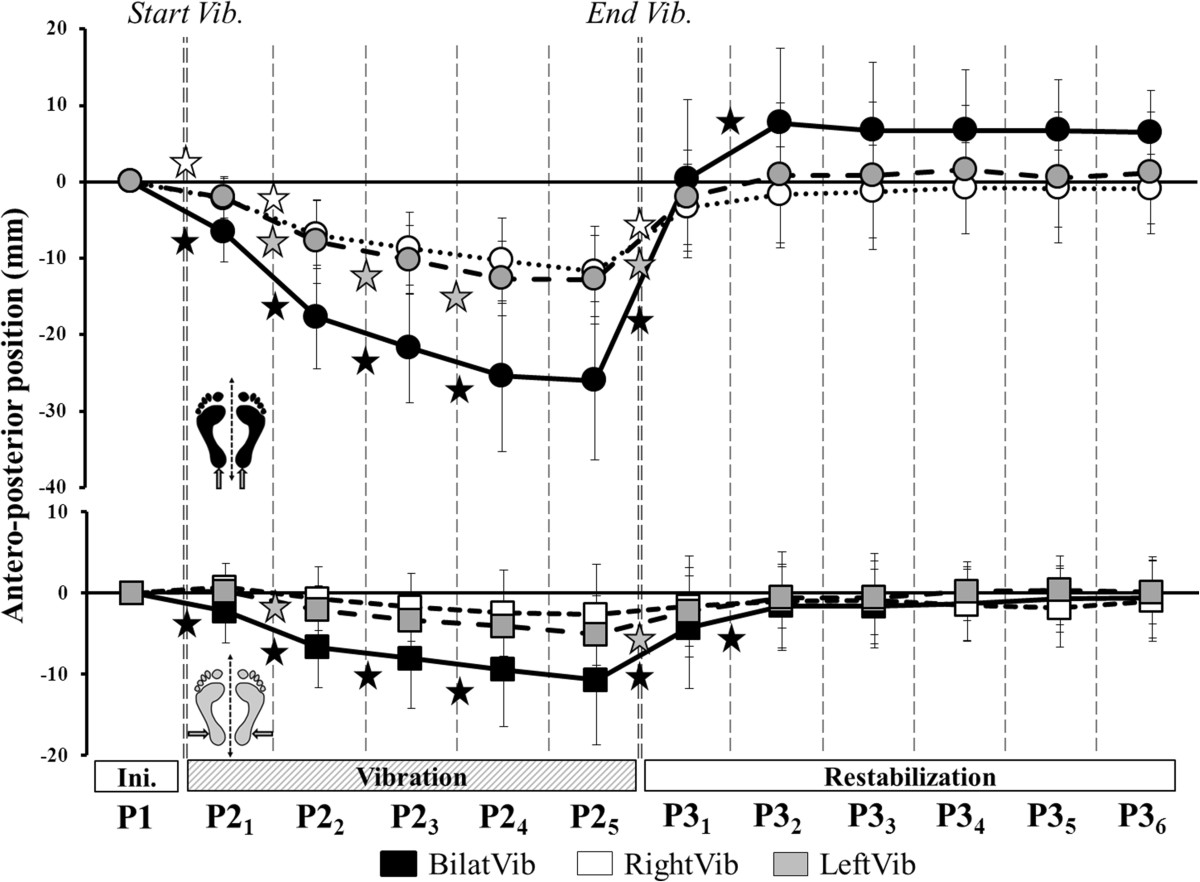
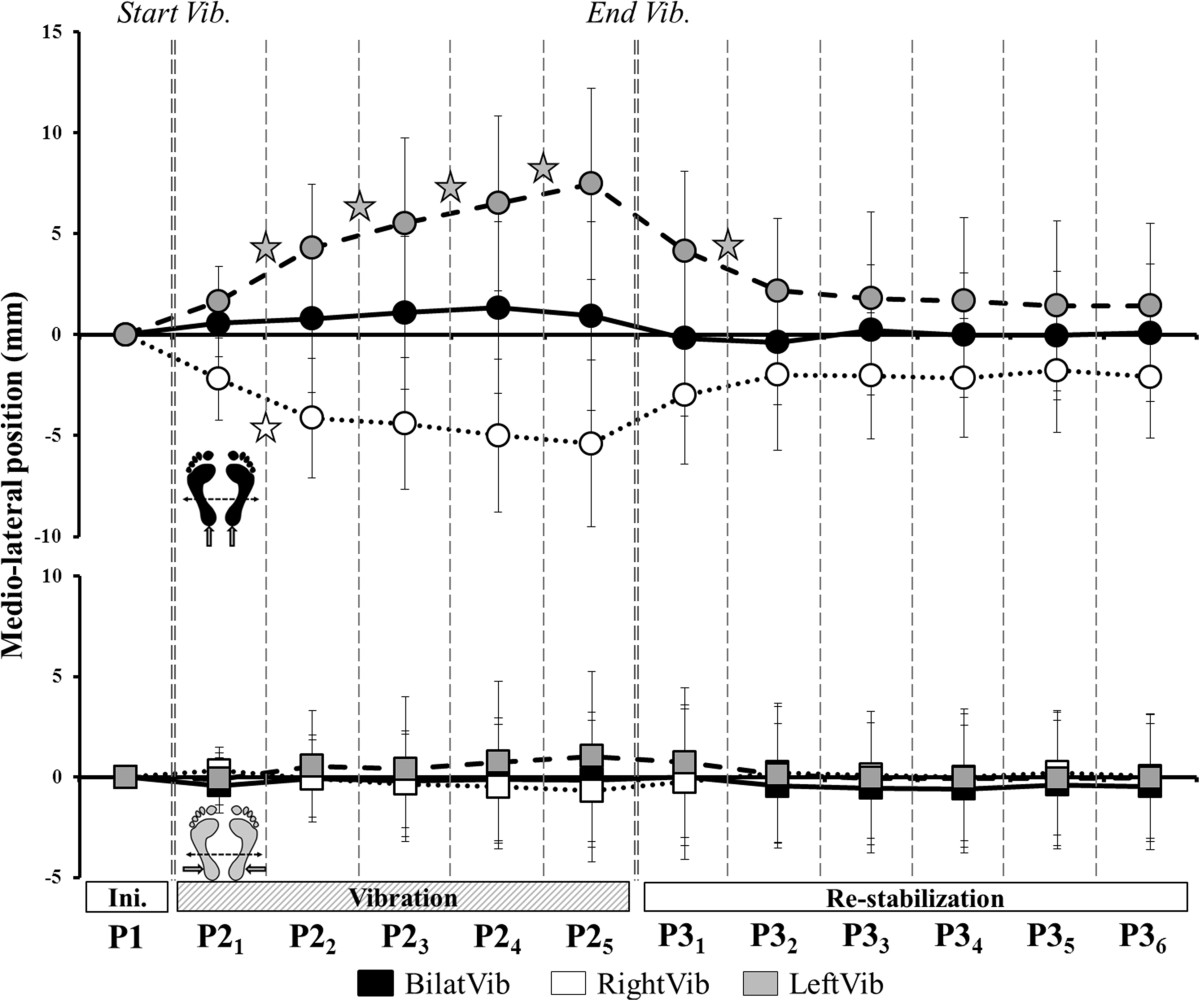
Standard parameters and the time course of center of pressure (CoP) displacements were recorded in 21 young adults, instructed to maintain their balance during tendon vibration. Following 4 s of baseline recording, three types of vibration (80 Hz) were applied for 20 s each on the Peroneus or Achilles tendons, either unilaterally or bilaterally (with eyes shut). The recording continued for a further 24 s after the end of the vibration during the re-stabilization phase. To evaluate the time course of the CoP displacement, each phase of the trial was divided into periods of 4 seconds. Differences between the type of tendon vibration, phases and periods were analyzed using ANOVA.
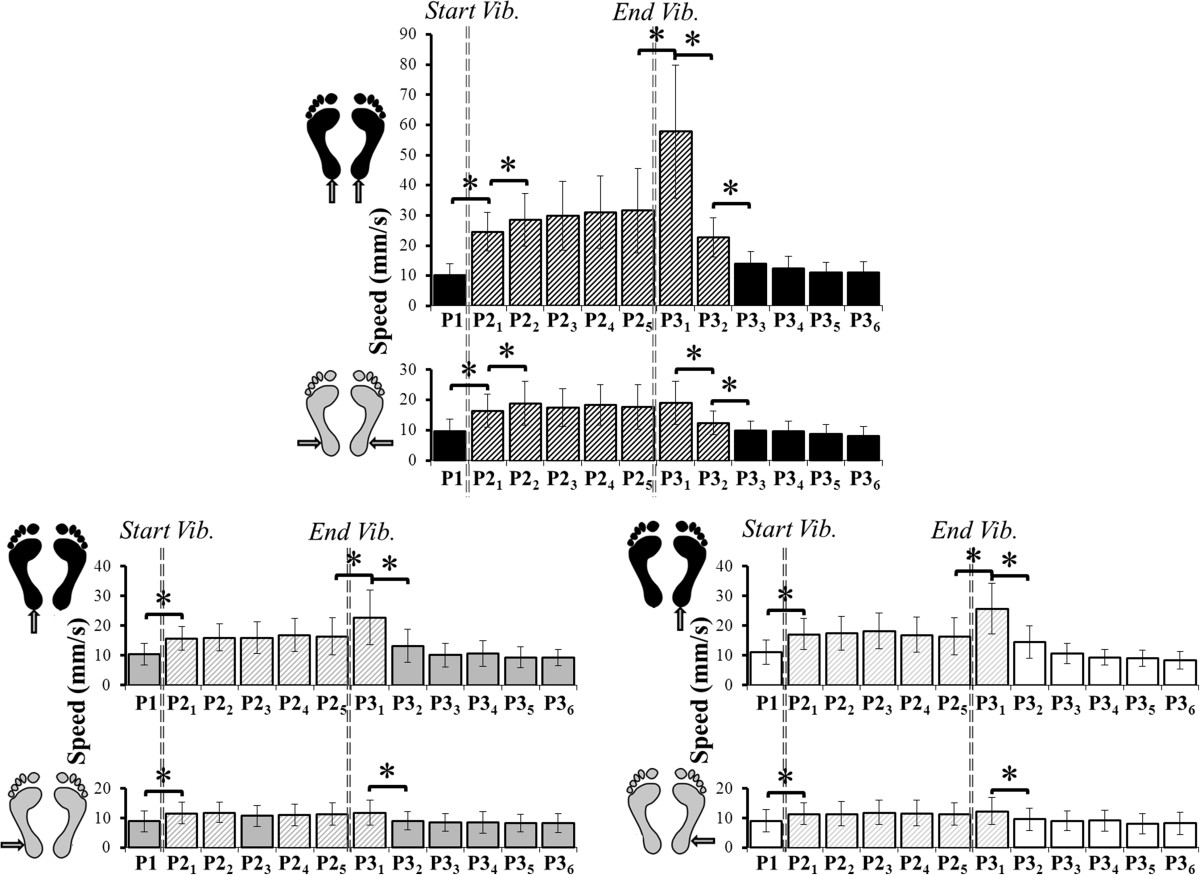
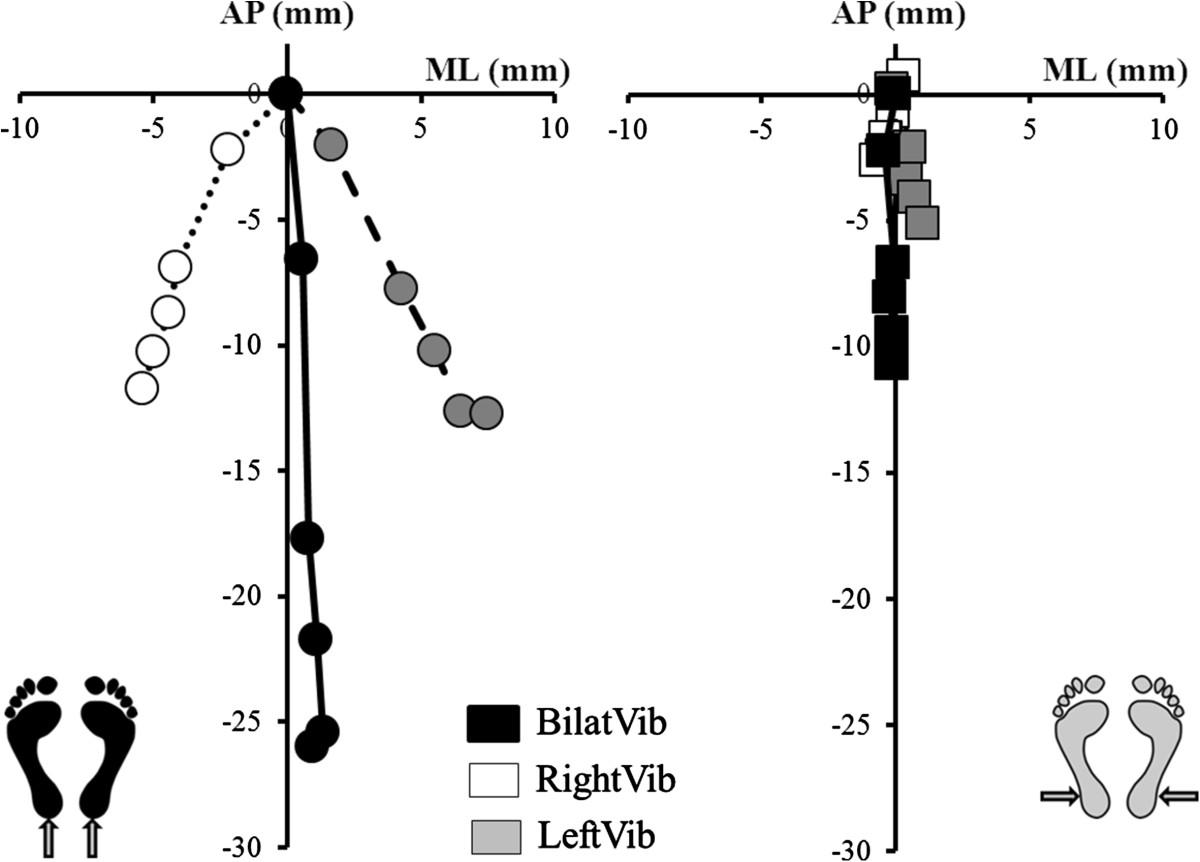
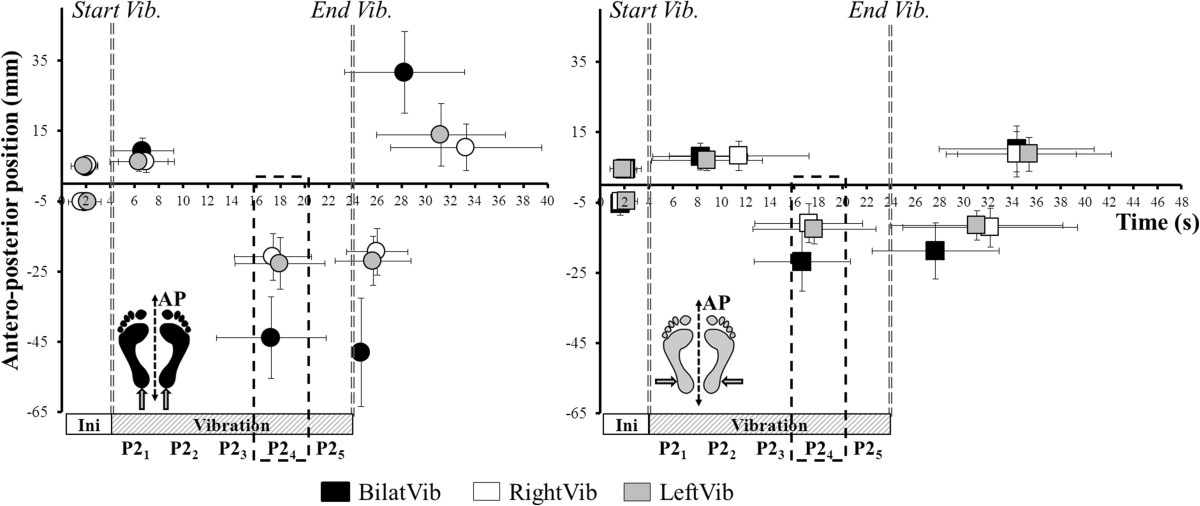
During all tendon vibrations, the speed of the CoP increased and a posterior displacement occurred. These changes were greater during Achilles than during Peroneus vibration for each type of vibration and also during bilateral compared with unilateral vibration. All maximal posterior positions occurred at a similar instant (between 12.7 and 14 s of vibration). Only unilateral Achilles vibration led to a significant medio-lateral displacement compared to the initial state.
The effect of the proprioceptive perturbation seems to be influenced by the position of the vibrated muscle according to the planes of the musculoskeletal postural organization. The amplitude of the destabilization may be related to the importance of the muscle for postural control. The medial CoP displacement which occurred during unilateral Achilles vibration is not a general reaction to a single-limb perturbation. Proprioceptive input from the non-perturbed leg was not sufficient for the antero-posterior displacement to be avoided; however, it helped to gain stability over time. The non-perturbed limb clearly plays an important role in the restoration of the postural referential, both during and immediately following the end of the vibration. The results demonstrated that at least 16 s of vibration are necessary to induce most postural effects in young adults.
本研究旨在探讨腓肠肌三头肌和腓骨长肌本体感觉受扰后的姿势后果。众所周知,这些肌肉在站立时分别控制矢状面和额状面的姿势。
记录了21名年轻成年人在肌腱振动期间保持平衡时压力中心(CoP)位移的标准参数和时间进程。在4秒的基线记录后,对腓骨或跟腱单侧或双侧(闭眼)施加三种类型的振动(80Hz),每次持续20秒。在重新稳定阶段,振动结束后记录再持续24秒。为了评估CoP位移的时间进程,试验的每个阶段被分为4秒的时间段。使用方差分析分析肌腱振动类型、阶段和时间段之间的差异。
在所有肌腱振动期间,CoP的速度增加并发生向后位移。对于每种振动类型,这些变化在跟腱振动时比在腓骨振动时更大,并且在双侧振动时比单侧振动时更大。所有最大向后位置都出现在相似的时刻(振动12.7至14秒之间)。与初始状态相比,只有单侧跟腱振动导致明显的内外侧位移。
本体感觉受扰的影响似乎受振动肌肉在肌肉骨骼姿势组织平面中的位置影响。不稳定的幅度可能与肌肉对姿势控制的重要性有关。单侧跟腱振动期间发生的内侧CoP位移不是对单肢受扰的普遍反应。来自未受扰腿的本体感觉输入不足以避免前后位移;然而,它有助于随着时间的推移获得稳定性。未受扰肢体在振动期间和振动结束后立即恢复姿势参考方面显然起着重要作用。结果表明,在年轻成年人中,至少16秒的振动是诱导大多数姿势效应所必需的。