Olaitan Peter B, Odesina Victoria, Ademola Samuel, Fadiora Solomon O, Oluwatosin Odunayo M, Reichenberger Ernst J
Department of Reconstructive Sciences, Center for Regenerative Medicine and Developmental Biology, University of Connecticut Health Center, 263 Farmington Avenue, Farmington, CT 06030-3705, USA.
BMC Med Ethics. 2014 Sep 2;15:65. doi: 10.1186/1472-6939-15-65.
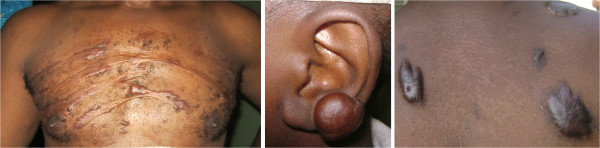
More involvement of sub-Saharan African countries in biomedical studies, specifically in genetic research, is needed to advance individualized medicine that will benefit non-European populations. Missing infrastructure, cultural and religious beliefs as well as lack of understanding of research benefits can pose a challenge to recruitment. Here we describe recruitment efforts for a large genetic study requiring three-generation pedigrees within the Yoruba homelands of Nigeria. The aim of the study was to identify genes responsible for keloids, a wound healing disorder. We also discuss ethical and logistical considerations that we encountered in preparation for this research endeavor.
Protocols for this bi-national intercultural study were approved by the Institutional Review Board (IRB) in the US and the ethics committees of the Nigerian institutions for consideration of cultural differences. Principles of community based participatory research were employed throughout the recruitment process. Keloid patients (patient advisors), community leaders, kings/chiefs and medical directors were engaged to assist the research teams with recruitment strategies. Community meetings, church forums, and media outlets (study flyers, radio and TV announcements) were utilized to promote the study in Nigeria. Recruitment of research participants was conducted by trained staff from the local communities. Pedigree structures were re-analyzed on a regular basis as new family members were recruited and recruitment challenges were documented.
Total recruitment surpassed 4200 study participants over a 7-year period including 79 families with complete three-generation pedigrees. In 9 families more than 20 family members participated, however, in 5 of these families, we encountered issues with pedigree structure as members from different branches presented inconsistent family histories. These issues were due to the traditional open family structure amongst the Yoruba and by beliefs in voodoo or in juju. In addition, family members living in other parts of the country or abroad complicated timely and complete family recruitment.
Organizational, logistics and ethics challenges can be overcome by additional administrative efforts, good communication, community involvement and education of staff members. However, recruitment challenges due to infrastructural shortcomings or cultural and religious beliefs can lead to significant delays, which may negatively affect study time lines and expectations of funding agencies.
撒哈拉以南非洲国家需要更多地参与生物医学研究,特别是基因研究,以推动能使非欧洲人群受益的个性化医疗。基础设施缺失、文化和宗教信仰以及对研究益处缺乏了解可能给招募工作带来挑战。在此,我们描述了在尼日利亚约鲁巴族聚居地进行一项需要三代谱系的大型基因研究的招募工作。该研究旨在确定导致瘢痕疙瘩(一种伤口愈合紊乱疾病)的基因。我们还讨论了在筹备这项研究工作过程中遇到的伦理和后勤方面的考虑因素。
这项跨文化的双边研究方案得到了美国机构审查委员会(IRB)以及尼日利亚各机构伦理委员会的批准,以考虑文化差异。在整个招募过程中采用了基于社区的参与性研究原则。瘢痕疙瘩患者(患者顾问)、社区领袖、国王/酋长和医学主任参与协助研究团队制定招募策略。利用社区会议、教堂论坛和媒体渠道(研究传单、广播和电视公告)在尼日利亚宣传该研究。研究参与者的招募由当地社区受过培训的工作人员进行。随着新家庭成员的招募,定期重新分析谱系结构,并记录招募过程中遇到的挑战。
在7年时间里,总共招募了超过4200名研究参与者,包括79个拥有完整三代谱系的家庭。在9个家庭中,有20多名家庭成员参与,但在其中5个家庭中,我们遇到了谱系结构问题,因为来自不同分支的成员提供了不一致的家族病史。这些问题是由于约鲁巴族传统的开放家庭结构以及对伏都教或巫术的信仰所致。此外,居住在该国其他地区或国外的家庭成员使及时、完整地招募整个家庭变得复杂。
通过额外的行政努力、良好的沟通、社区参与和对工作人员的培训,可以克服组织、后勤和伦理方面的挑战。然而,由于基础设施缺陷或文化和宗教信仰导致的招募挑战可能会导致严重延误,这可能会对研究时间表和资助机构的期望产生负面影响。