Pardha-Saradhi Peddisetty, Yamal Gupta, Peddisetty Tanuj, Sharmila Peddisetty, Nagar Shilpi, Singh Jyoti, Nagarajan Rajamani, Rao Kottapalli S
Department of Environmental Studies, University of Delhi, Delhi, India.
Department of Environmental Studies, University of Delhi, Delhi, India; Department of Botany, University of Delhi, Delhi, India.
PLoS One. 2014 Sep 3;9(9):e106715. doi: 10.1371/journal.pone.0106715. eCollection 2014.
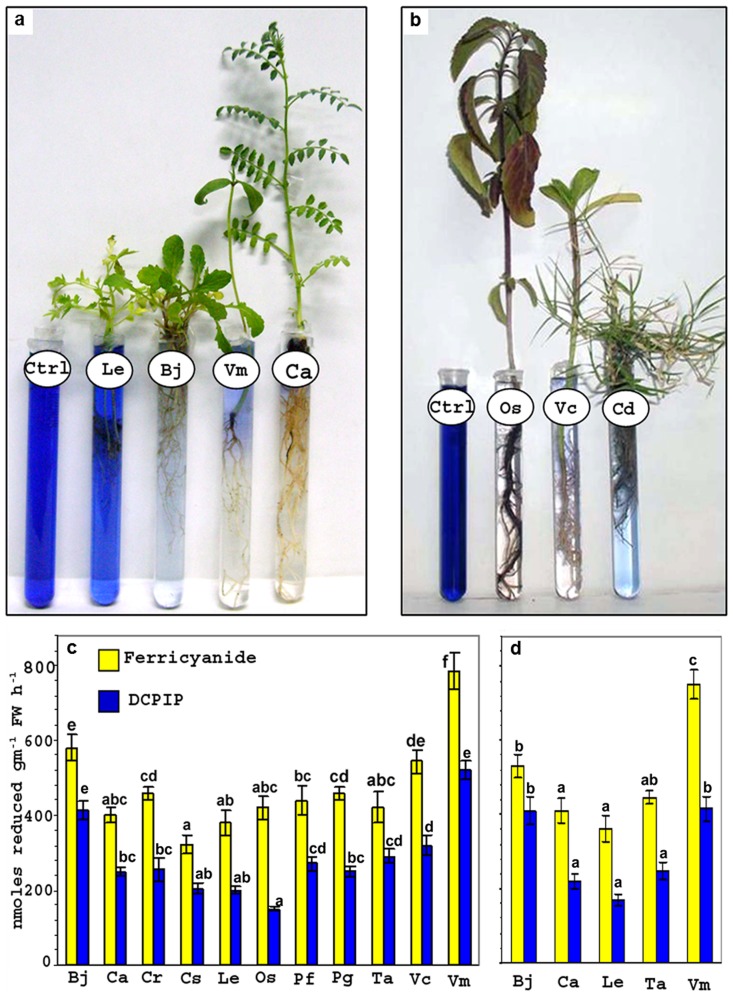
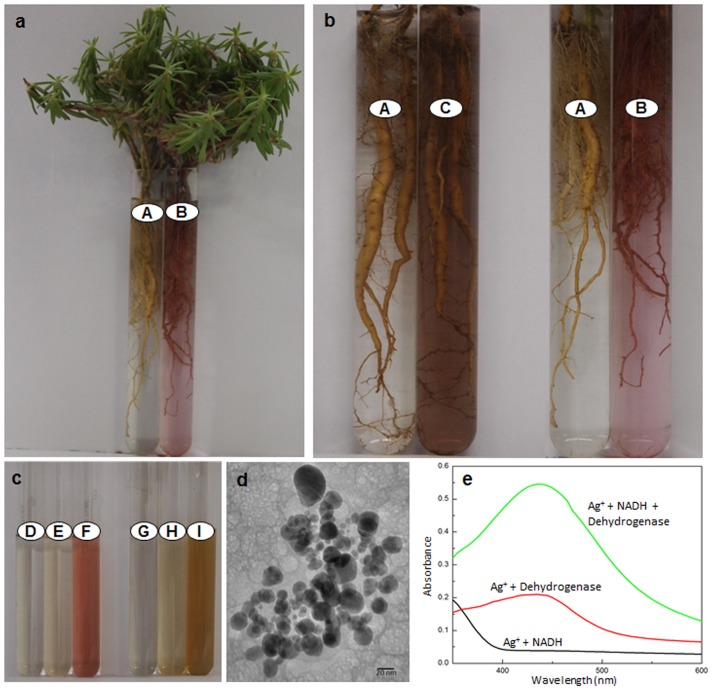
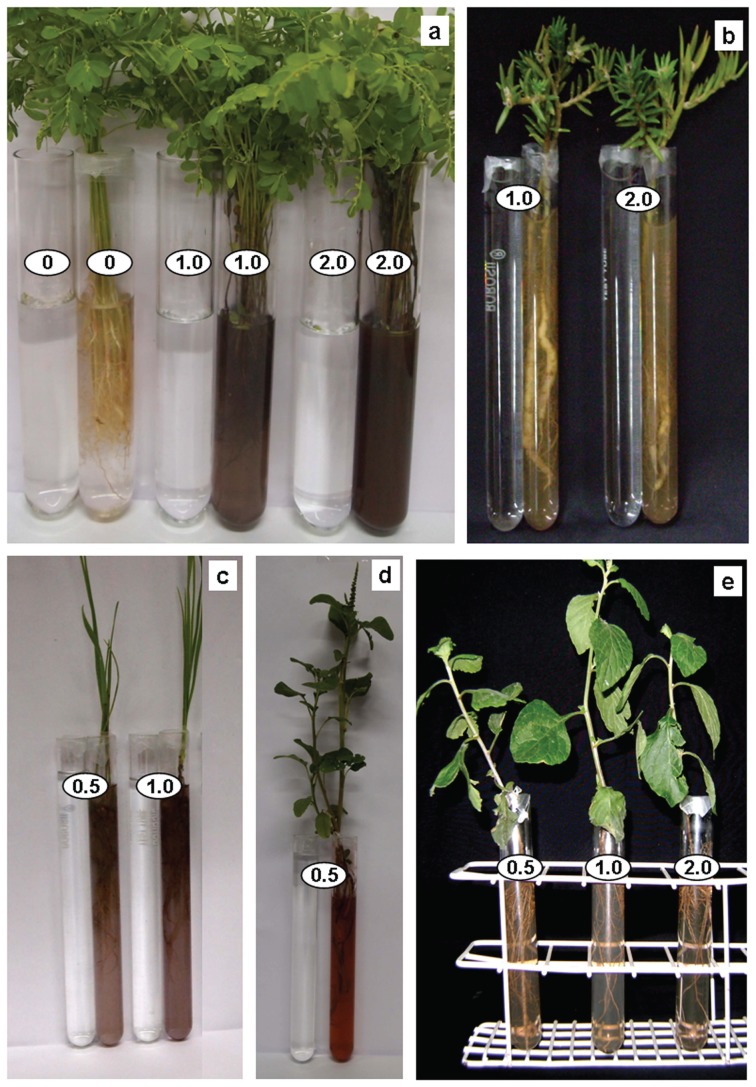
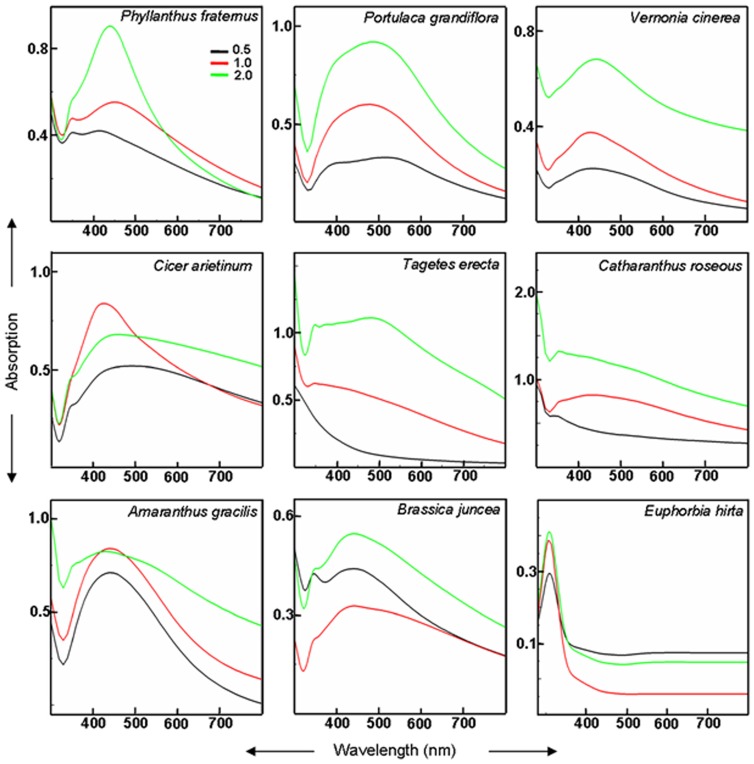
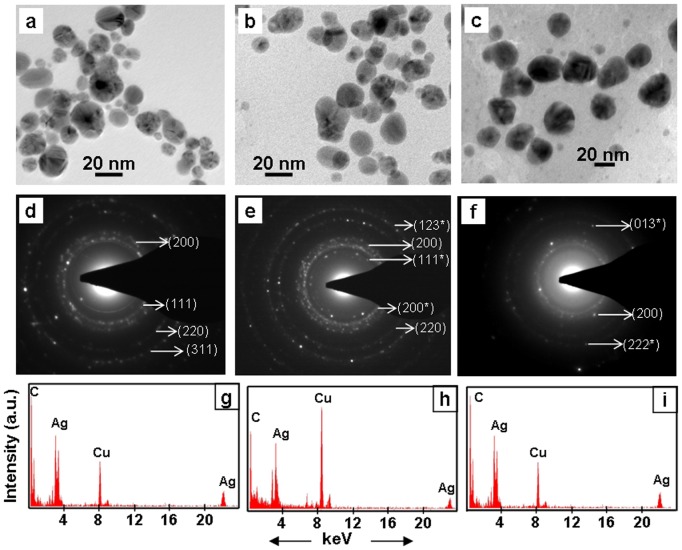
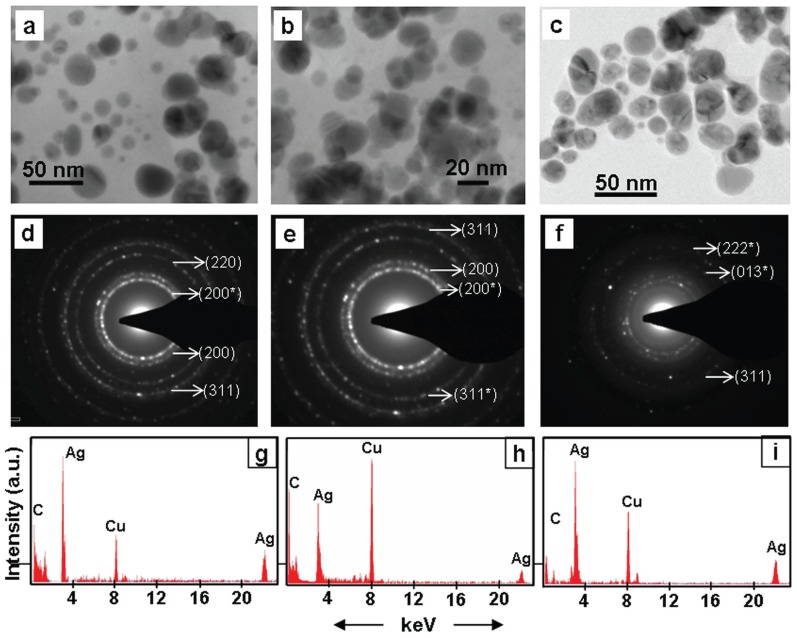
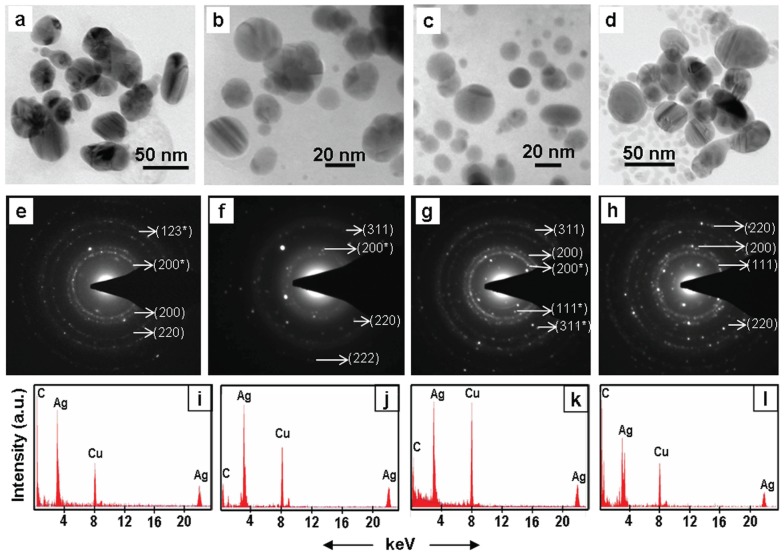
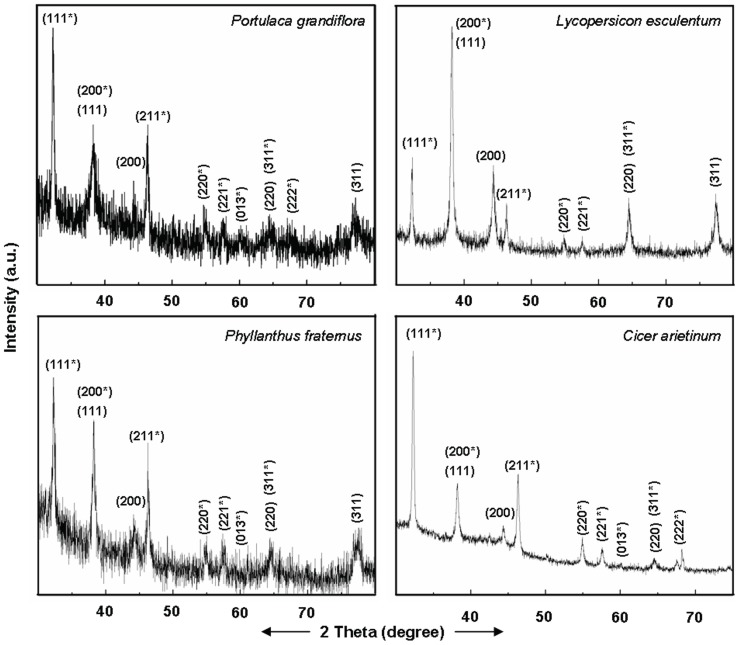
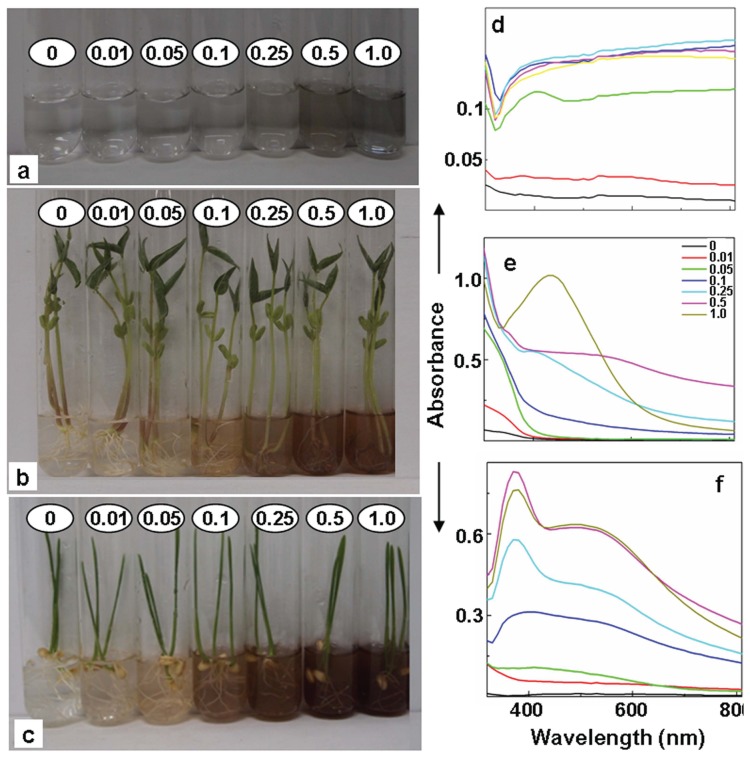
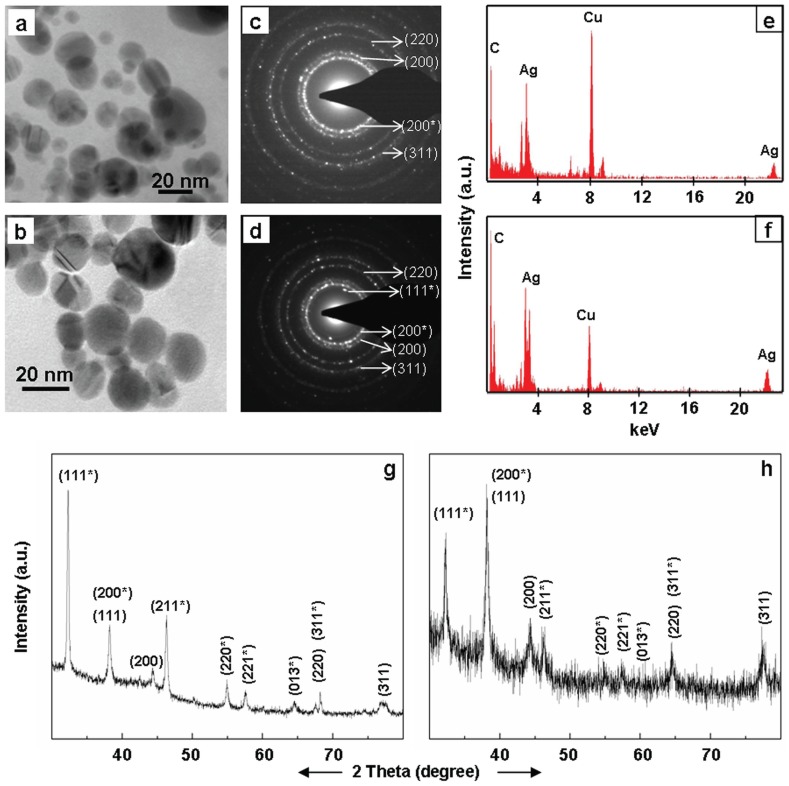
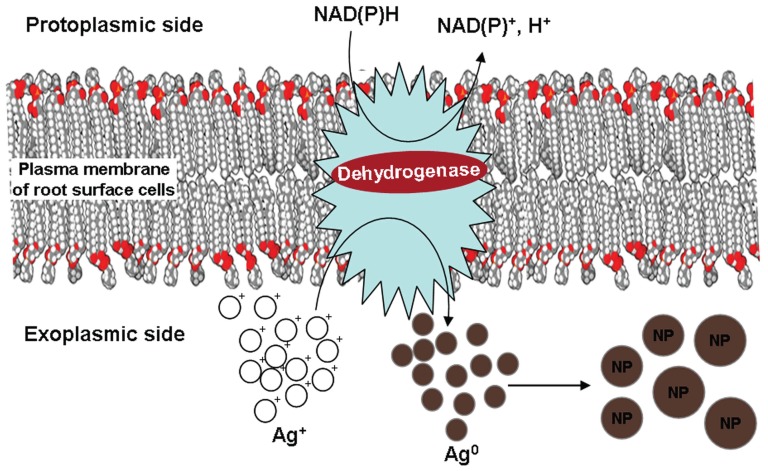
Potential of root system of plants from wide range of families to effectively reduce membrane impermeable ferricyanide to ferrocyanide and blue coloured 2,6-dichlorophenol indophenol (DCPIP) to colourless DCPIPH2 both under non-sterile and sterile conditions, revealed prevalence of immense reducing strength at root surface. As generation of silver nanoparticles (NPs) from Ag+ involves reduction, present investigations were carried to evaluate if reducing strength prevailing at surface of root system can be exploited for reduction of Ag+ and exogenous generation of silver-NPs. Root system of intact plants of 16 species from 11 diverse families of angiosperms turned clear colorless AgNO3 solutions, turbid brown. Absorption spectra of these turbid brown solutions showed silver-NPs specific surface plasmon resonance peak. Transmission electron microscope coupled with energy dispersive X-ray confirmed the presence of distinct NPs in the range of 5-50 nm containing Ag. Selected area electron diffraction and powder X-ray diffraction patterns of the silver NPs showed Bragg reflections, characteristic of crystalline face-centered cubic structure of Ag(0) and cubic structure of Ag2O. Root system of intact plants raised under sterile conditions also generated Ag(0)/Ag2O-NPs under strict sterile conditions in a manner similar to that recorded under non-sterile conditions. This revealed the inbuilt potential of root system to generate Ag(0)/Ag2O-NPs independent of any microorganism. Roots of intact plants reduced triphenyltetrazolium to triphenylformazon and impermeable ferricyanide to ferrocyanide, suggesting involvement of plasma membrane bound dehydrogenases in reduction of Ag+ and formation of Ag(0)/Ag2O-NPs. Root enzyme extract reduced triphenyltetrazolium to triphenylformazon and Ag+ to Ag(0) in presence of NADH, clearly establishing potential of dehydrogenases to reduce Ag+ to Ag(0), which generate Ag(0)/Ag2O-NPs. Findings presented in this manuscript put forth a novel, simple, economically viable and green protocol for synthesis of silver-NPs under ambient conditions in aqueous phase, using root system of intact plants.
多种植物根系在非无菌和无菌条件下均具有将膜不可渗透的铁氰化物有效还原为亚铁氰化物,以及将蓝色的2,6 - 二氯酚靛酚(DCPIP)还原为无色的DCPIPH2的能力,这表明根系表面存在巨大的还原能力。由于从Ag⁺生成银纳米颗粒(NPs)涉及还原过程,因此进行了本研究以评估是否可以利用根系表面普遍存在的还原能力来还原Ag⁺并外源生成银纳米颗粒。来自被子植物11个不同科的16种完整植物的根系使澄清无色的AgNO₃溶液变成浑浊的棕色。这些浑浊棕色溶液的吸收光谱显示出银纳米颗粒特有的表面等离子体共振峰。透射电子显微镜与能量色散X射线联用证实存在尺寸在5 - 50 nm范围内含有Ag的独特纳米颗粒。银纳米颗粒的选区电子衍射和粉末X射线衍射图谱显示出布拉格反射,这是Ag(0)的面心立方晶体结构和Ag₂O的立方结构的特征。在无菌条件下培养的完整植物根系在严格无菌条件下也以与非无菌条件下记录的方式生成Ag(0)/Ag₂O - NPs。这揭示了根系内在的独立于任何微生物生成Ag(0)/Ag₂O - NPs的潜力。完整植物的根将三苯基四氮唑还原为三苯基甲臜,并将不可渗透的铁氰化物还原为亚铁氰化物,这表明质膜结合脱氢酶参与了Ag⁺的还原以及Ag(0)/Ag₂O - NPs的形成。根酶提取物在NADH存在下将三苯基四氮唑还原为三苯基甲臜,并将Ag⁺还原为Ag(0),明确证实了脱氢酶将Ag⁺还原为Ag(0)的潜力,而Ag(0)会生成Ag(0)/Ag₂O - NPs。本手稿中的研究结果提出了一种新颖、简单、经济可行且绿色的方案,用于在水相中利用完整植物的根系在环境条件下合成银纳米颗粒。