Toko Kiyoshi, Hara Daichi, Tahara Yusuke, Yasuura Masato, Ikezaki Hidekazu
Graduate School of Information Science and Electrical Engineering, Kyushu University, Nishi-ku, Fukuoka 819-0395, Japan.
Intelligent Sensor Technology, Inc., 5-1-1 Onna, Atsugi-shi, Kanagawa 243-0032, Japan.
Sensors (Basel). 2014 Sep 2;14(9):16274-86. doi: 10.3390/s140916274.
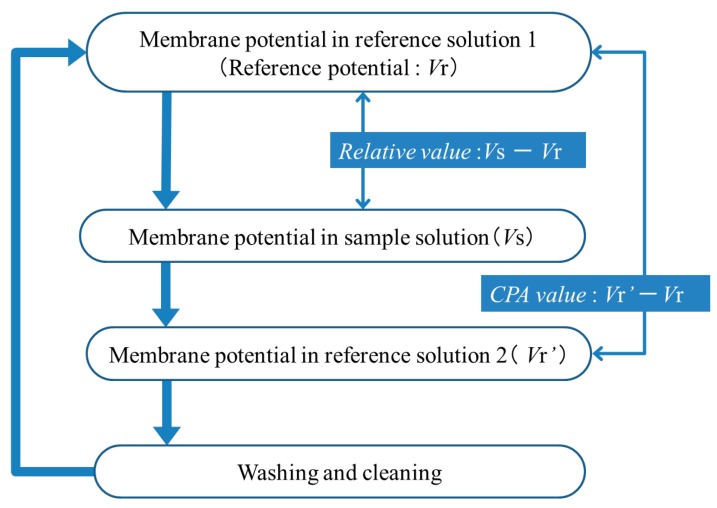
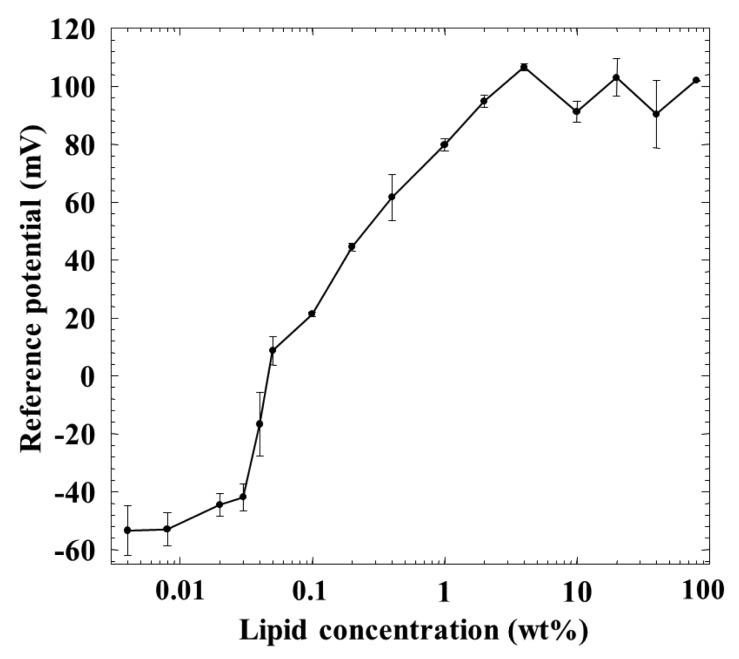
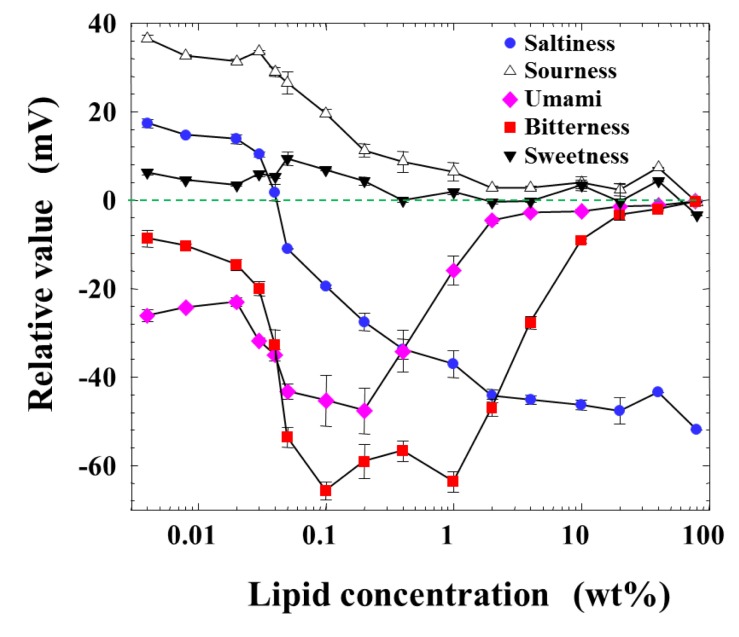
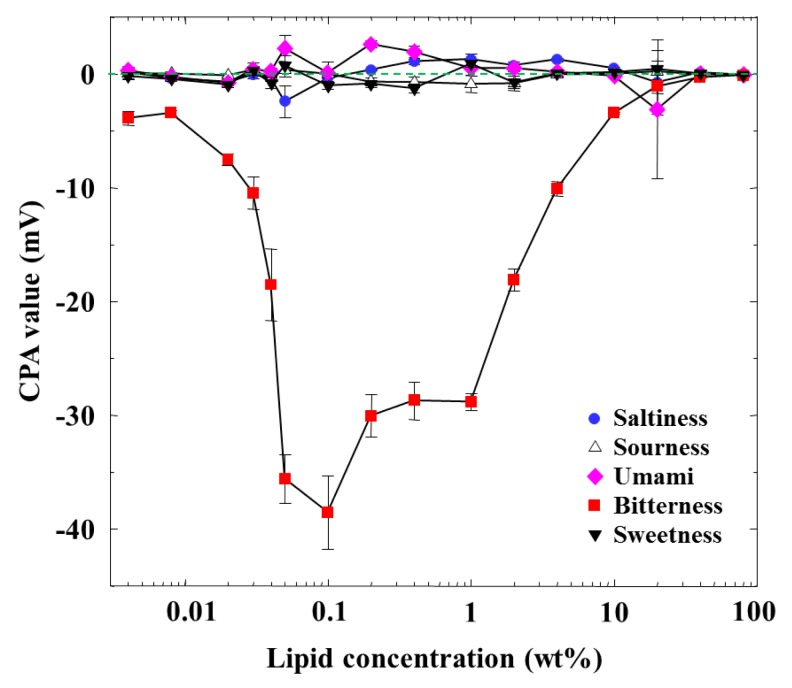
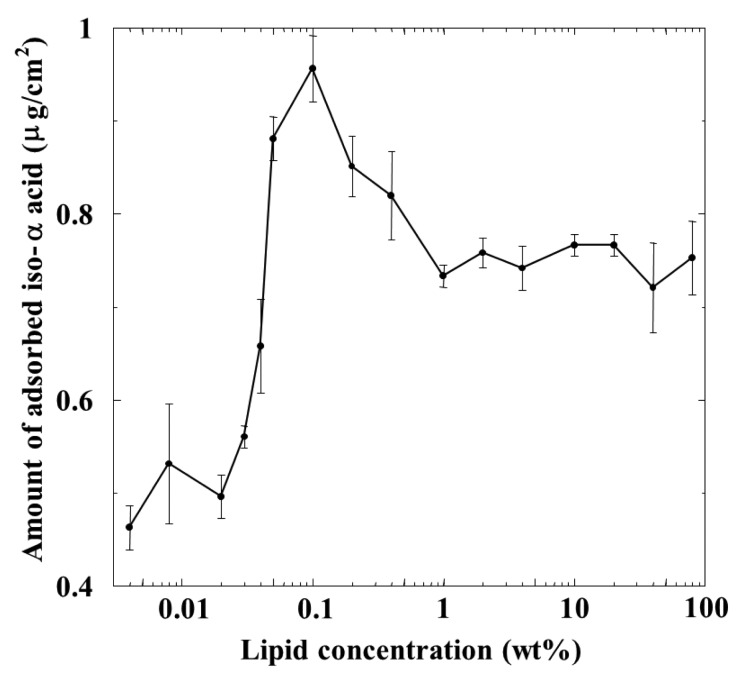
The bitterness of bitter substances can be measured by the change in the membrane electric potential caused by adsorption (CPA) using a taste sensor (electronic tongue). In this study, we examined the relationship between the CPA value due to an acidic bitter substance and the amount of the bitter substance adsorbed onto lipid/polymer membranes, which contain different lipid contents, used in the taste sensor. We used iso-α-acid which is an acidic bitter substance found in several foods and beverages. The amount of adsorbed iso-α-acid, which was determined by spectroscopy, showed a maximum at the lipid concentration 0.1 wt % of the membrane, and the same phenomenon was observed for the CPA value. At the higher lipid concentration, however, the amount adsorbed decreased and then remained constant, while the CPA value decreased monotonically to zero. This constant adsorption amount was observed when the membrane potential in the reference solution did not change with increasing lipid concentration. The decrease in CPA value in spite of the constant adsorption amount is caused by a decrease in the sensitivity of the membrane as the surface charge density increases. The reason why the peaks appeared in both the CPA value and adsorption amount is based on the contradictory adsorption properties of iso-α-acid. The increasing charged lipid concentration of the membrane causes an increasing electrostatic attractive interaction between iso-α-acid and the membrane, but simultaneously causes a decreasing hydrophobic interaction that results in decreasing adsorption of iso-α-acid, which also has hydrophobic properties, onto the membrane. Estimates of the amount of adsorption suggest that iso-α-acid molecules are adsorbed onto both the surface and interior of the membrane.
苦味物质的苦味可以通过使用味觉传感器(电子舌)测量由吸附引起的膜电位变化(CPA)来测定。在本研究中,我们研究了味觉传感器中使用的、含有不同脂质含量的脂质/聚合物膜上,酸性苦味物质引起的CPA值与苦味物质吸附量之间的关系。我们使用了异α-酸,它是在多种食品和饮料中发现的一种酸性苦味物质。通过光谱法测定的异α-酸吸附量在膜的脂质浓度为0.1 wt%时达到最大值,CPA值也观察到相同现象。然而,在较高脂质浓度下,吸附量先下降然后保持恒定,而CPA值则单调下降至零。当参比溶液中的膜电位不随脂质浓度增加而变化时,观察到这种恒定的吸附量。尽管吸附量恒定,但CPA值下降是由于随着表面电荷密度增加膜的灵敏度降低所致。CPA值和吸附量中都出现峰值的原因基于异α-酸相互矛盾的吸附特性。膜中带电脂质浓度的增加导致异α-酸与膜之间的静电吸引相互作用增强,但同时导致疏水相互作用减弱,从而导致同样具有疏水特性的异α-酸在膜上的吸附减少。吸附量的估计表明异α-酸分子吸附在膜的表面和内部。