Chen Catherine, Kollef Marin H
Division of Pulmonary and Critical Care Medicine, Washington University School of Medicine, 660 South Euclid Avenue, St Louis, MO, 63110, USA.
Crit Care. 2014 Aug 29;18(4):481. doi: 10.1186/s13054-014-0481-5.
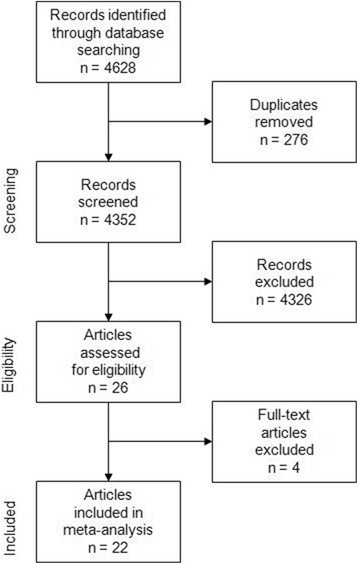
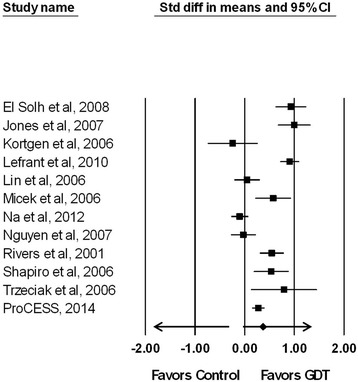
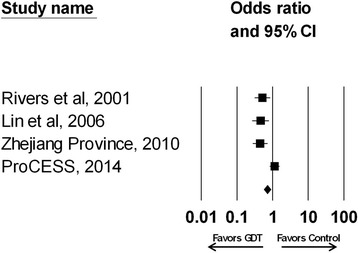
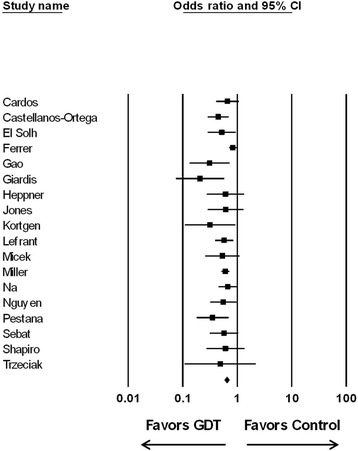
Intravenous fluids (IVFs) represent a basic therapeutic intervention utilized in septic shock. Unfortunately, the optimal method for administering IVFs to maximize patient outcomes is unknown. A meta-analysis of four randomized trials of goal-directed therapy did not demonstrate a significant reduction in mortality (odds ratio 0.609; 95% confidence interval 0.363 to 1.020; P = 0.059), whereas 18 trials with historical controls showed a significant increase in survival (odds ratio 0.580; 95% confidence interval 0.501 to 0.672; P < 0.0001). Based on these data, clinicians should be aware of the potential for harm due to the excessive administration of IVFs to patients with septic shock.
静脉输液(IVF)是脓毒性休克中使用的一种基本治疗干预措施。不幸的是,关于如何以最佳方式进行静脉输液以实现患者最佳治疗效果尚不清楚。一项对四项目标导向治疗随机试验的荟萃分析未显示死亡率有显著降低(比值比0.609;95%置信区间0.363至1.020;P = 0.059),而18项采用历史对照的试验显示生存率有显著提高(比值比0.580;95%置信区间0.501至0.672;P < 0.0001)。基于这些数据,临床医生应意识到对脓毒性休克患者过度进行静脉输液可能造成伤害。