Narayanapillai Sreekanth C, Leitzman Pablo, O'Sullivan M Gerard, Xing Chengguo
Department of Medicinal Chemistry, College of Pharmacy, University of Minnesota , Minneapolis, Minnesota 55455, United States.
Chem Res Toxicol. 2014 Oct 20;27(10):1871-6. doi: 10.1021/tx5003194. Epub 2014 Sep 12.
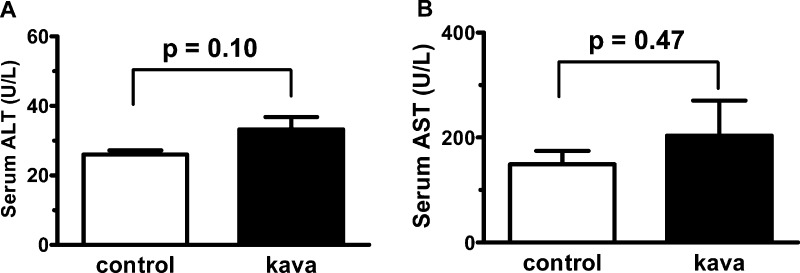
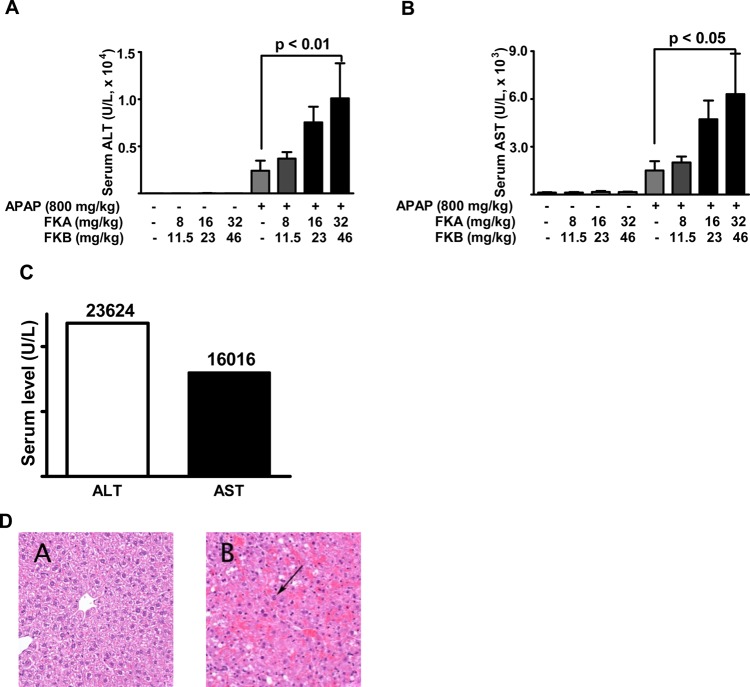
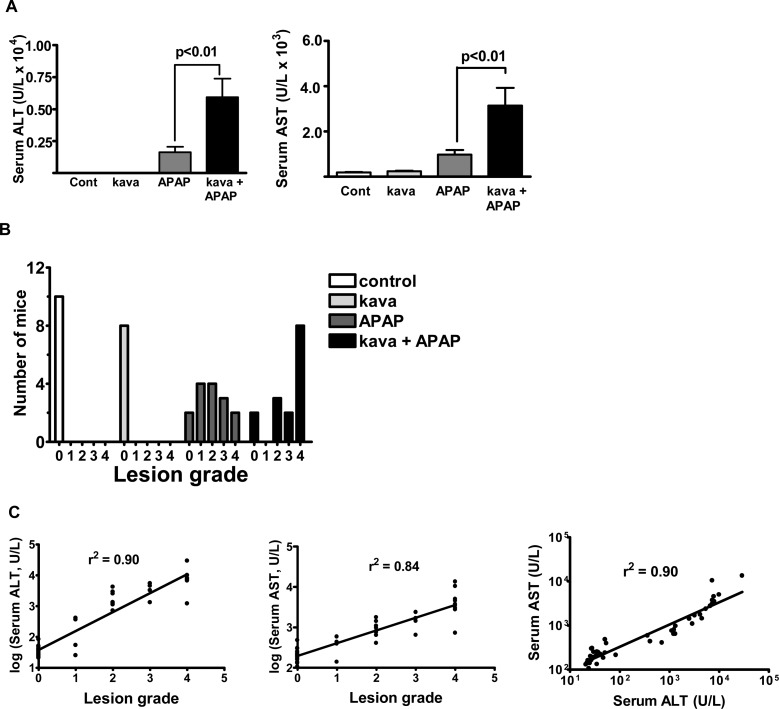
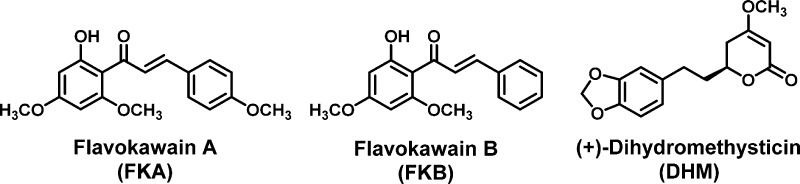
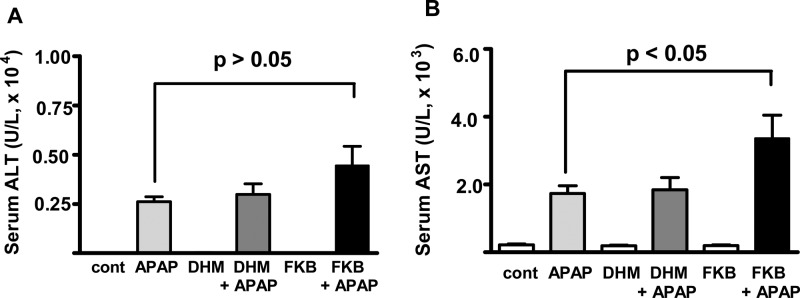
Anxiolytic kava products have been associated with rare but severe hepatotoxicity in humans. This adverse potential has never been captured in animal models, and the responsible compound(s) remains to be determined. The lack of such knowledge greatly hinders the preparation of a safer kava product and limits its beneficial applications. In this study we evaluated the toxicity of kava as a single entity or in combination with acetaminophen (APAP) in C57BL/6 mice. Kava alone revealed no adverse effects for long-term usage even at a dose of 500 mg/kg bodyweight. On the contrary a three-day kava pretreatment potentiated APAP-induced hepatotoxicity, resulted in an increase in serum ALT and AST, and increased severity of liver lesions. Chalcone-based flavokawains A (FKA) and B (FKB) in kava recapitulated its hepatotoxic synergism with APAP while dihydromethysticin (DHM, a representative kavalactone and a potential lung cancer chemopreventive agent) had no such effect. These results, for the first time, demonstrate the hepatotoxic risk of kava and its chalcone-based FKA and FKB in vivo and suggest that herb-drug interaction may account for the rare hepatotoxicity associated with anxiolytic kava usage in humans.
抗焦虑的卡瓦产品与人类罕见但严重的肝毒性有关。这种不良可能性在动物模型中从未被发现,并且其致病化合物仍有待确定。缺乏此类知识极大地阻碍了更安全卡瓦产品的制备,并限制了其有益应用。在本研究中,我们评估了卡瓦单独使用或与对乙酰氨基酚(APAP)联合使用对C57BL/6小鼠的毒性。单独使用卡瓦即使在500mg/kg体重的剂量下长期使用也未显示出不良反应。相反,为期三天的卡瓦预处理增强了APAP诱导的肝毒性,导致血清谷丙转氨酶(ALT)和谷草转氨酶(AST)升高,并增加了肝脏病变的严重程度。卡瓦中基于查耳酮的黄酮卡瓦因A(FKA)和B(FKB)重现了其与APAP的肝毒性协同作用,而二氢醉椒素(DHM,一种代表性的醉椒内酯和潜在的肺癌化学预防剂)则没有这种作用。这些结果首次证明了卡瓦及其基于查耳酮的FKA和FKB在体内的肝毒性风险,并表明草药-药物相互作用可能是与人类使用抗焦虑卡瓦相关的罕见肝毒性的原因。