Wang Yongjun, Liu Dan, Zheng Qingchuan, Zhao Qiang, Zhang Hongjuan, Ma Yan, Fallon John K, Fu Qiang, Haynes Matthew T, Lin Guimei, Zhang Rong, Wang Dun, Yang Xinggang, Zhao Linxiang, He Zhonggui, Liu Feng
Division of Molecular Pharmaceutics, Eshelman School of Pharmacy, University of North Carolina at Chapel Hill , Chapel Hill, North Carolina 27599, United States.
Nano Lett. 2014 Oct 8;14(10):5577-83. doi: 10.1021/nl502044x. Epub 2014 Sep 7.
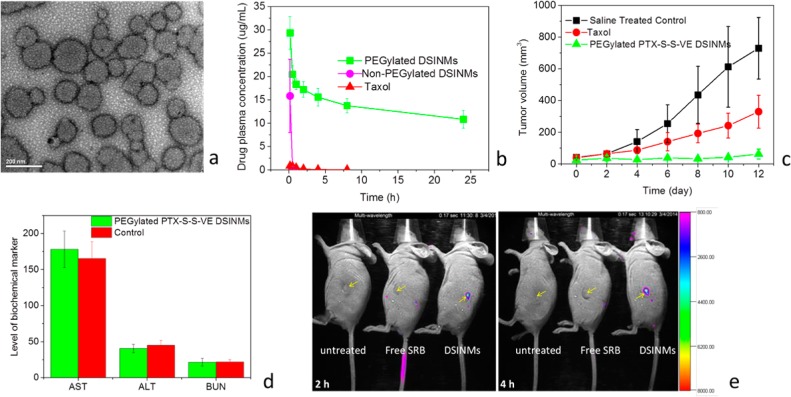
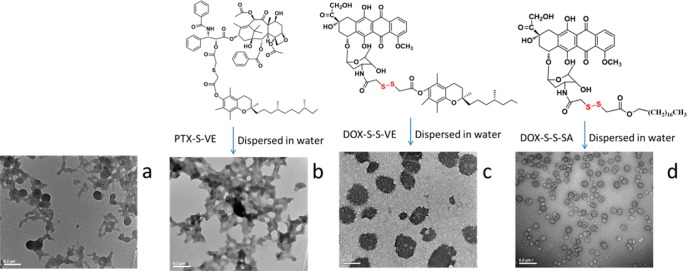
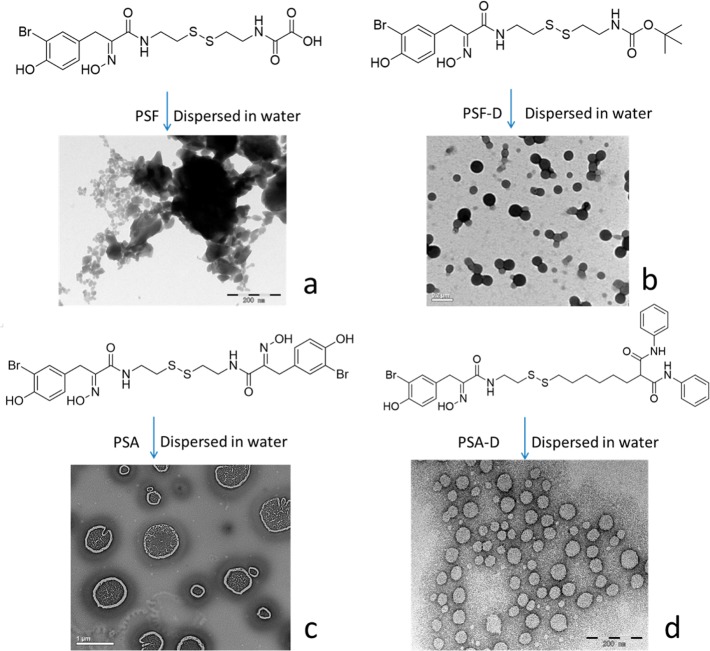
It is commonly observed that hydrophobic molecules alone cannot self-assemble into stable nanoparticles, requiring amphiphilic or ionic materials to support nanoparticle stability and function in vivo. We report herein newly self-assembled nanomedicines through entirely different mechanisms. We present proof-of-concept methodology and results in support of our hypothesis that disulfide-induced nanomedicines (DSINMs) are promoted and stabilized by the insertion of a single disulfide bond into hydrophobic molecules, in order to balance the competition between intermolecular forces involved in the self-assembly of nanomedicines. This hypothesis has been explored through diverse synthetic compounds, which include four first-line chemotherapy drugs (paclitaxel, doxorubicin, fluorouracil, and gemcitabine), two small-molecule natural products and their derivatives, as well as a fluorescent probe. Such an unprecedented and highly reproducible system has the potential to serve as a synthetic platform for a wide array of safe and effective therapeutic and diagnostic nanomedicine strategies.
人们普遍观察到,仅疏水分子不能自组装成稳定的纳米颗粒,需要两亲性或离子性材料来支持纳米颗粒在体内的稳定性和功能。我们在此报告通过完全不同的机制新自组装的纳米药物。我们展示了概念验证方法和结果,以支持我们的假设,即二硫键诱导的纳米药物(DSINMs)通过在疏水分子中插入单个二硫键来促进和稳定,以平衡纳米药物自组装中涉及的分子间力之间的竞争。该假设已通过多种合成化合物进行了探索,这些化合物包括四种一线化疗药物(紫杉醇、阿霉素、氟尿嘧啶和吉西他滨)、两种小分子天然产物及其衍生物,以及一种荧光探针。这样一个前所未有的且高度可重复的系统有潜力作为一个合成平台,用于广泛的安全有效的治疗和诊断纳米医学策略。