Pavone Mary Ellen, Hirshfeld-Cytron Jennifer, Lawson Angela K, Smith Kristin, Kazer Ralph, Klock Susan
Department of Obstetrics and Gynecology, Feinberg School of Medicine, Northwestern University, Chicago, US.
Department of Obstetrics and Gynecology, Feinberg School of Medicine, Northwestern University, Chicago, US ; Fertility Centers of Illinois, Orland Park, Illinois, US.
J Hum Reprod Sci. 2014 Apr;7(2):111-8. doi: 10.4103/0974-1208.138869.
Cancer survival has improved significantly and maintaining fertility is both a major concern and an important factor for the quality of life in cancer patients.
To explore differences in oocyte stimulation for fertility preservation (FP) patients based on cancer diagnosis.
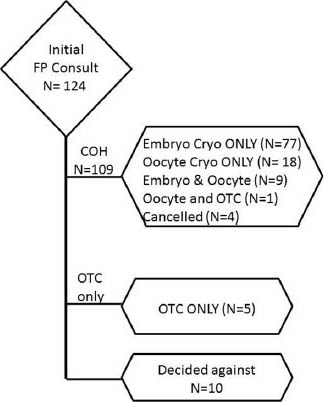
Between 2005 and 2011, 109 patients elected to pursue FP at a single institution.
In vitro fertilization (IVF) outcome variables between four cancer diagnostic groups (breast, gynecologic, lymphoma/leukemia and other) and age-matched male factor or tubal factor infertility IVF control group were compared.
ANOVA and Chi-square analyses were employed to compare variables between the groups that were normally distributed. Kruskal-Wallis with subsequent Mann-Whitney U-test were used for data that were not normally distributed.
Women with gynecologic malignancies were significantly older than the women in the other three groups, but tended to have a better ovarian response. Women with hematologic malignancies were most likely to have been exposed to chemotherapy and had the longest stimulations with a similar number of oocytes retrieved. The age-matched IVF controls had higher peak estradiol levels, number of oocytes obtained, and fertilization rates when compared to cancer patients with or without a history of prior chemotherapy.
Factors including age, type of cancer and chemotherapy exposure, can influence response to ovarian stimulation. Discussing these findings with patients presenting for FP may aid in setting realistic treatment expectations.
癌症生存率已显著提高,而保持生育能力既是癌症患者主要关注的问题,也是生活质量的重要因素。
探讨基于癌症诊断的生育力保存(FP)患者在卵母细胞刺激方面的差异。
2005年至2011年期间,109名患者选择在单一机构进行生育力保存。
比较了四个癌症诊断组(乳腺癌、妇科癌症、淋巴瘤/白血病和其他癌症)与年龄匹配的男性因素或输卵管因素不孕的体外受精(IVF)对照组之间的IVF结果变量。
采用方差分析和卡方分析比较正态分布组之间的变量。对于非正态分布的数据,采用Kruskal-Wallis检验及后续的Mann-Whitney U检验。
妇科恶性肿瘤患者比其他三组患者年龄显著更大,但卵巢反应往往更好。血液系统恶性肿瘤患者最有可能接受过化疗,刺激时间最长,回收的卵母细胞数量相似。与有或无化疗史的癌症患者相比,年龄匹配的IVF对照组有更高的雌二醇峰值水平、获得的卵母细胞数量和受精率。
年龄、癌症类型和化疗暴露等因素可影响对卵巢刺激的反应。与前来进行生育力保存的患者讨论这些发现可能有助于设定现实的治疗期望。