Mirajkar Nandita S, Gebhart Connie J
Department of Veterinary and Biomedical Sciences, College of Veterinary Medicine, University of Minnesota, Saint Paul, Minnesota, United States of America.
Department of Veterinary and Biomedical Sciences, College of Veterinary Medicine, University of Minnesota, Saint Paul, Minnesota, United States of America; Veterinary Diagnostic Laboratory, College of Veterinary Medicine, University of Minnesota, Saint Paul, Minnesota, United States of America.
PLoS One. 2014 Sep 5;9(9):e107176. doi: 10.1371/journal.pone.0107176. eCollection 2014.
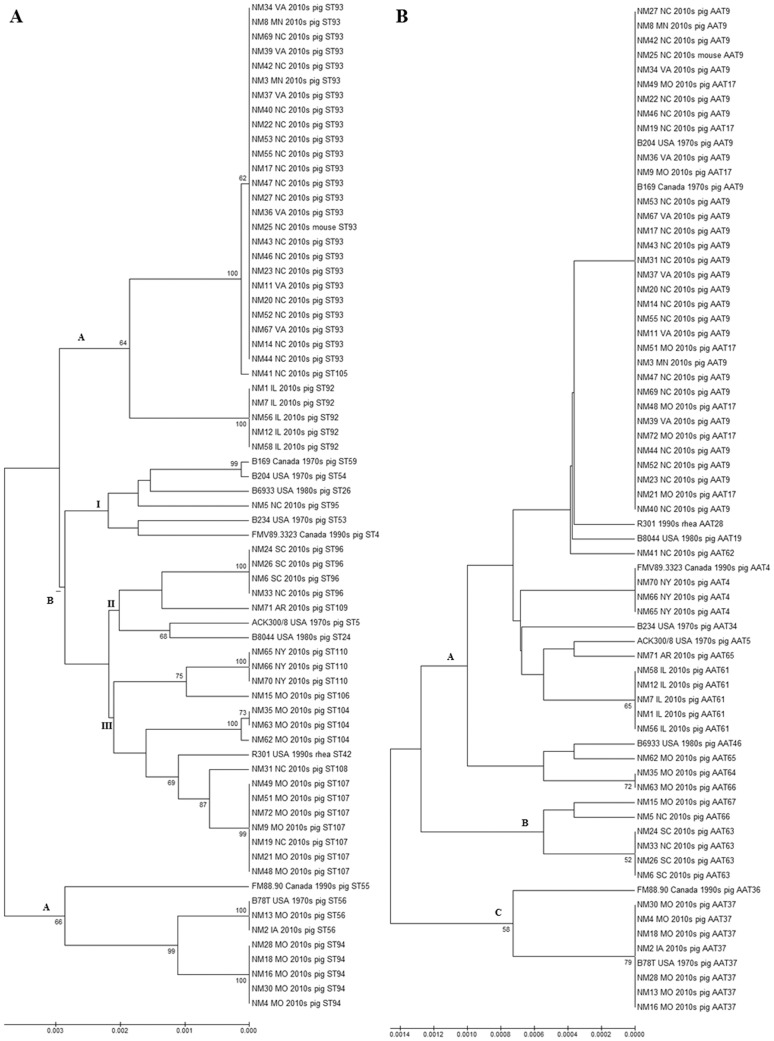
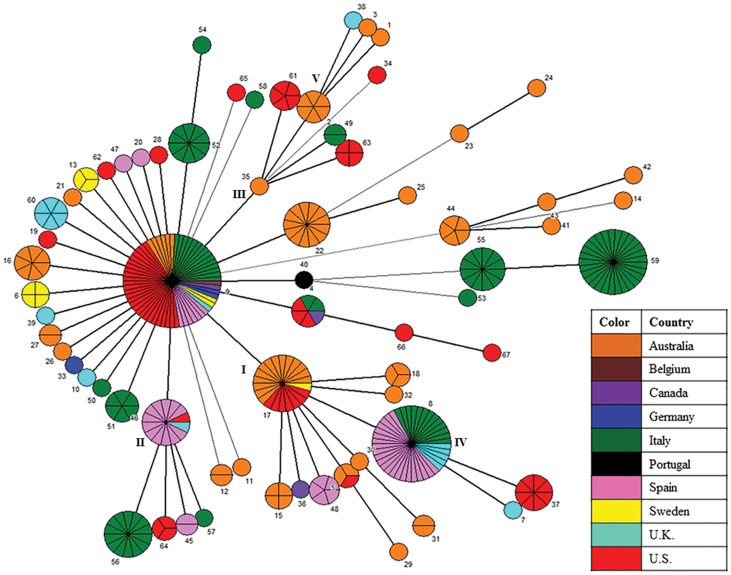
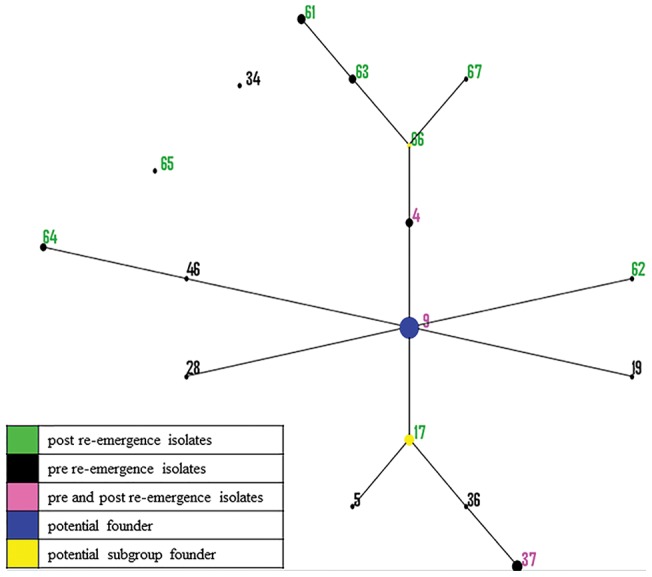
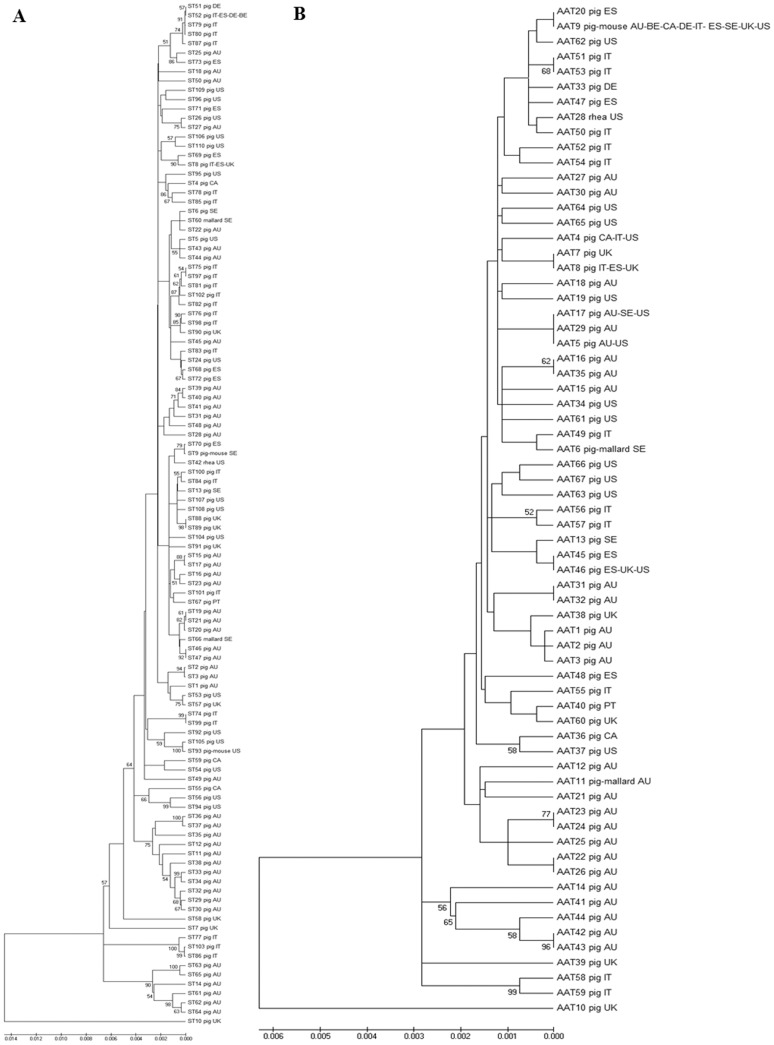
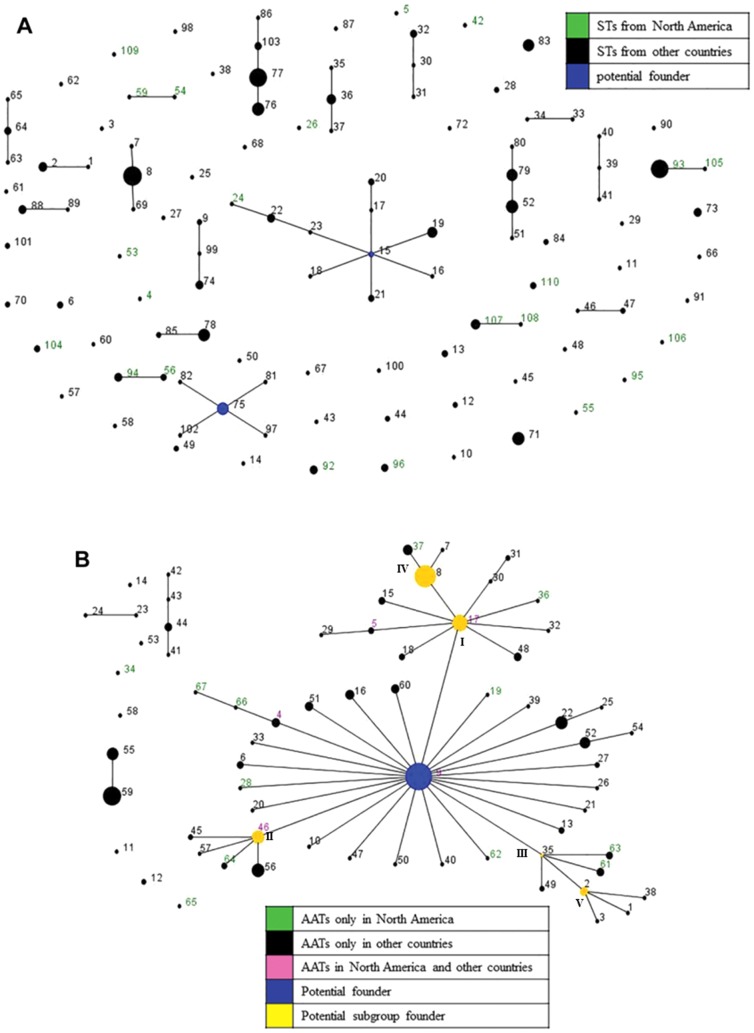
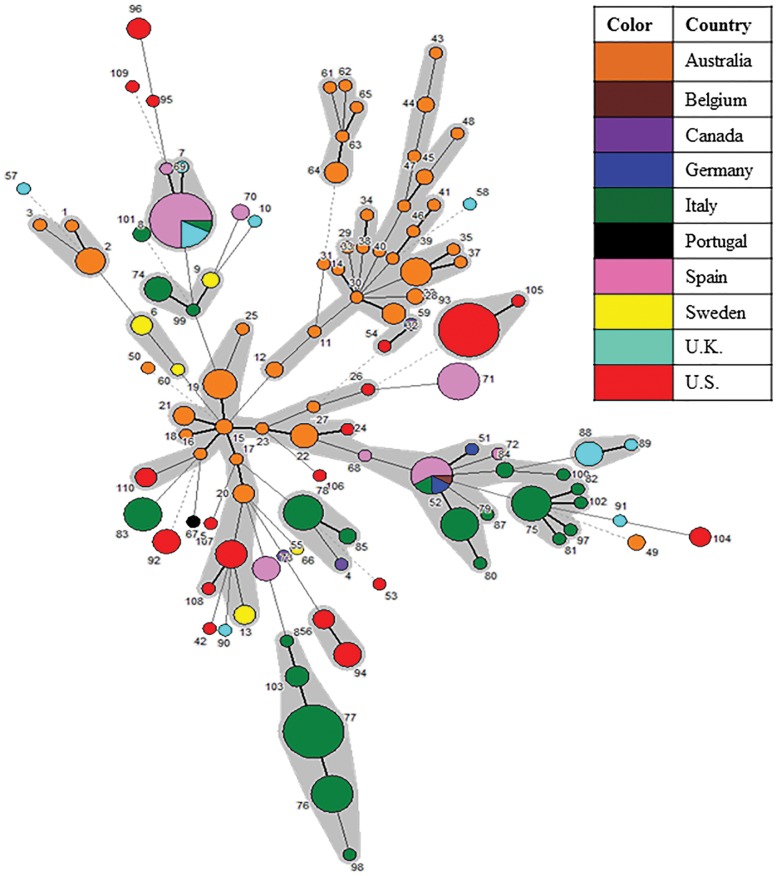
Outbreaks of mucohemorrhagic diarrhea in pigs caused by Brachyspira hyodysenteriae in the late 2000s indicated the re-emergence of Swine Dysentery (SD) in the U.S. Although the clinical disease was absent in the U.S. since the early 1990s, it continued to cause significant economic losses to other swine rearing countries worldwide. This study aims to fill the gap in knowledge pertaining to the re-emergence and epidemiology of B. hyodysenteriae in the U.S. and its global relationships using a multi-locus sequence typing (MLST) approach. Fifty-nine post re-emergent isolates originating from a variety of sources in the U.S. were characterized by MLST, analyzed for epidemiological relationships (within and between multiple sites of swine systems), and were compared with pre re-emergent isolates from the U.S. Information for an additional 272 global isolates from the MLST database was utilized for international comparisons. Thirteen nucleotide sequence types (STs) including a predominant genotype (ST93) were identified in the post re-emergent U.S. isolates; some of which showed genetic similarity to the pre re-emergent STs thereby suggesting its likely role in the re-emergence of SD. In the U.S., in general, no more than one ST was found on a site; multiple sites of a common system shared a ST; and STs found in the U.S. were distinct from those identified globally. Of the 110 STs characterized from ten countries, only two were found in more than one country. The U.S. and global populations, identified as clonal and heterogeneous based on STs, showed close relatedness based on amino acid types (AATs). One predicted founder type (AAT9) and multiple predicted subgroup founder types identified for both the U.S. and the global population indicate the potential microevolution of this pathogen. This study elucidates the strain diversity and microevolution of B. hyodysenteriae, and highlights the utility of MLST for epidemiological and surveillance studies.
21世纪末由猪痢疾短螺旋体引起的猪黏液出血性腹泻疫情表明猪痢疾(SD)在美国再度出现。尽管自20世纪90年代初以来美国未出现过该病的临床病例,但它仍继续给全球其他养猪国家造成重大经济损失。本研究旨在利用多位点序列分型(MLST)方法填补美国猪痢疾短螺旋体再度出现及其流行病学以及全球关系方面的知识空白。对59株源自美国各种来源的再度出现疫情后的分离株进行MLST分型,分析其流行病学关系(猪系统多个场所内部及之间),并与美国再度出现疫情前的分离株进行比较。另外还利用了来自MLST数据库的272株全球分离株的信息进行国际比较。在美国再度出现疫情后的分离株中鉴定出13种核苷酸序列类型(STs),包括一种主要基因型(ST93);其中一些与再度出现疫情前的STs显示出遗传相似性,从而表明其可能在猪痢疾再度出现中发挥作用。在美国,一般来说,一个场所发现的ST不超过一种;同一系统的多个场所共享一种ST;在美国发现的ST与全球鉴定出的ST不同。在从10个国家鉴定出的110种ST中,只有两种在不止一个国家被发现。基于STs鉴定为克隆性和异质性的美国和全球群体,基于氨基酸类型(AATs)显示出密切的相关性。为美国和全球群体鉴定出一种预测的始祖类型(AAT9)和多种预测的亚组始祖类型,表明该病原体具有潜在的微观进化。本研究阐明了猪痢疾短螺旋体的菌株多样性和微观进化,并突出了MLST在流行病学和监测研究中的实用性。