Division of Molecular Bacterial Epidemiology and Infectious Diseases, Institute of Veterinary Bacteriology, Vetsuisse Faculty, University of Bern, Bern, Switzerland.
Graduate School for Cellular and Biomedical Sciences, University of Bern, Bern, Switzerland.
BMC Genomics. 2022 Feb 15;23(1):131. doi: 10.1186/s12864-022-08347-5.
Brachyspira (B.) hyodysenteriae is a fastidious anaerobe spirochete that can cause swine dysentery, a severe mucohaemorragic colitis that affects pig production and animal welfare worldwide. In Switzerland, the population of B. hyodysenteriae is characterized by the predominance of macrolide-lincosamide-resistant B. hyodysenteriae isolates of sequence type (ST) ST196, prompting us to obtain deeper insights into the genomic structure and variability of ST196 using pangenome and whole genome variant analyses.
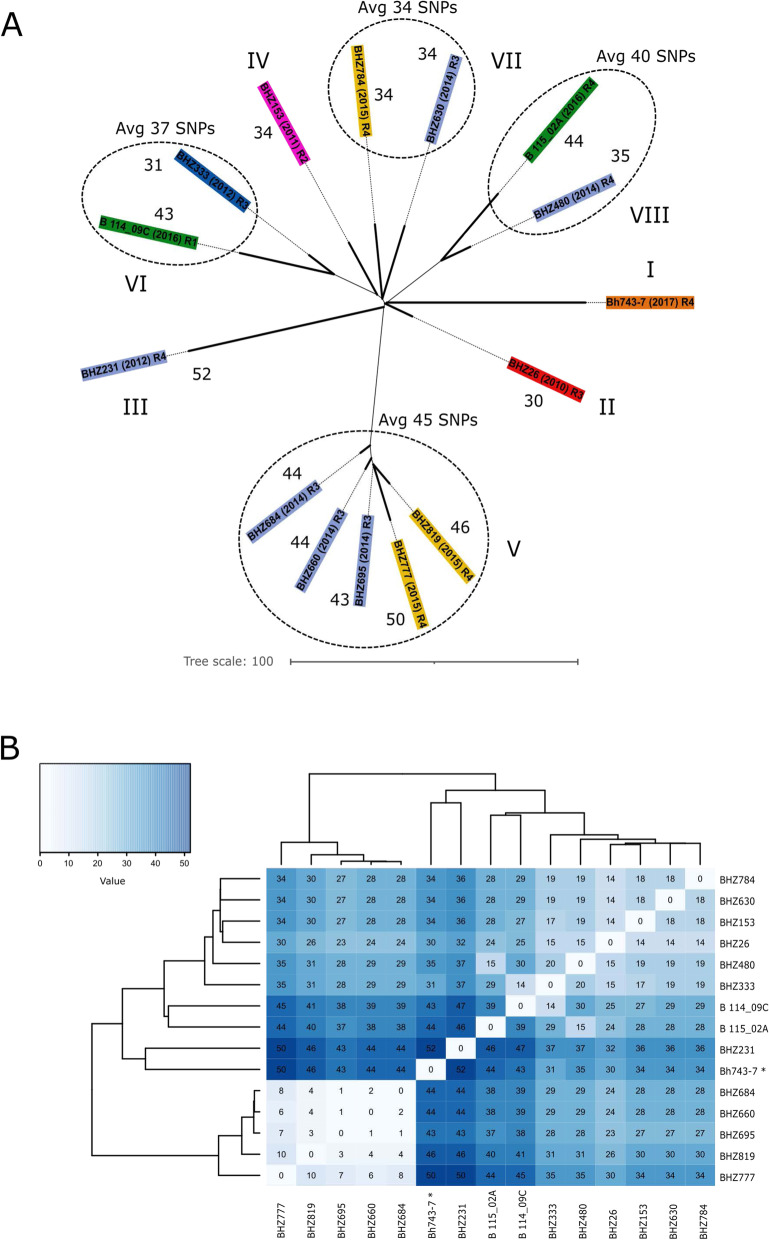
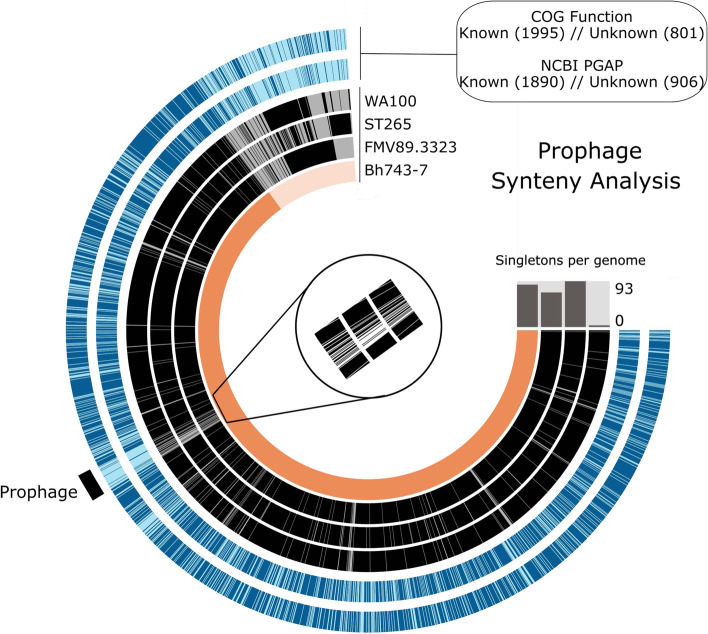
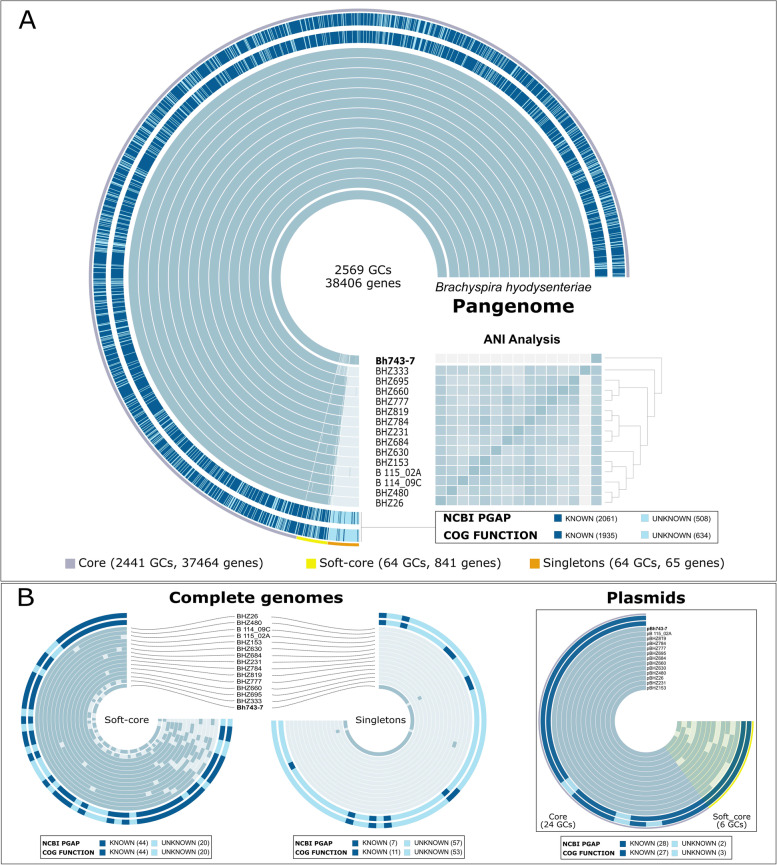
The draft genome of 14 B. hyodysenteriae isolates of ST196, sampled during a 7-year period from geographically distant pig herds, was obtained by whole-genome sequencing (WGS) and compared to the complete genome of the B. hyodysenteriae isolate Bh743-7 of ST196 used as reference. Variability results revealed the existence of 30 to 52 single nucleotide polymorphisms (SNPs), resulting in eight sublineages of ST196. The pangenome analysis led to the identification of a novel prophage, pphBhCH20, of the Siphoviridae family in a single isolate of ST196, which suggests that horizontal gene transfer events may drive changes in genomic structure.
This study contributes to the catalogue of publicly available genomes and provides relevant bioinformatic tools and information for further comparative genomic analyses for B. hyodysenteriae. It reveals that Swiss B. hyodysenteriae isolates of the same ST may have evolved independently over time by point mutations and acquisition of larger genetic elements. In line with this, the third type of mobile genetic element described so far in B. hyodysenteriae, the novel prophage pphBhCH20, has been identified in a single isolate of B. hyodysenteriae of ST196.
短螺旋体(B.)hyodysenteriae 是一种严格的厌氧菌螺旋体,可引起猪痢疾,这是一种严重的黏液性出血性结肠炎,影响全球猪的生产和动物福利。在瑞士,B. hyodysenteriae 的种群特征是主要存在大环内酯-林可酰胺耐药的 B. hyodysenteriae 分离株,其序列类型(ST)为 ST196,这促使我们通过泛基因组和全基因组变异分析深入了解 ST196 的基因组结构和变异性。
通过全基因组测序(WGS)获得了 14 株 ST196 短螺旋体分离株的草图基因组,这些分离株在 7 年内从地理上遥远的猪群中采样,并与用作参考的 ST196 短螺旋体 Bh743-7 完整基因组进行比较。变异结果显示存在 30 到 52 个单核苷酸多态性(SNP),导致 ST196 存在 8 个亚系。泛基因组分析导致在 ST196 的单个分离株中鉴定出一种新的 Siphoviridae 科的噬菌体 pphBhCH20,这表明水平基因转移事件可能导致基因组结构发生变化。
本研究为公开可用基因组目录做出了贡献,并为进一步的比较基因组分析提供了相关的生物信息学工具和信息。它表明,同一 ST 的瑞士短螺旋体分离株可能随着时间的推移通过点突变和获得更大的遗传元件而独立进化。与此一致,迄今为止在 B. hyodysenteriae 中描述的第三种移动遗传元件,新型噬菌体 pphBhCH20,已在 ST196 的单个 B. hyodysenteriae 分离株中鉴定出来。