
匈牙利本地肥猪曼加利察猪的基因组测序与分析
Genome sequencing and analysis of Mangalica, a fatty local pig of Hungary.
作者信息
Molnár János, Nagy Tibor, Stéger Viktor, Tóth Gábor, Marincs Ferenc, Barta Endre
机构信息
Agricultural Genomics and Bioinformatics Group, Agricultural Biotechnology Institute, NARIC, Gödöllő, Hungary.
出版信息
BMC Genomics. 2014 Sep 5;15(1):761. doi: 10.1186/1471-2164-15-761.
BACKGROUND
Mangalicas are fatty type local/rare pig breeds with an increasing presence in the niche pork market in Hungary and in other countries. To explore their genetic resources, we have analysed data from next-generation sequencing of an individual male from each of three Mangalica breeds along with a local male Duroc pig. Structural variations, such as SNPs, INDELs and CNVs, were identified and particular genes with SNP variations were analysed with special emphasis on functions related to fat metabolism in pigs.
RESULTS
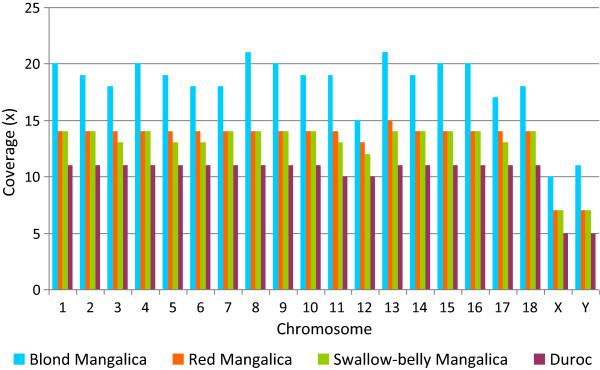
More than 60 Gb of sequence data were generated for each of the sequenced individuals, resulting in 11× to 19× autosomal median coverage. After stringent filtering, around six million SNPs, of which approximately 10% are novel compared to the dbSNP138 database, were identified in each animal. Several hundred thousands of INDELs and about 1,000 CNV gains were also identified. The functional annotation of genes with exonic, non-synonymous SNPs, which are common in all three Mangalicas but are absent in either the reference genome or the sequenced Duroc of this study, highlighted 52 genes in lipid metabolism processes. Further analysis revealed that 41 of these genes are associated with lipid metabolic or regulatory pathways, 49 are in fat-metabolism and fatness-phenotype QTLs and, with the exception of ACACA, ANKRD23, GM2A, KIT, MOGAT2, MTTP, FASN, SGMS1, SLC27A6 and RETSAT, have not previously been associated with fat-related phenotypes.
CONCLUSIONS
Genome analysis of Mangalica breeds revealed that local/rare breeds could be a rich source of sequence variations not present in cosmopolitan/industrial breeds. The identified Mangalica variations may, therefore, be a very useful resource for future studies of agronomically important traits in pigs.
背景
曼加利察猪是脂肪型本地/稀有猪种,在匈牙利及其他国家的小众猪肉市场中所占份额日益增加。为了探索它们的遗传资源,我们分析了来自三个曼加利察猪品种的个体雄性以及一头本地杜洛克猪的下一代测序数据。识别出了单核苷酸多态性(SNP)、插入缺失(INDEL)和拷贝数变异(CNV)等结构变异,并对具有SNP变异的特定基因进行了分析,特别关注与猪脂肪代谢相关的功能。
结果
每个测序个体产生了超过60Gb的序列数据,常染色体中位数覆盖率达到11倍至19倍。经过严格筛选,在每只动物中鉴定出约600万个SNP,其中约有10%相对于dbSNP138数据库是新发现的。还鉴定出了数十万的INDEL和约1000个CNV增益。对在所有三个曼加利察猪品种中均常见但在本研究的参考基因组或测序杜洛克猪中不存在的具有外显子、非同义SNP的基因进行功能注释,突出了52个参与脂质代谢过程的基因。进一步分析表明,这些基因中有4个与脂质代谢或调控途径相关,49个位于脂肪代谢和肥胖表型数量性状位点(QTL)中,并且除了乙酰辅酶A羧化酶α(ACACA)、锚蛋白重复结构域23(ANKRD23)、GM2神经节苷脂激活蛋白(GM2A)、原癌基因c-Kit(KIT)、甘油二酯酰基转移酶(MOGAT2)、微粒体甘油三酯转运蛋白(MTTP)、脂肪酸合酶(FASN)、鞘脂单糖磷酸合酶1(SGMS1)、溶质载体家族27成员6(SLC27A6)和肉碱软脂酰转移酶1(RETSAT)外,以前均未与脂肪相关表型相关联。
结论
曼加利察猪品种的基因组分析表明,本地/稀有品种可能是世界性/工业品种中不存在的序列变异的丰富来源。因此,所鉴定出的曼加利察猪变异可能是未来猪重要农艺性状研究的非常有用的资源。



 Zotero 插件