State Key Laboratory of Swine Genetic Improvement and Production Technology, Jiangxi Agricultural University, Nanchang 330045, China.
State Key Laboratory of Swine Genetic Improvement and Production Technology, Jiangxi Agricultural University, Nanchang 330045, China.
Genomics Proteomics Bioinformatics. 2022 Dec;20(6):1040-1052. doi: 10.1016/j.gpb.2022.02.001. Epub 2022 Feb 16.
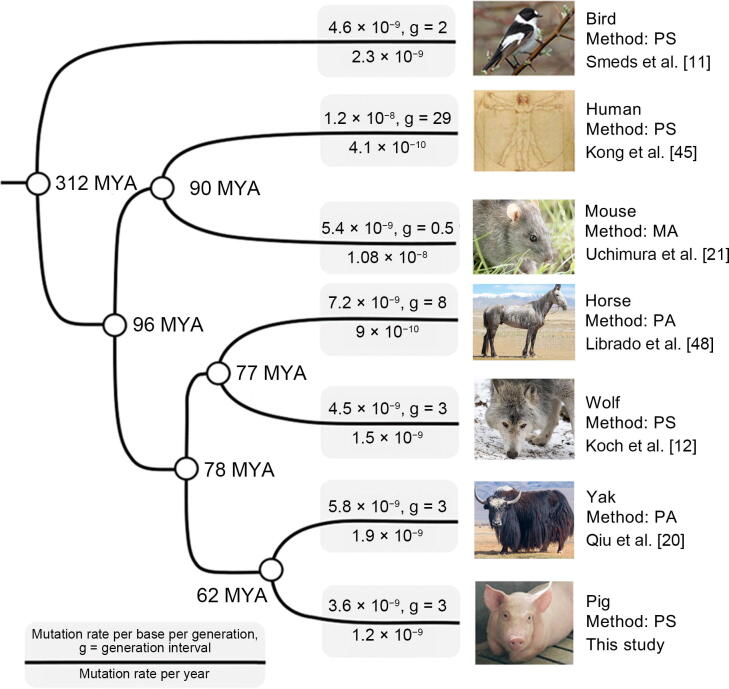
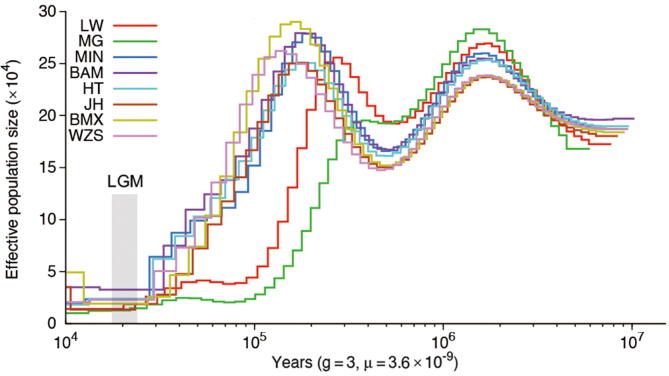
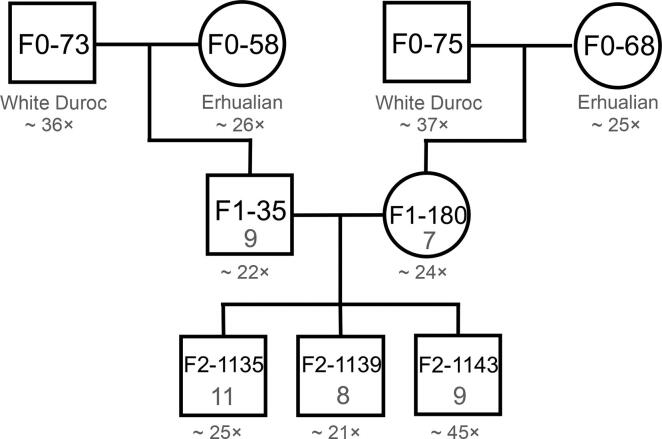
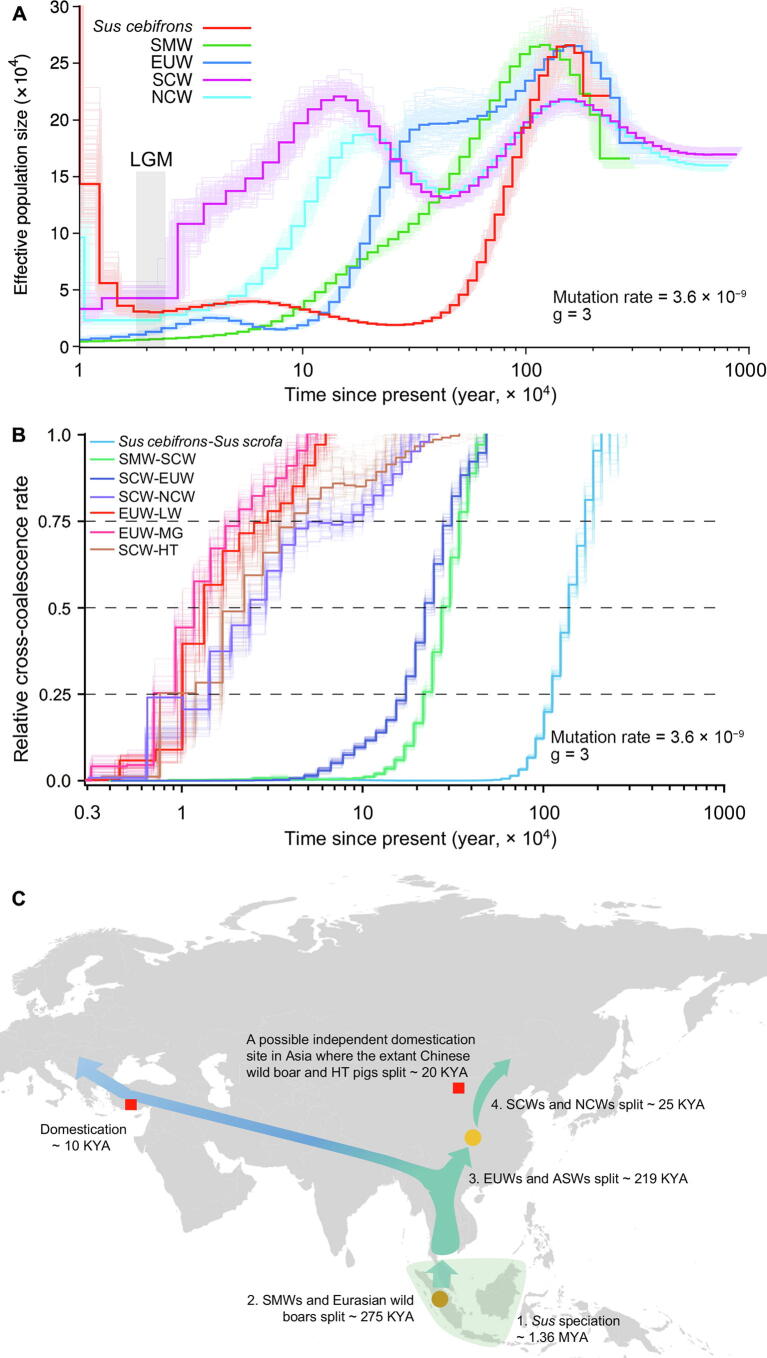
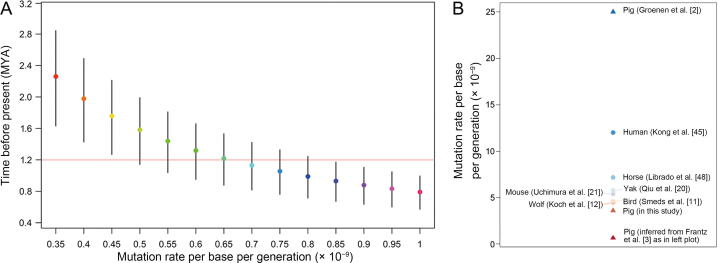
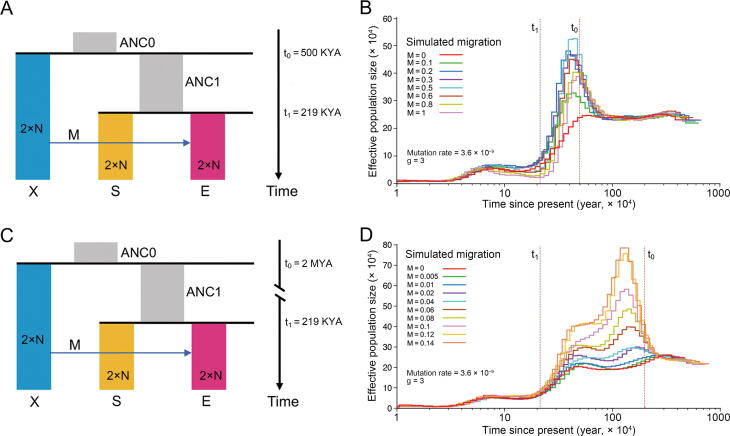
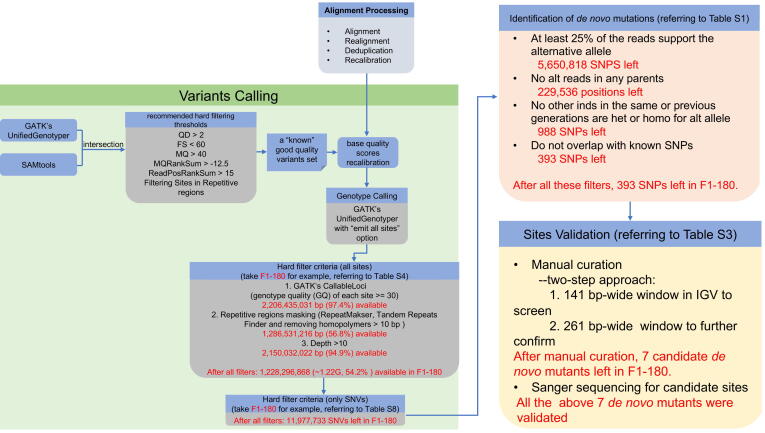
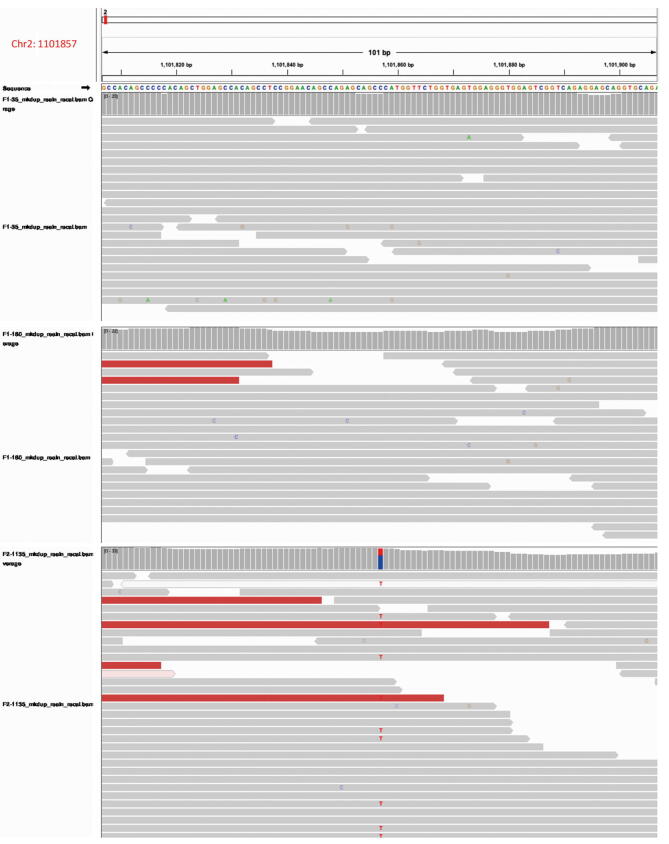
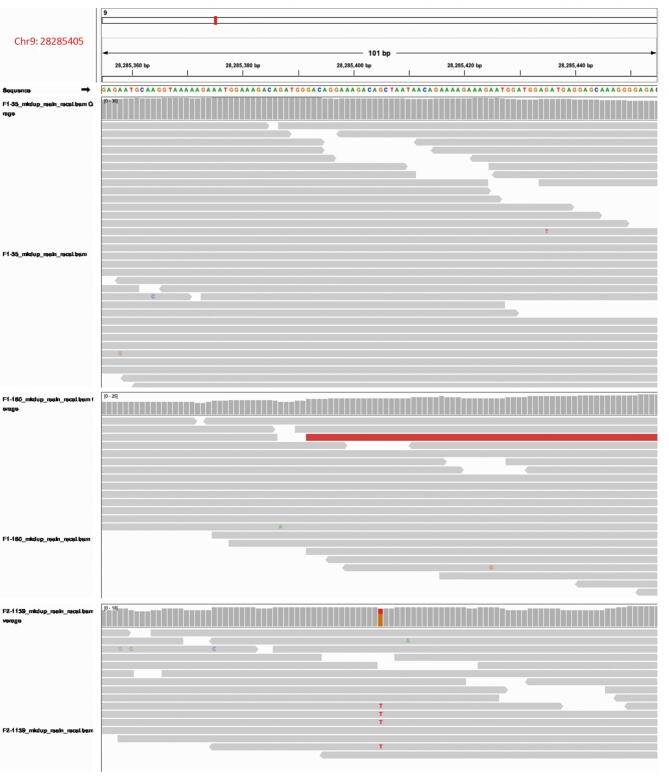
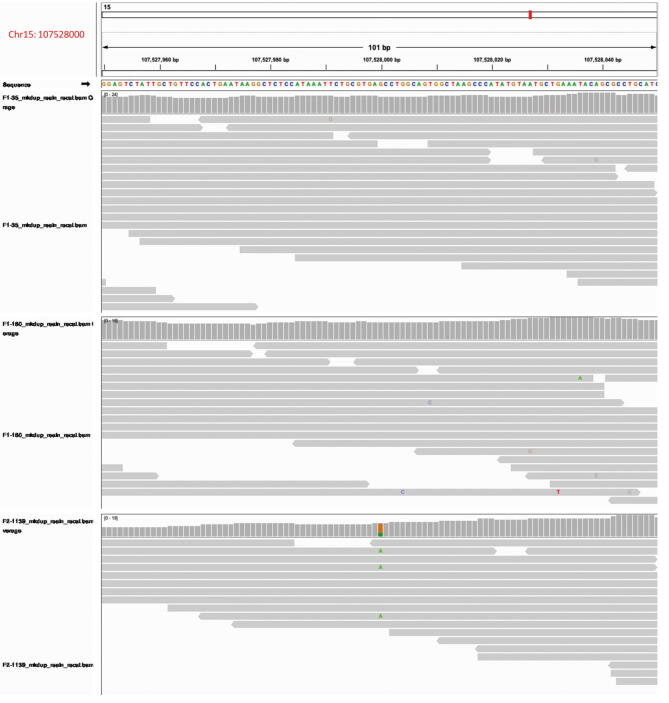
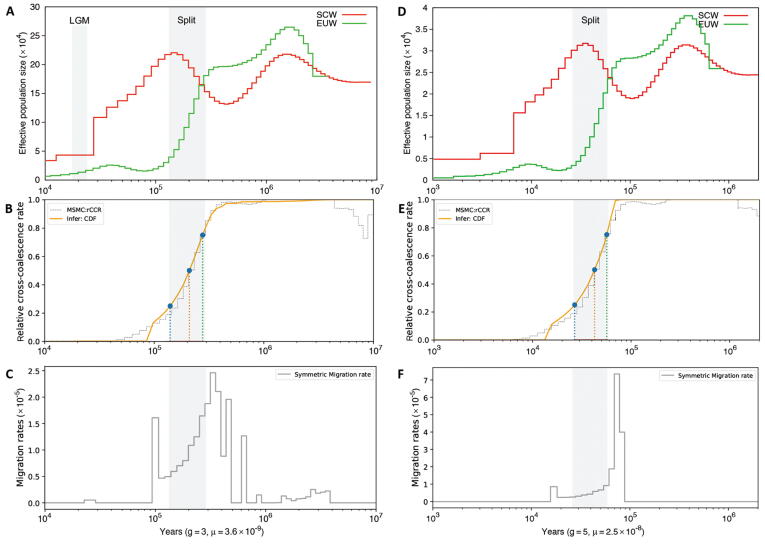
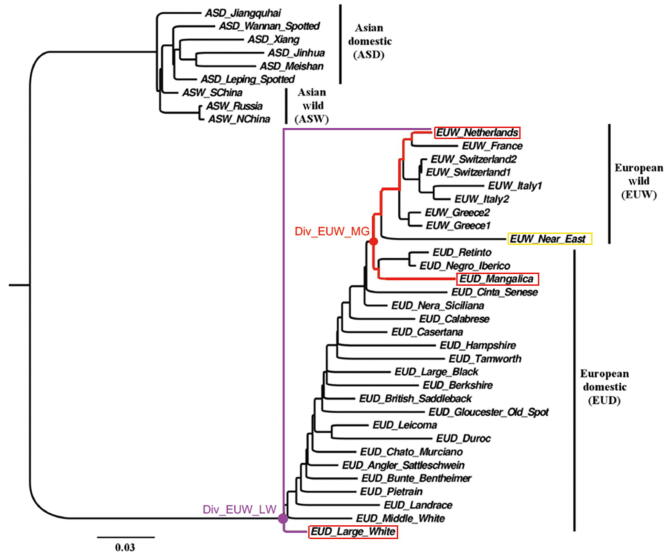
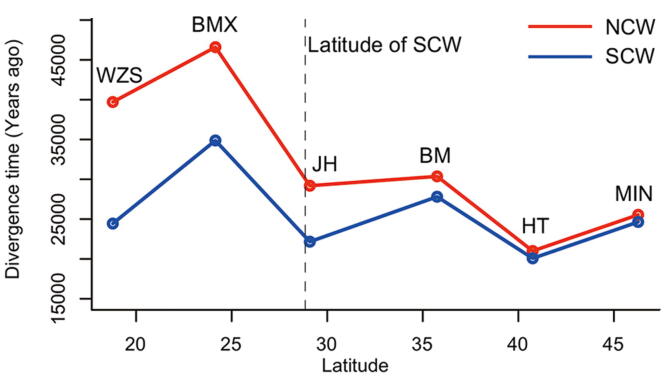
The mutation rate used in the previous analyses of pig evolution and demographics was cursory and hence invited potential bias in inferring evolutionary history. Herein, we estimated the de novo mutation rate of pigs as 3.6 × 10 per base per generation using high-quality whole-genome sequencing data from nine individuals in a three-generation pedigree through stringent filtering and validation. Using this mutation rate, we re-investigated the evolutionary history of pigs. The estimated divergence time of ∼ 10 kiloyears ago (KYA) between European wild and domesticated pigs was consistent with the domestication time of European pigs based on archaeological evidence. However, other divergence events inferred here were not as ancient as previously described. Our estimates suggest that Sus speciation occurred ∼ 1.36 million years ago (MYA); European wild pigs split from Asian wild pigs only ∼ 219 KYA; and south and north Chinese wild pigs split ∼ 25 KYA. Meanwhile, our results showed that the most recent divergence event between Chinese wild and domesticated pigs occurred in the Hetao Plain, northern China, approximately 20 KYA, supporting the possibly independent domestication in northern China along the middle Yellow River. We also found that the maximum effective population size of pigs was ∼ 6 times larger than estimated before. An archaic migration from other Sus species originating ∼ 2 MYA to European pigs was detected during western colonization of pigs, which may affect the accuracy of previous demographic inference. Our de novo mutation rate estimation and its consequences for demographic history inference reasonably provide a new vision regarding the evolutionary history of pigs.
先前关于猪进化和种群动态的分析中使用的突变率是粗略的,因此可能会对推断进化历史产生潜在的偏差。在这里,我们使用严格筛选和验证的三代家系中 9 个个体的高质量全基因组测序数据,估计猪的从头突变率为 3.6×10⁻⁹ 个碱基/代。利用这个突变率,我们重新研究了猪的进化历史。欧洲野猪和驯化猪之间约 10 千年前(KYA)的估计分化时间与基于考古证据的欧洲猪驯化时间一致。然而,这里推断的其他分化事件并不像以前描述的那样古老。我们的估计表明,Sus 物种分化发生在约 136 万年前(MYA);欧洲野猪与亚洲野猪的分化仅发生在约 219 KYA;中国南方和北方的野猪大约在 25 KYA 分化。同时,我们的研究结果表明,中国野猪和驯化猪之间最近的分化事件发生在中国北方的河套平原,大约在 20 KYA,支持了中国北方沿黄河中游独立驯化的可能性。我们还发现,猪的最大有效种群规模比之前估计的大约 6 倍。在猪的西部殖民化过程中,检测到了起源于约 2 MYA 的其他 Sus 物种的古老迁移,这可能会影响之前人口推断的准确性。我们的从头突变率估计及其对人口历史推断的影响,为猪的进化历史提供了一个新的视角。