Department of Surgery, University of Minnesota, Minneapolis, MN.
Department of Food Science and Nutrition, University of Minnesota, Minneapolis, MN; Geriatric Research and Clinical Center (GRECC), Minneapolis Veterans Affairs Health Care System (VAHCS), Minneapolis, MN.
J Surg Res. 2015 Jan;193(1):15-21. doi: 10.1016/j.jss.2014.08.003. Epub 2014 Aug 8.
We have previously shown that mitochondrial uncoupling protein-2 (UCP-2) is increased in a swine model of hibernating myocardium (HM). Although UCP-2 reduces oxidant stress, it can promote inefficiency of the electron transport chain. In this study, we tested whether UCP-2 remains increased in revascularized HM (RHM) after coronary artery bypass grafting (CABG).
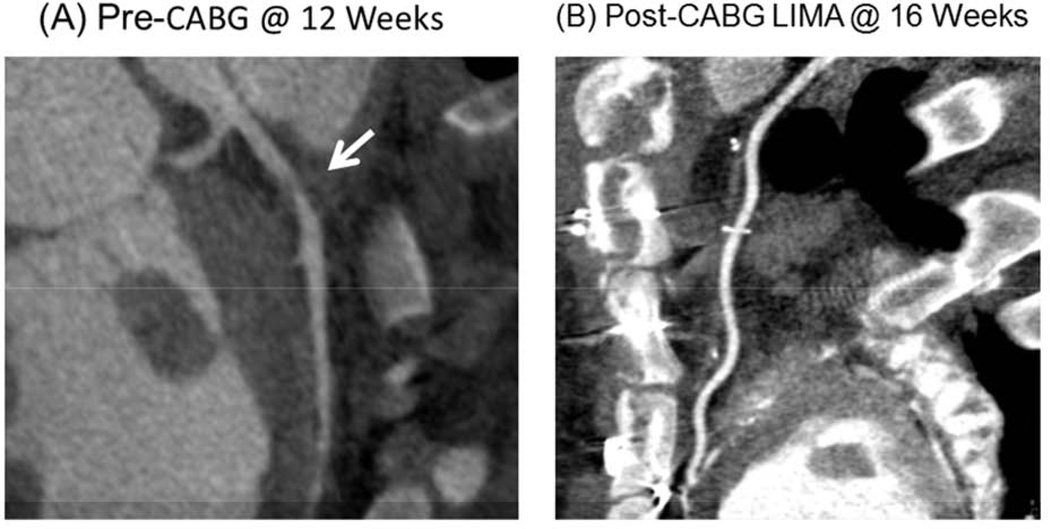
Seven swine underwent thoracotomy with placement of a constrictor on the left anterior descending artery (LAD). Twelve weeks later, a left internal mammary artery graft was placed on the distal LAD. Four weeks post-CABG, computed tomography angiography documented patent grafts and function. At the terminal study, blood flow to the LAD and remote territories were assessed during high dose dobutamine and mitochondria isolated from both regions for analysis. Comparisons were made to a group of swine with HM who underwent constrictor placement without bypass grafting (n = 4).
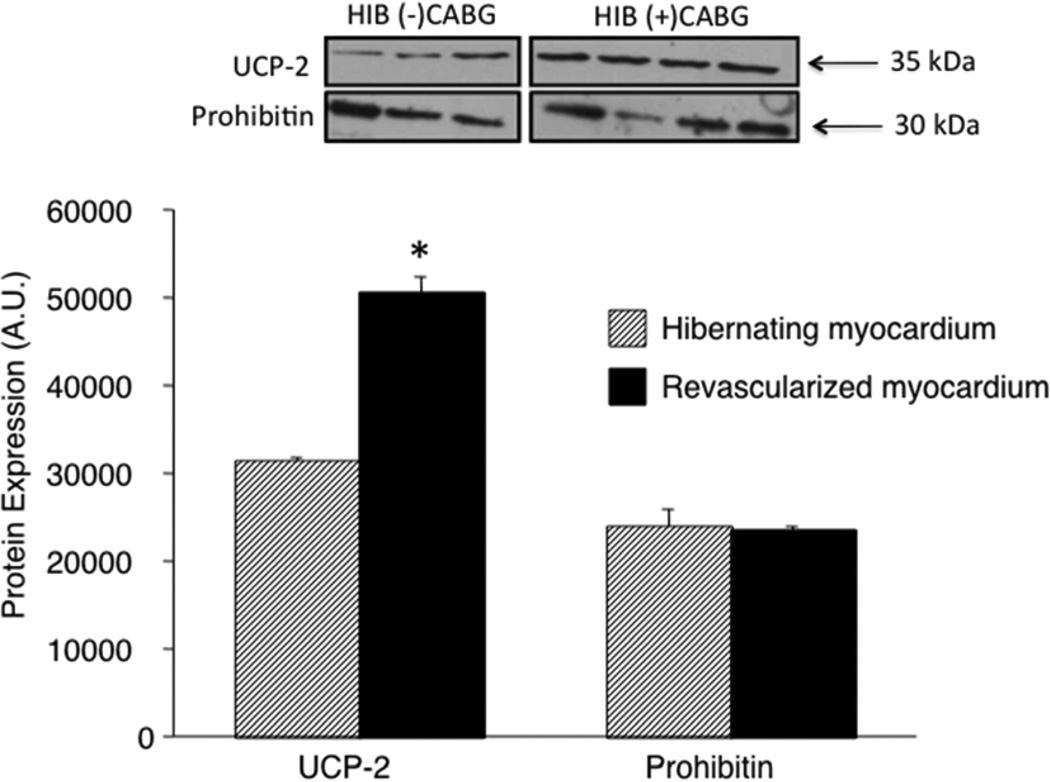
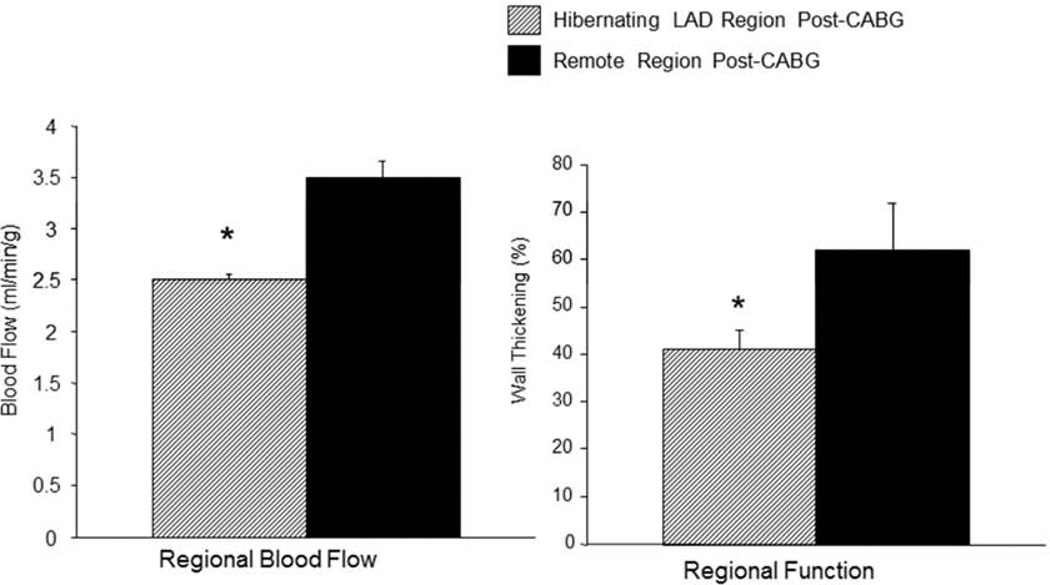
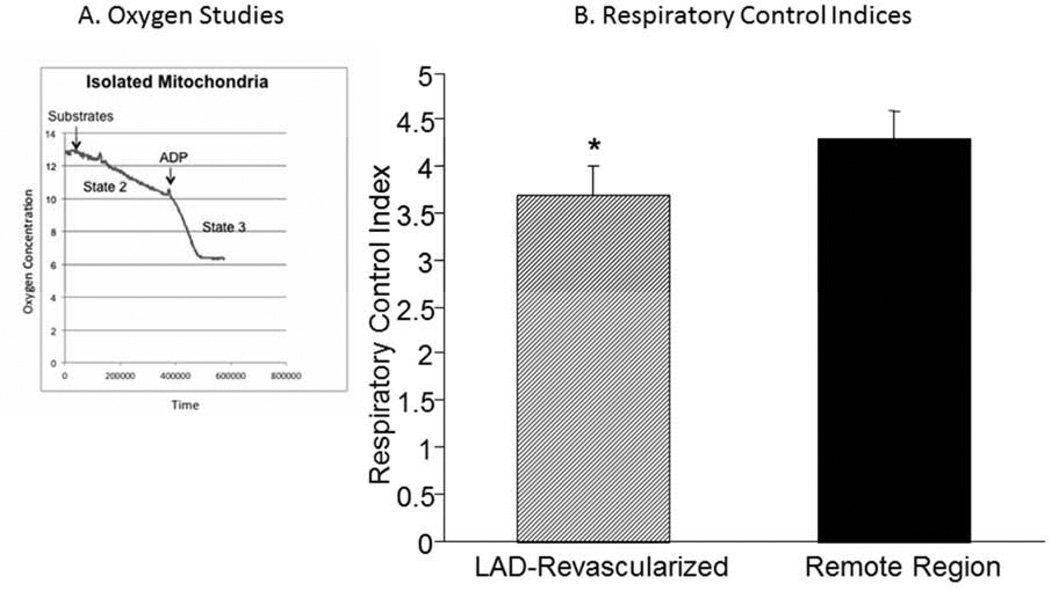
During dobutamine infusion, RHM demonstrated lower blood flows (2.44 ± 0.23 versus 3.43 ± 0.30 mL/min/g; P < 0.05) and reduced wall thickening (33 ± 9% versus 52 ± 13%; P < 0.05) compared with remote regions. RHM had lower respiratory control indices (3.7 ± 0.3 versus 4.3 ± 0.4; P < 0.05) with persistently increased UCP-2 content.
Despite patent grafts, RHM demonstrates a submaximal response to dobutamine infusion and increased mitochondrial UCP-2 expression. These data support the notion that recovery of the mitochondria in RHM is delayed early post-CABG and may contribute to impaired oxygen consumption and contractile reserve during catecholamine challenges.
我们之前的研究表明,在冬眠心肌(HM)的猪模型中,线粒体解偶联蛋白 2(UCP-2)增加。虽然 UCP-2 减少了氧化应激,但它可以降低电子传递链的效率。在这项研究中,我们测试了冠状动脉旁路移植术(CABG)后再血管化的 HM(RHM)中 UCP-2 是否仍然增加。
七头猪接受了开胸手术,并在左前降支(LAD)上放置了一个收缩器。12 周后,将左内乳动脉移植物放置在 LAD 的远端。CABG 后 4 周,通过计算机断层扫描血管造影术记录了通畅的移植物和功能。在终末研究中,在高剂量多巴酚丁胺输注期间评估 LAD 和远程区域的血流,并且从两个区域分离线粒体进行分析。与未进行旁路移植术的 HM 猪(n=4)的一组进行了比较。
在多巴酚丁胺输注期间,RHM 的血流较低(2.44±0.23 与 3.43±0.30 mL/min/g;P<0.05),并且壁增厚减少(33±9%与 52±13%;P<0.05)与远程区域相比。RHM 的呼吸控制指数较低(3.7±0.3 与 4.3±0.4;P<0.05),但 UCP-2 含量持续增加。
尽管移植的血管通畅,但 RHM 对多巴酚丁胺输注的反应仍然不足,并且线粒体 UCP-2 的表达增加。这些数据支持这样的观点,即 CABG 后早期 RHM 中的线粒体恢复延迟,并且可能导致儿茶酚胺挑战期间耗氧量和收缩储备受损。