Abooali Maryam, Lall Gurprit S, Coughlan Karen, Lall Harjinder S, Gibbs Bernhard F, Sumbayev Vadim V
School of Pharmacy, University of Kent, Chatham Maritime, ME4 4TB, United Kingdom.
Sci Rep. 2014 Sep 9;4:6307. doi: 10.1038/srep06307.
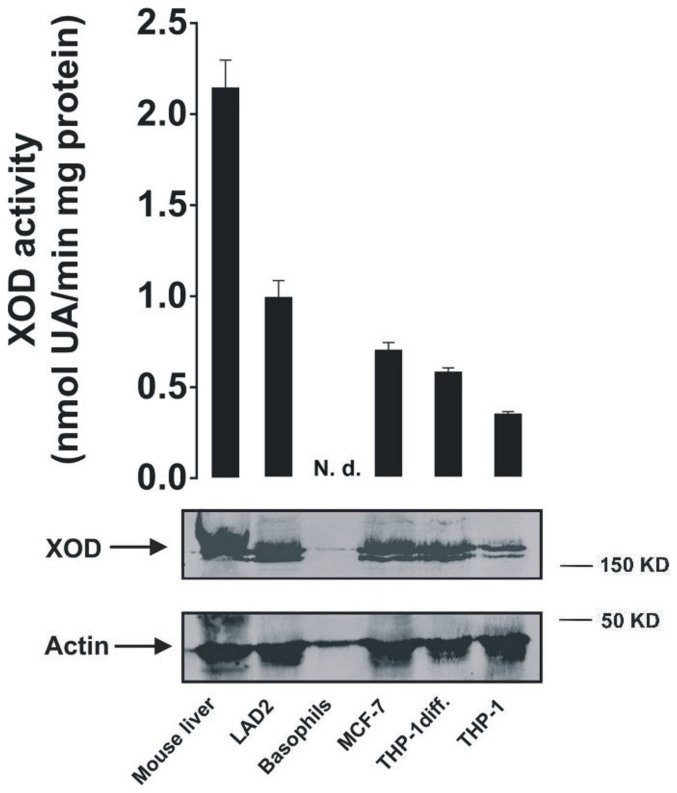
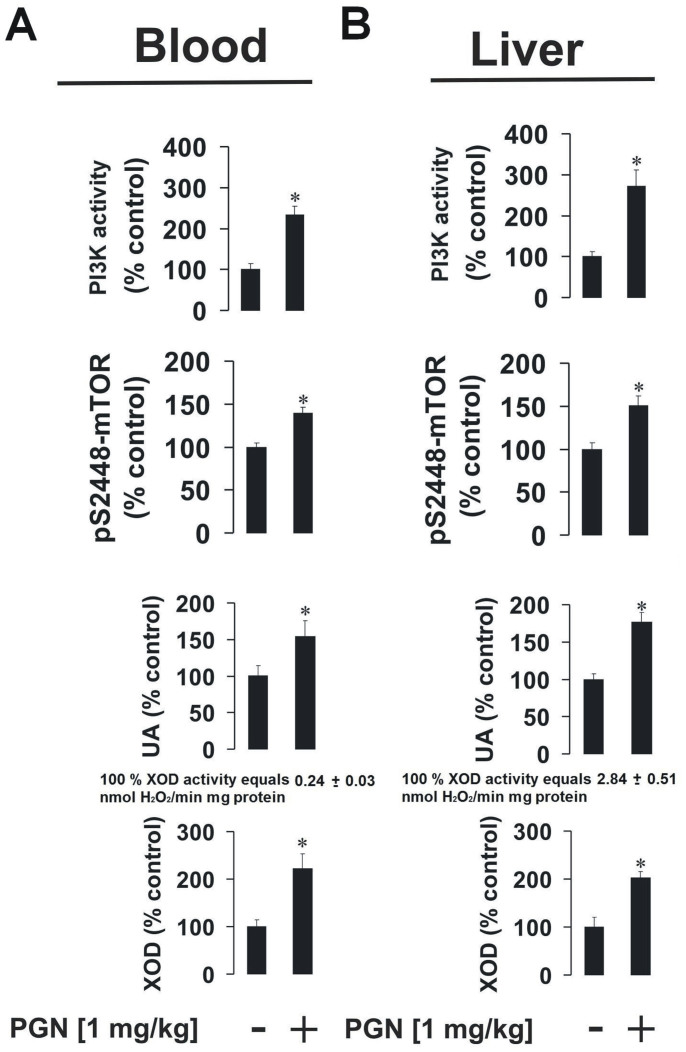
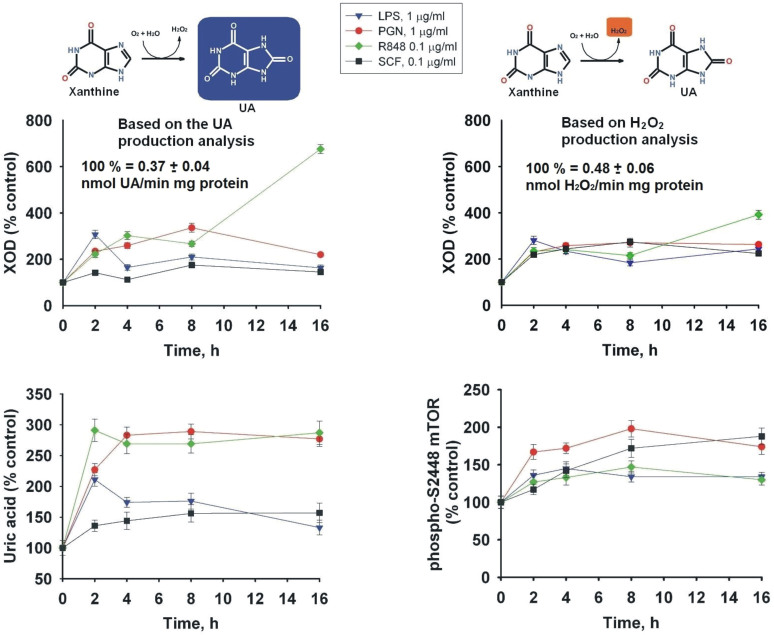
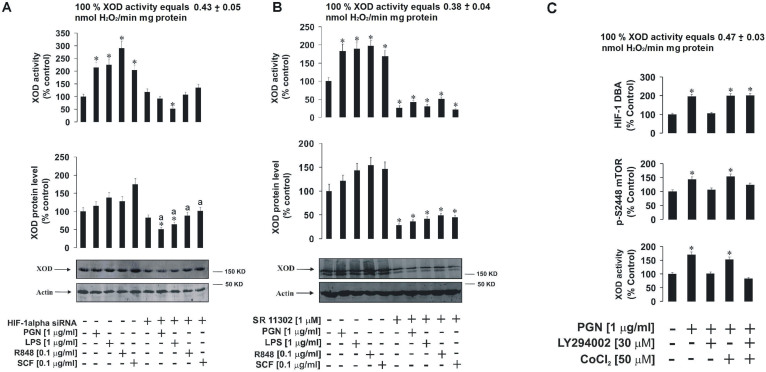
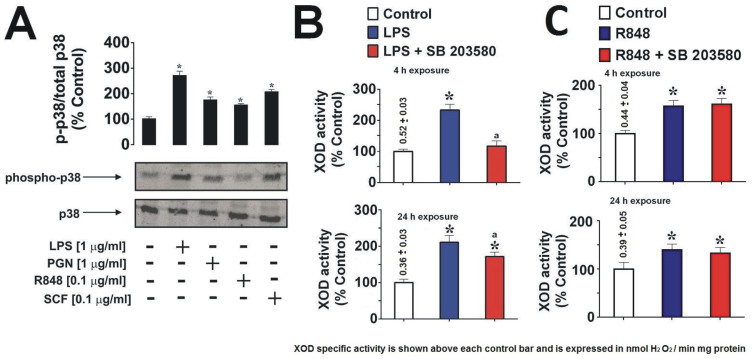
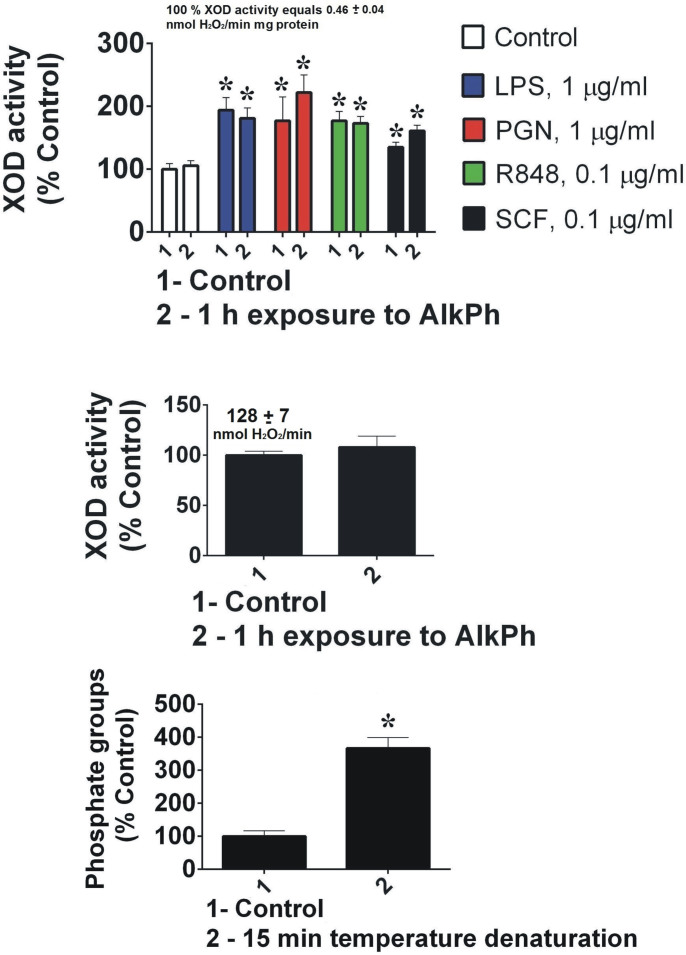
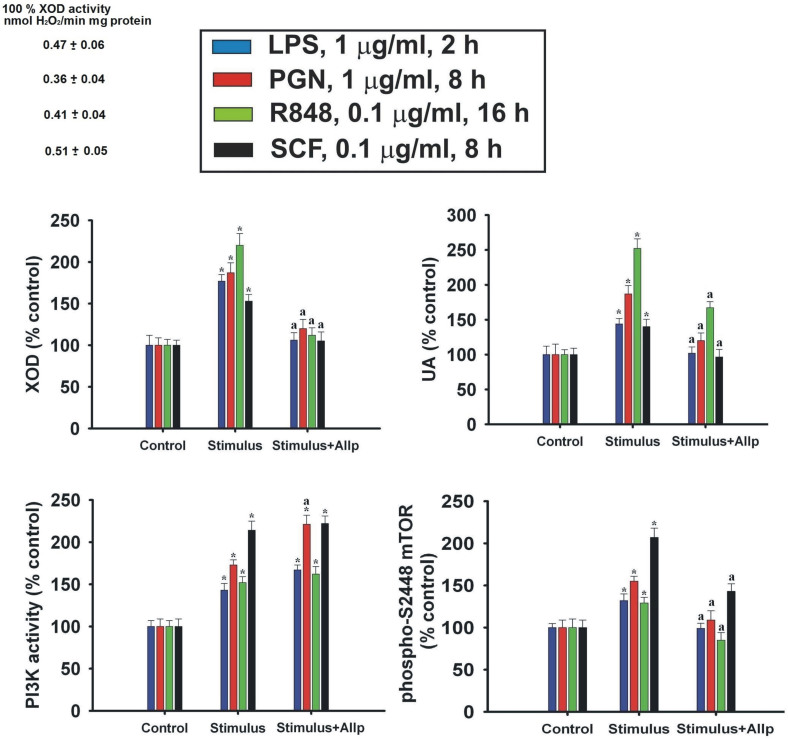
Xanthine oxidase (XOD) is an enzyme which plays a central role in purine catabolism by converting hypoxanthine into xanthine and then further into uric acid. Here we report that XOD is activated in THP-1 human myeloid cells in response to pro-inflammatory and growth factor stimulation. This effect occurred following stimulation of THP-1 cells with ligands of plasma membrane associated TLRs 2 and 4, endosomal TLRs 7 and 8 as well as stem cell growth factor (SCF). Hypoxia-inducible factor 1 (HIF-1) and activator protein 1 (AP-1) transcription complexes were found to be responsible for XOD upregulation. Importantly, the mammalian target of rapamycin (mTOR), a major myeloid cell translation regulator, was also found to be essential for XOD activation. Specific inhibition of XOD by allopurinol and sodium tungstate led to an increase in intracellular AMP levels triggering downregulation of mTOR activation by phosphorylation of its T2446 residue. Taken together, our results demonstrate for the first time that XOD is not only activated by pro-inflammatory stimuli or SCF but also plays an important role in maintaining mTOR-dependent translational control during the biological responses of human myeloid cells.
黄嘌呤氧化酶(XOD)是一种在嘌呤分解代谢中起核心作用的酶,它可将次黄嘌呤转化为黄嘌呤,然后进一步转化为尿酸。在此我们报告,在促炎和生长因子刺激下,XOD在THP-1人髓细胞中被激活。在用质膜相关的Toll样受体2和4、内体Toll样受体7和8以及干细胞生长因子(SCF)的配体刺激THP-1细胞后,出现了这种效应。发现缺氧诱导因子1(HIF-1)和激活蛋白1(AP-1)转录复合物是XOD上调的原因。重要的是,雷帕霉素的哺乳动物靶点(mTOR),一种主要的髓细胞翻译调节因子,也被发现对XOD激活至关重要。别嘌呤醇和钨酸钠对XOD的特异性抑制导致细胞内AMP水平升高,通过其T2446残基的磷酸化触发mTOR激活的下调。综上所述,我们的结果首次证明,XOD不仅被促炎刺激或SCF激活,而且在人类髓细胞的生物学反应过程中,在维持mTOR依赖性翻译控制方面发挥重要作用。