Qin Zhenpeng, Balasubramanian Saravana Kumar, Wolkers Willem F, Pearce John A, Bischof John C
Department of Mechanical Engineering, University of Minnesota, 111 Church St. SE, Minneapolis, MN, 55455, USA.
Ann Biomed Eng. 2014 Dec;42(12):2392-404. doi: 10.1007/s10439-014-1100-y. Epub 2014 Sep 10.
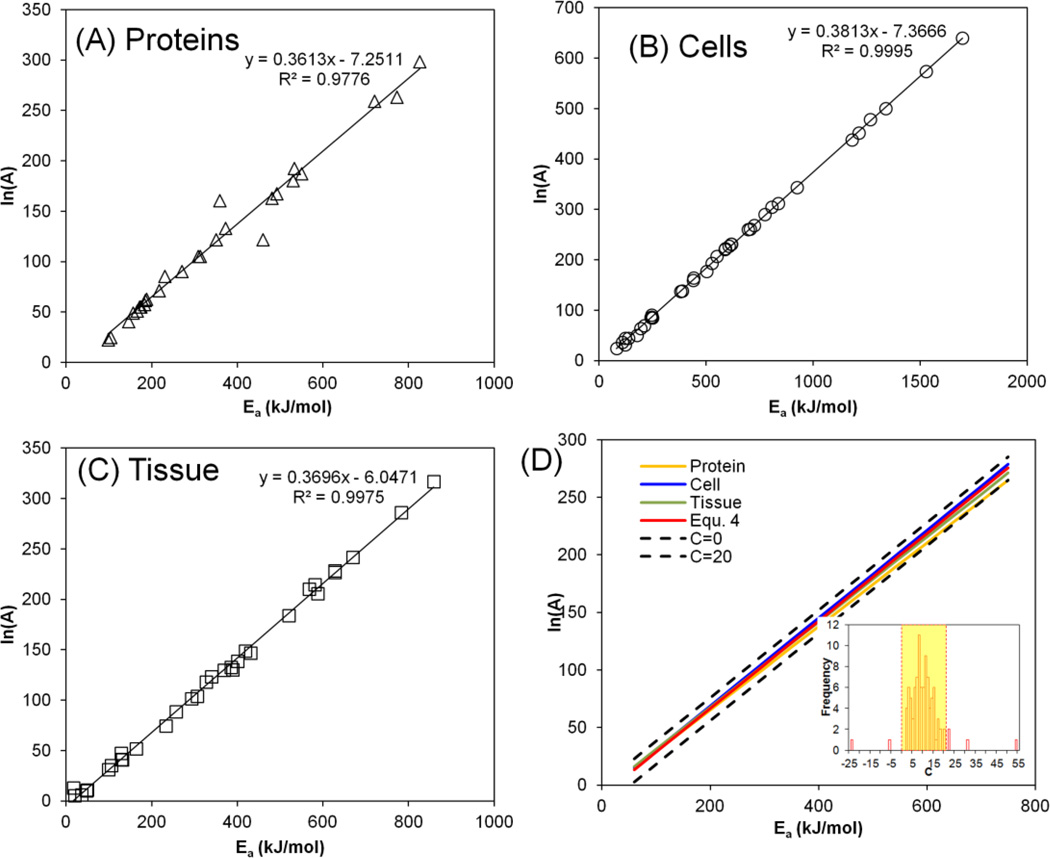
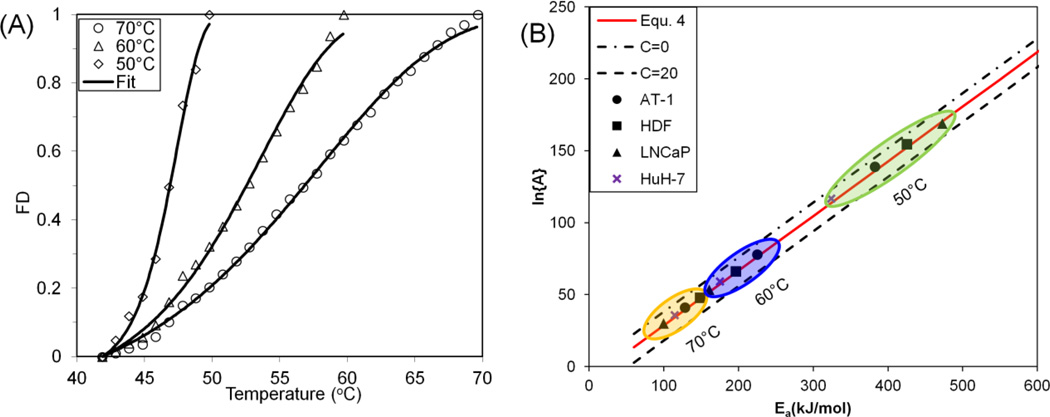
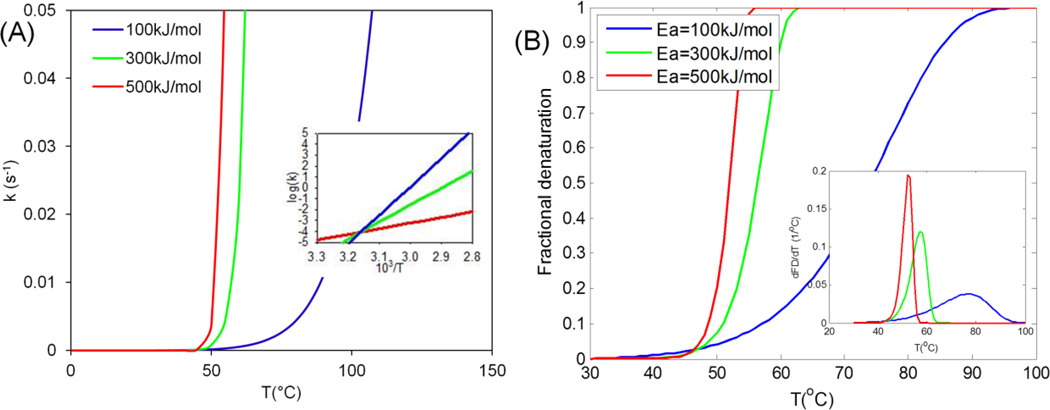
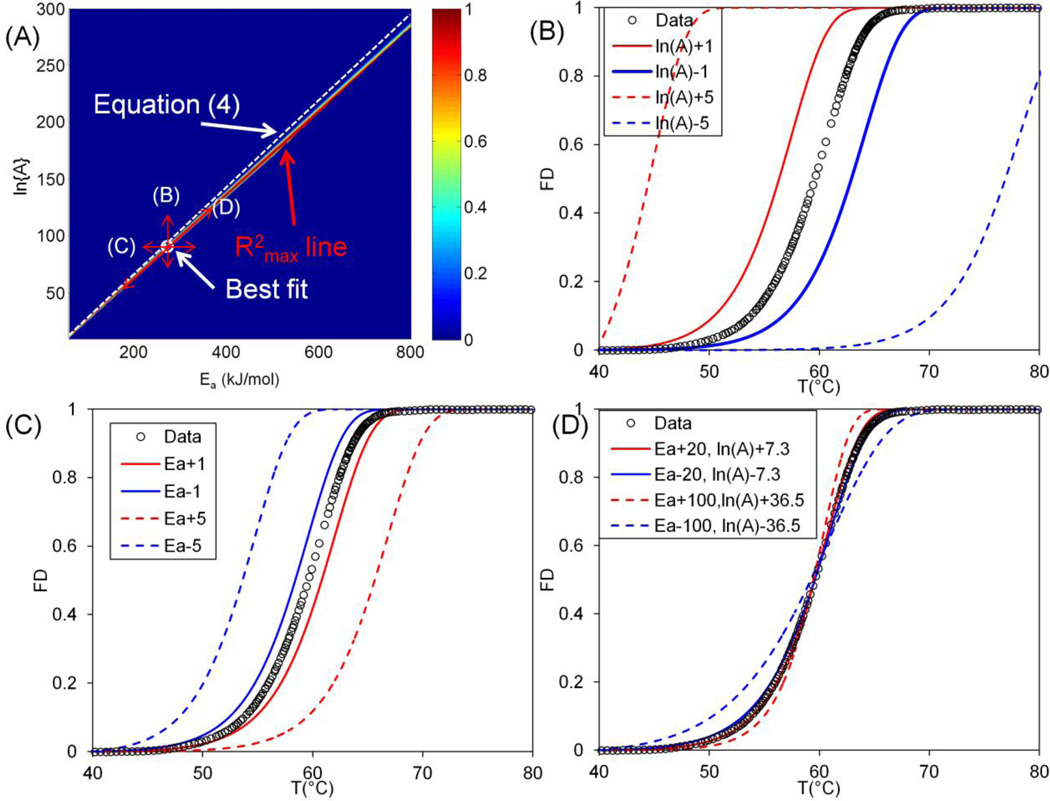
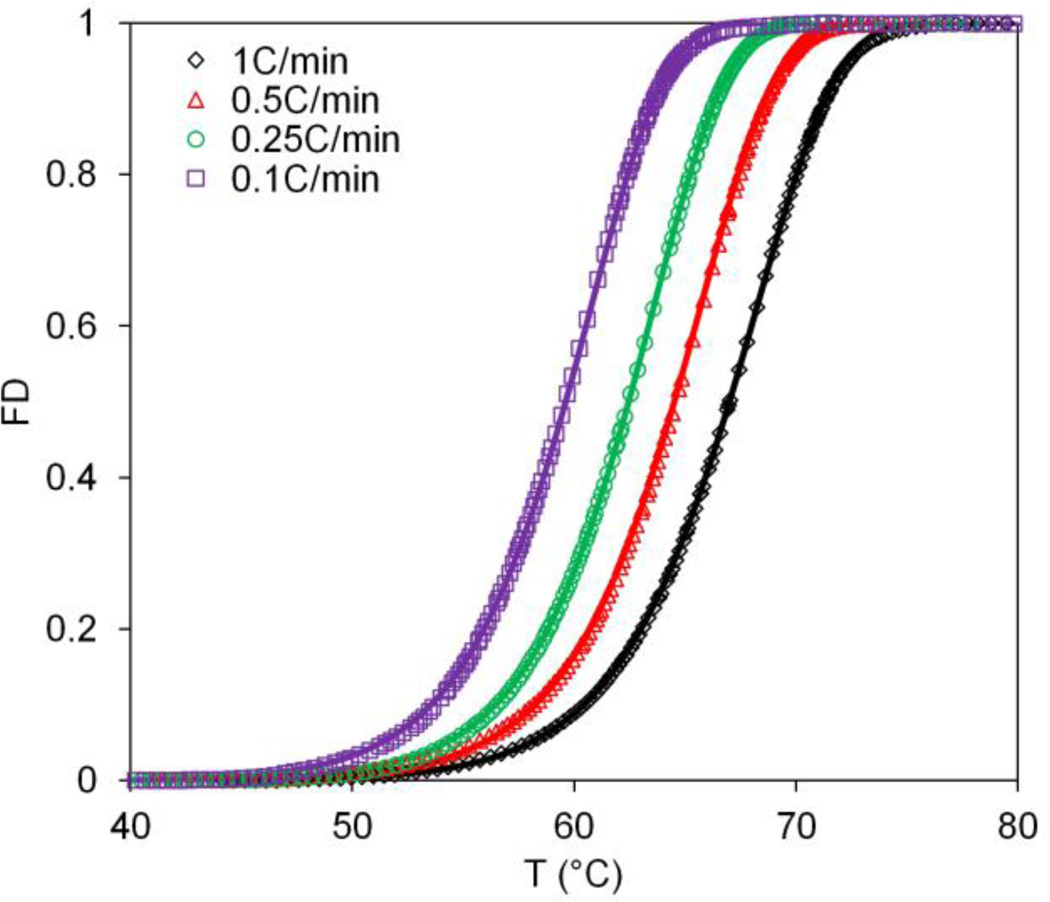
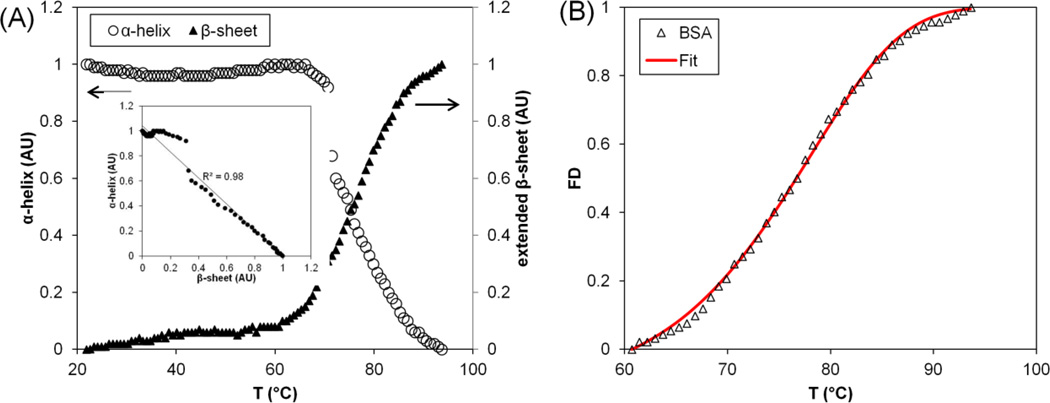
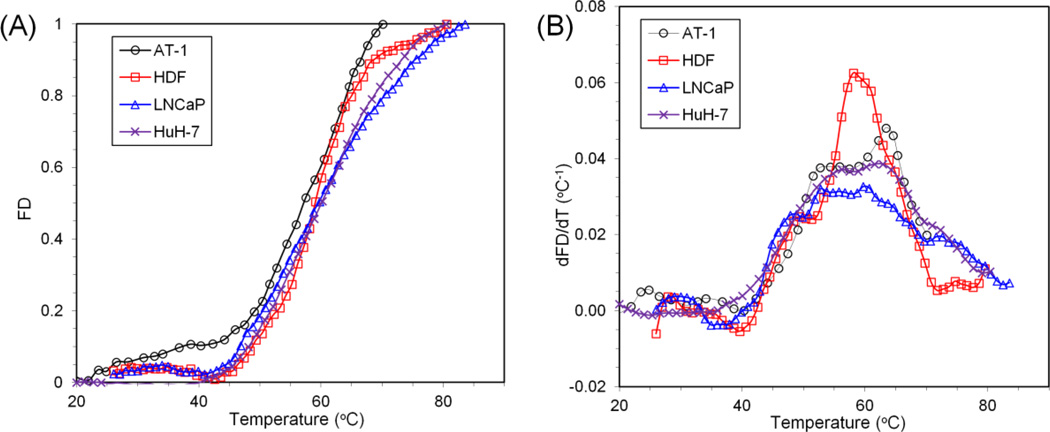
Thermal denaturation of proteins is critical to cell injury, food science and other biomaterial processing. For example protein denaturation correlates strongly with cell death by heating, and is increasingly of interest in focal thermal therapies of cancer and other diseases at temperatures which often exceed 50 °C. The Arrhenius model is a simple yet widely used model for both protein denaturation and cell injury. To establish the utility of the Arrhenius model for protein denaturation at 50 °C and above its sensitivities to the kinetic parameters (activation energy E a and frequency factor A) were carefully examined. We propose a simplified correlated parameter fit to the Arrhenius model by treating E a, as an independent fitting parameter and allowing A to follow dependently. The utility of the correlated parameter fit is demonstrated on thermal denaturation of proteins and cells from the literature as a validation, and new experimental measurements in our lab using FTIR spectroscopy to demonstrate broad applicability of this method. Finally, we demonstrate that the end-temperature within which the denaturation is measured is important and changes the kinetics. Specifically, higher E a and A parameters were found at low end-temperature (50 °C) and reduce as end-temperatures increase to 70 °C. This trend is consistent with Arrhenius parameters for cell injury in the literature that are significantly higher for clonogenics (45-50 °C) vs. membrane dye assays (60-70 °C). Future opportunities to monitor cell injury by spectroscopic measurement of protein denaturation are discussed.
蛋白质的热变性对于细胞损伤、食品科学及其他生物材料加工至关重要。例如,蛋白质变性与加热导致的细胞死亡密切相关,并且在癌症及其他疾病的局部热疗中越来越受关注,这些热疗的温度常常超过50°C。阿伦尼乌斯模型是一种简单却被广泛应用于蛋白质变性和细胞损伤的模型。为了确定阿伦尼乌斯模型在50°C及以上温度下对蛋白质变性的适用性,我们仔细研究了其对动力学参数(活化能Ea和频率因子A)的敏感性。我们提出了一种简化的相关参数拟合方法,将Ea作为独立的拟合参数,让A随之变化。通过对文献中蛋白质和细胞热变性的研究验证了相关参数拟合的实用性,并在我们实验室利用傅里叶变换红外光谱法进行的新实验测量中证明了该方法的广泛适用性。最后,我们证明了测量变性的终温很重要,它会改变动力学。具体而言,在低温终温(50°C)时发现较高的Ea和A参数,随着终温升高到70°C,这些参数会降低。这一趋势与文献中细胞损伤的阿伦尼乌斯参数一致,即克隆原测定(45 - 50°C)的参数明显高于膜染料测定(60 - 70°C)。文中还讨论了未来通过蛋白质变性的光谱测量来监测细胞损伤的机会。