McLaughlin Richard N, Young Janet M, Yang Lei, Neme Rafik, Wichman Holly A, Malik Harmit S
Division of Basic Sciences, Fred Hutchinson Cancer Research Center, Seattle, Washington, United States of America.
Department of Biological Sciences & Institute for Bioinformatics and Evolutionary Studies, University of Idaho, Moscow, Idaho, United States of America.
PLoS Genet. 2014 Sep 11;10(9):e1004531. doi: 10.1371/journal.pgen.1004531. eCollection 2014 Sep.
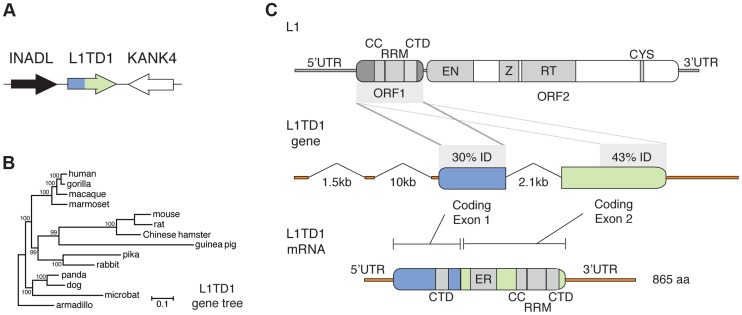
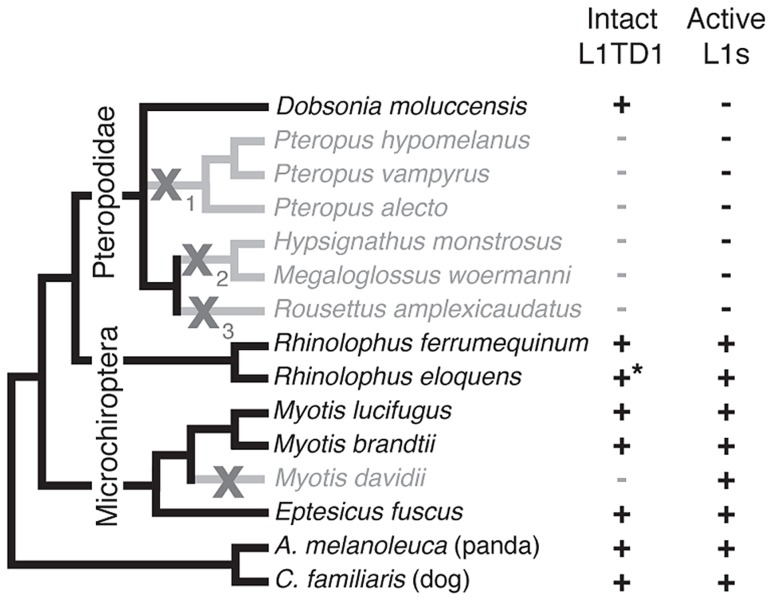
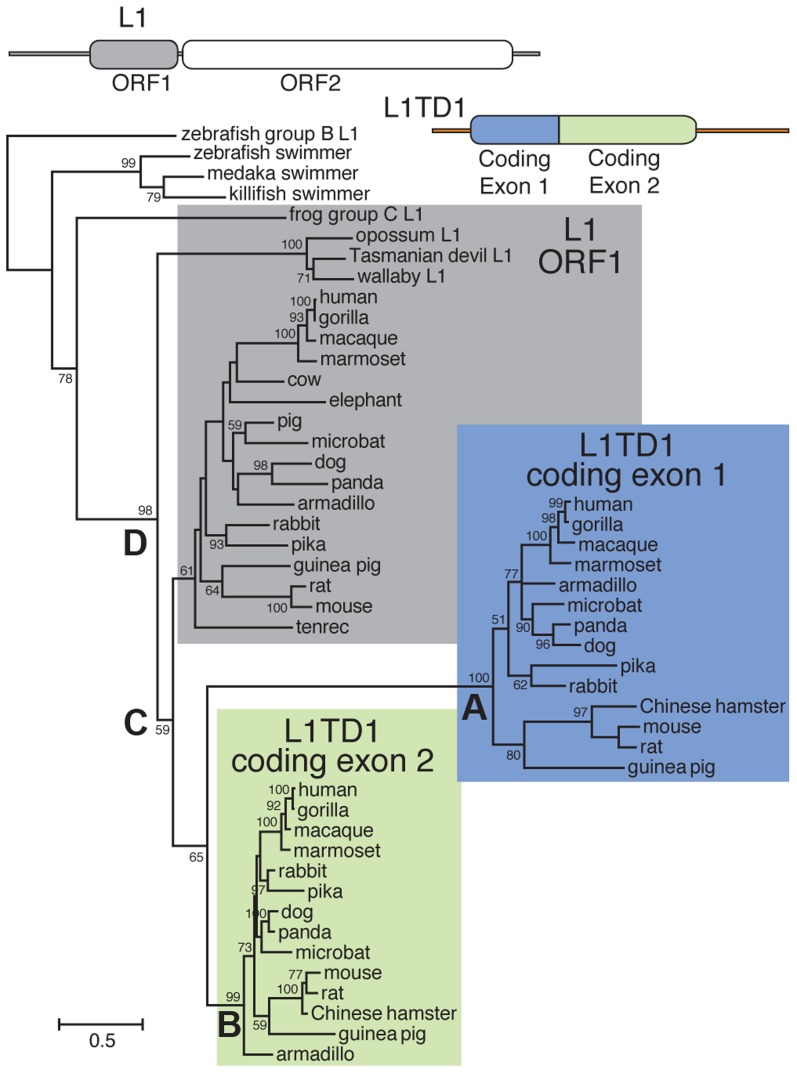
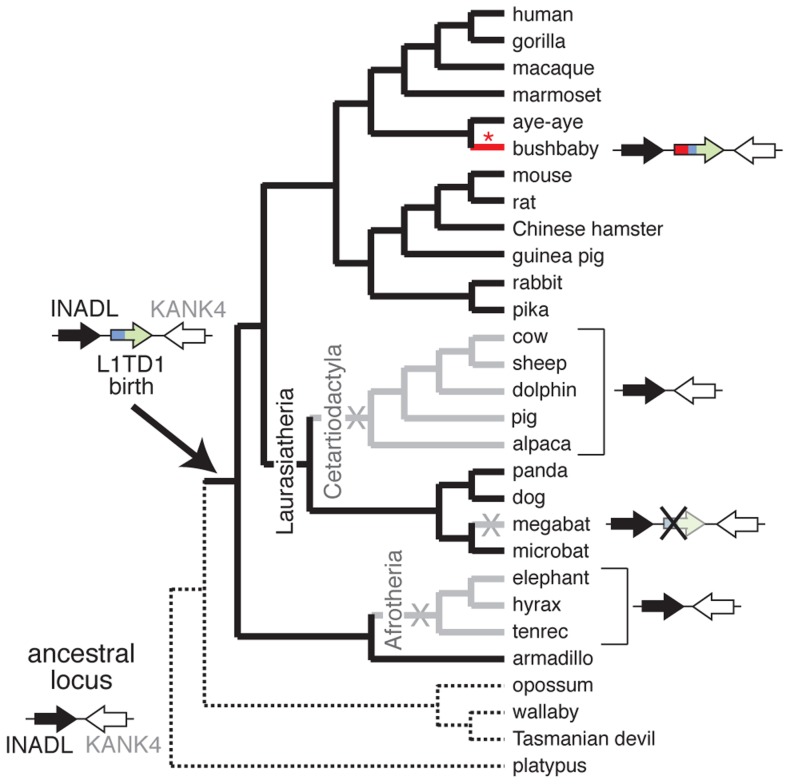
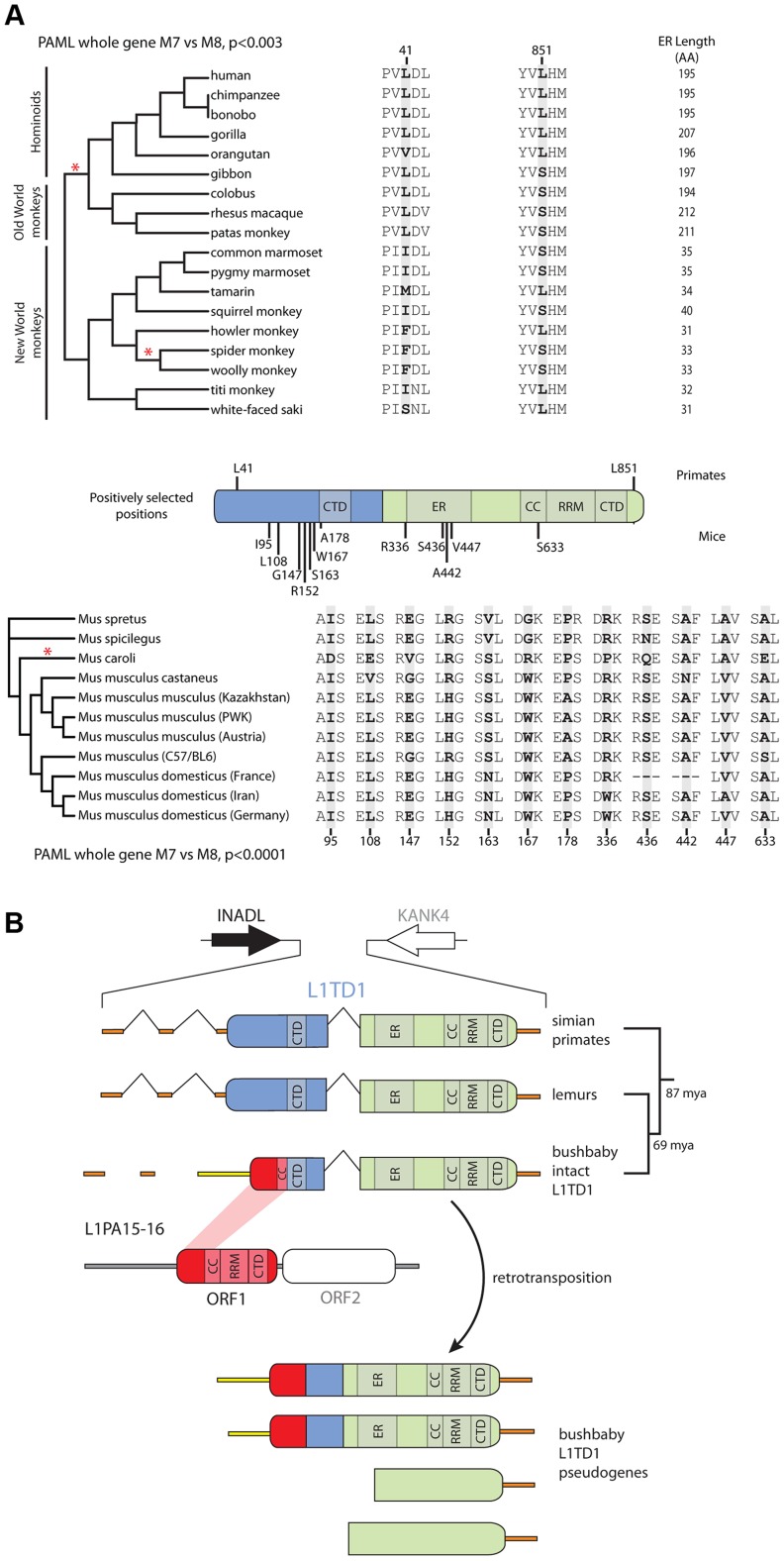
Mammalian genomes comprise many active and fossilized retroelements. The obligate requirement for retroelement integration affords host genomes an opportunity to 'domesticate' retroelement genes for their own purpose, leading to important innovations in genome defense and placentation. While many such exaptations involve retroviruses, the L1TD1 gene is the only known domesticated gene whose protein-coding sequence is almost entirely derived from a LINE-1 (L1) retroelement. Human L1TD1 has been shown to play an important role in pluripotency maintenance. To investigate how this role was acquired, we traced the origin and evolution of L1TD1. We find that L1TD1 originated in the common ancestor of eutherian mammals, but was lost or pseudogenized multiple times during mammalian evolution. We also find that L1TD1 has evolved under positive selection during primate and mouse evolution, and that one prosimian L1TD1 has 'replenished' itself with a more recent L1 ORF1 from the prosimian genome. These data suggest that L1TD1 has been recurrently selected for functional novelty, perhaps for a role in genome defense. L1TD1 loss is associated with L1 extinction in several megabat lineages, but not in sigmodontine rodents. We hypothesize that L1TD1 could have originally evolved for genome defense against L1 elements. Later, L1TD1 may have become incorporated into pluripotency maintenance in some lineages. Our study highlights the role of retroelement gene domestication in fundamental aspects of mammalian biology, and that such domesticated genes can adopt different functions in different lineages.
哺乳动物基因组包含许多活跃的和已僵化的逆转录元件。逆转录元件整合的必然需求为宿主基因组提供了一个机会,使其能够为自身目的“驯化”逆转录元件基因,从而在基因组防御和胎盘形成方面带来重要创新。虽然许多这样的适应性改变涉及逆转录病毒,但L1TD1基因是唯一已知的被驯化基因,其蛋白质编码序列几乎完全源自LINE-1(L1)逆转录元件。已证明人类L1TD1在多能性维持中起重要作用。为了研究这一作用是如何获得的,我们追踪了L1TD1的起源和进化。我们发现L1TD1起源于真兽类哺乳动物的共同祖先,但在哺乳动物进化过程中多次丢失或假基因化。我们还发现L1TD1在灵长类和小鼠进化过程中受到正选择,并且一种原猴亚目动物的L1TD1从该原猴亚目动物基因组中获得了一个更新的L1 ORF1来“补充”自身。这些数据表明,L1TD1因功能新颖性而被反复选择,可能是为了在基因组防御中发挥作用。L1TD1的缺失与几个大蝙蝠谱系中的L1灭绝有关,但在稻鼠科啮齿动物中并非如此。我们推测L1TD1最初可能是为了抵御L1元件而进化的。后来,L1TD1可能在某些谱系中被纳入多能性维持过程。我们的研究突出了逆转录元件基因驯化在哺乳动物生物学基本方面的作用,并且这种被驯化的基因在不同谱系中可以发挥不同的功能。