Nakajima Kei, Kanda Eiichiro, Hosobuchi Ami, Suwa Kaname
Division of Clinical Nutrition, Department of Medical Dietetics, Faculty of Pharmaceutical Sciences, Josai University, 1-1 Keyakidai, Sakado, Saitama 350-0295, Japan.
Department of Nephrology, Tokyo Kyosai Hospital, Nakameguro 2-3-8, Meguroku, Tokyo 153-8934, Japan.
Int J Otolaryngol. 2014;2014:218218. doi: 10.1155/2014/218218. Epub 2014 Aug 12.
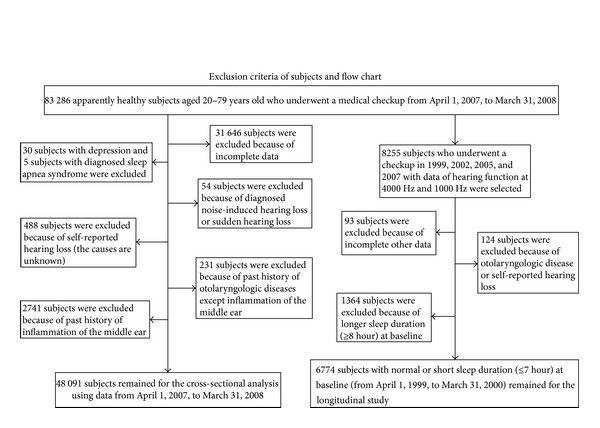
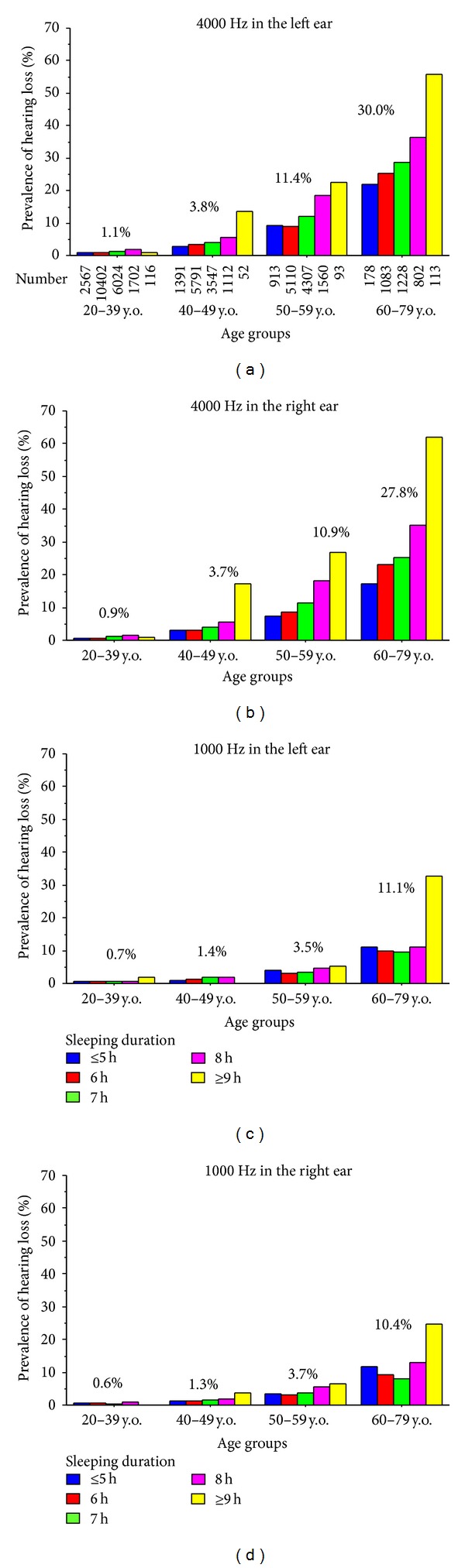
Hearing loss leads to impaired social functioning and quality of life. Hearing loss is also associated with sleeping disorders and cardiometabolic risk factors. Here, we determined whether subclinical hearing loss is associated with sleep duration and cardiometabolic risk factors in a cross-sectional and longitudinal study of healthy Japanese general population. 48,091 men and women aged 20-79 years who underwent medical checkups were included in a cross-sectional study, and 6,674 were included in an 8-year longitudinal study. The prevalence of audiometrically determined hearing loss (>25 dB) at 4000 and 1000 Hz increased significantly with increasing sleep duration in any age strata. Logistic regression analysis showed that compared with reference sleep duration (6 h) longer sleep duration (≥8 h) was significantly associated with hearing loss, even after adjusting for potential confounding factors. Simultaneously, hearing loss was significantly associated with male sex, diabetes, and no habitual exercise. In the longitudinal study, the risk of longer sleep duration (≥8 h) after 8 years was significantly greater in subjects with hearing loss at 4000 Hz at baseline. In conclusion, current results suggest a potential association of subclinical hearing loss with longer sleep duration and cardiometabolic risk factors in a Japanese general population.
听力损失会导致社交功能受损和生活质量下降。听力损失还与睡眠障碍和心血管代谢危险因素有关。在此,我们在一项针对健康日本普通人群的横断面和纵向研究中,确定亚临床听力损失是否与睡眠时间和心血管代谢危险因素相关。48091名年龄在20 - 79岁接受体检的男性和女性被纳入横断面研究,6674人被纳入为期8年的纵向研究。在任何年龄层,4000Hz和1000Hz处经听力测定确定的听力损失(>25dB)患病率随睡眠时间增加而显著上升。逻辑回归分析表明,与参考睡眠时间(6小时)相比,即使在调整潜在混杂因素后,较长睡眠时间(≥8小时)仍与听力损失显著相关。同时,听力损失与男性、糖尿病和无习惯性运动显著相关。在纵向研究中,基线时4000Hz处有听力损失的受试者8年后出现较长睡眠时间(≥8小时)的风险显著更高。总之,目前的结果表明在日本普通人群中亚临床听力损失与较长睡眠时间和心血管代谢危险因素之间可能存在关联。