Library, Beijing University of Chinese Medicine, No. 11 Bei San Huan Dong Lu, Chaoyang District, Beijing 100029, China.
Beijing University of Posts and Telecommunications, No. 10 Xi Tu Cheng Lu, Haidian District, Beijing 100876, China.
Evid Based Complement Alternat Med. 2014;2014:425341. doi: 10.1155/2014/425341. Epub 2014 Aug 19.
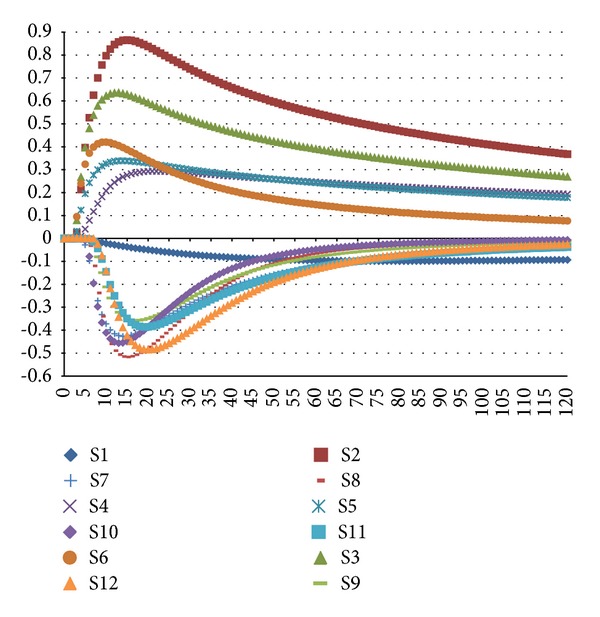
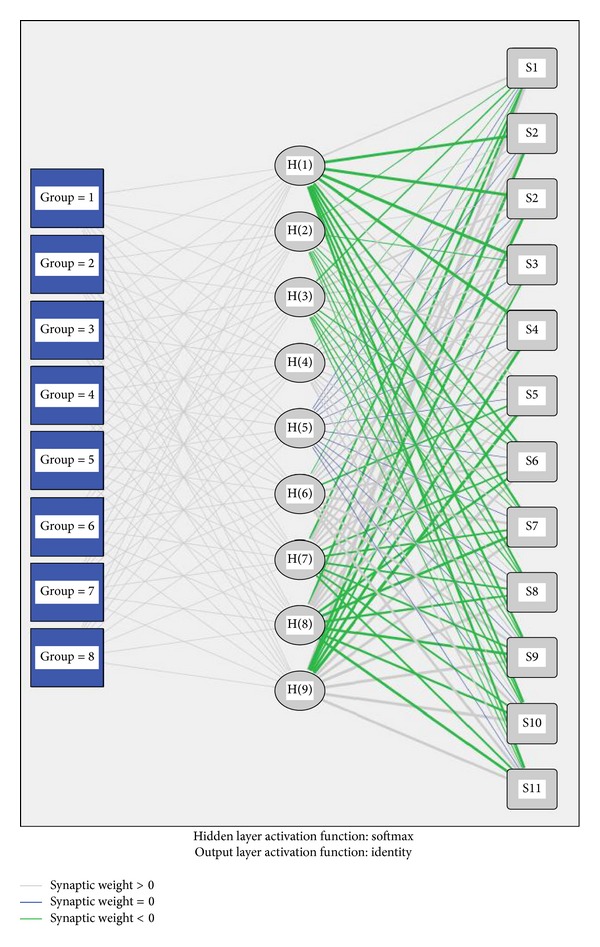
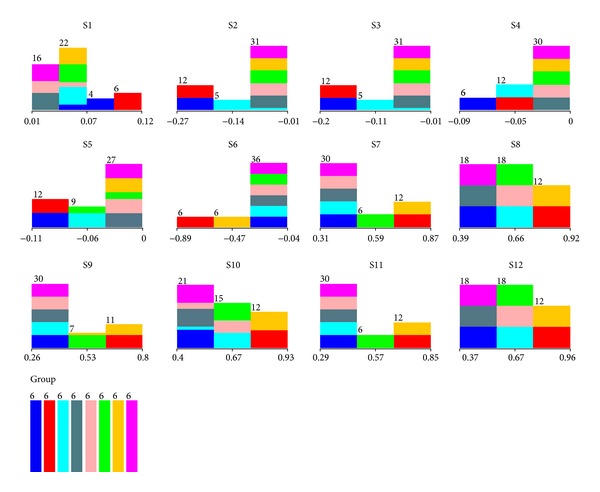
Plants from Asteraceae family are widely used as herbal medicines and food ingredients, especially in Asian area. Therefore, authentication and quality control of these different Asteraceae plants are important for ensuring consumers' safety and efficacy. In recent decades, electronic nose (E-nose) has been studied as an alternative approach. In this paper, we aim to develop a novel discriminative model by improving radial basis function artificial neural network (RBF-ANN) classification model. Feature selection algorithms, including principal component analysis (PCA) and BestFirst + CfsSubsetEval (BC), were applied in the improvement of RBF-ANN models. Results illustrate that in the improved RBF-ANN models with lower dimension data classification accuracies (100%) remained the same as in the original model with higher-dimension data. It is the first time to introduce feature selection methods to get valuable information on how to attribute more relevant MOS sensors; namely, in this case, S1, S3, S4, S6, and S7 show better capability to distinguish these Asteraceae plants. This paper also gives insights to further research in this area, for instance, sensor array optimization and performance improvement of classification model.
菊科植物被广泛用作草药和食品成分,特别是在亚洲地区。因此,对这些不同的菊科植物进行鉴定和质量控制对于确保消费者的安全和疗效非常重要。在最近几十年中,电子鼻 (E-nose) 已被研究作为一种替代方法。在本文中,我们旨在通过改进径向基函数人工神经网络 (RBF-ANN) 分类模型来开发一种新的判别模型。特征选择算法,包括主成分分析 (PCA) 和 BestFirst + CfsSubsetEval (BC),被应用于 RBF-ANN 模型的改进中。结果表明,在改进的 RBF-ANN 模型中,低维数据的分类准确率(100%)与高维数据的原始模型相同。这是首次引入特征选择方法来获取有关如何赋予更相关 MOS 传感器有价值信息的信息;也就是说,在这种情况下,S1、S3、S4、S6 和 S7 显示出更好的区分这些菊科植物的能力。本文还为该领域的进一步研究提供了一些见解,例如传感器阵列优化和分类模型性能的提高。