Zhang Fanglin, Tossberg John T, Spurlock Charles F, Yao Song-Yi, Aune Thomas M, Sriram Subramaniam
Departments of Medicine, Pathology Microbiology-Immunology and Neurology, Vanderbilt University, Nashville, TN 37212.
Ann Clin Transl Neurol. 2014 May 1;1(5):307-318. doi: 10.1002/acn3.47.
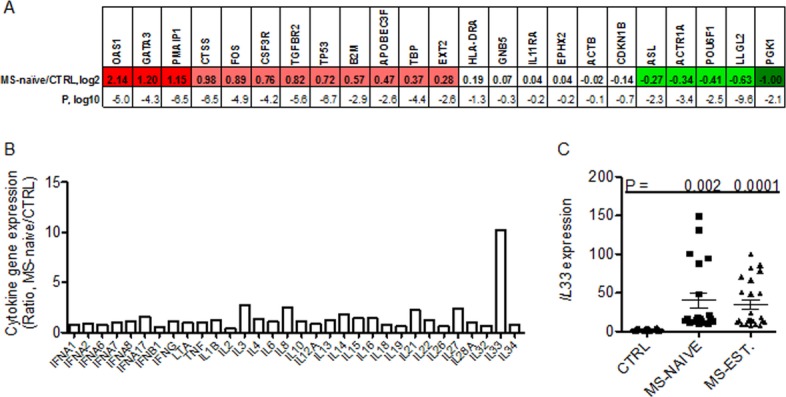
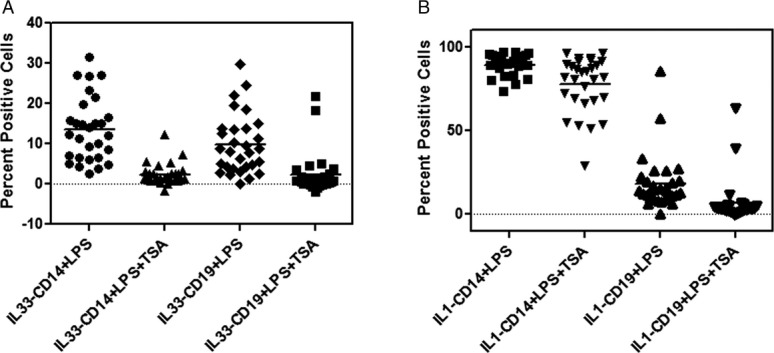
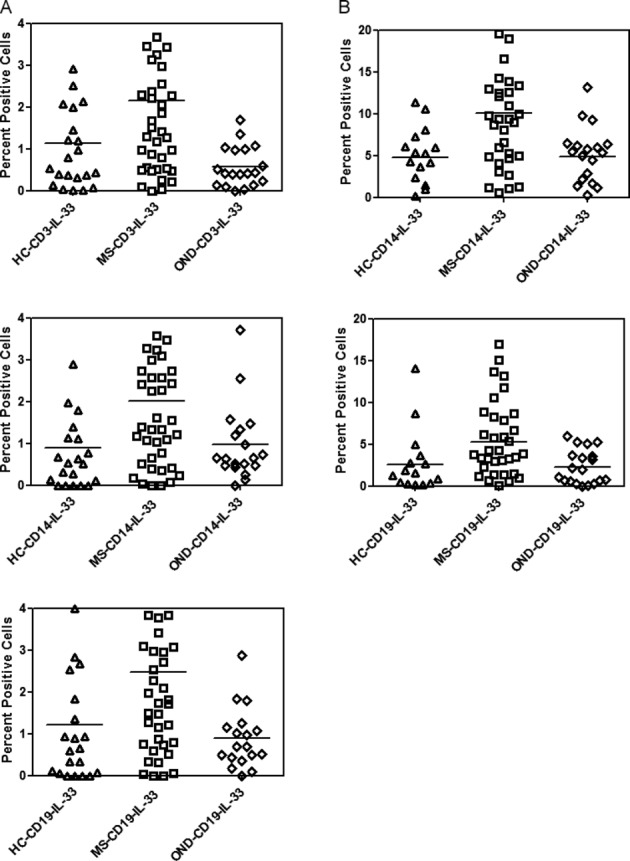
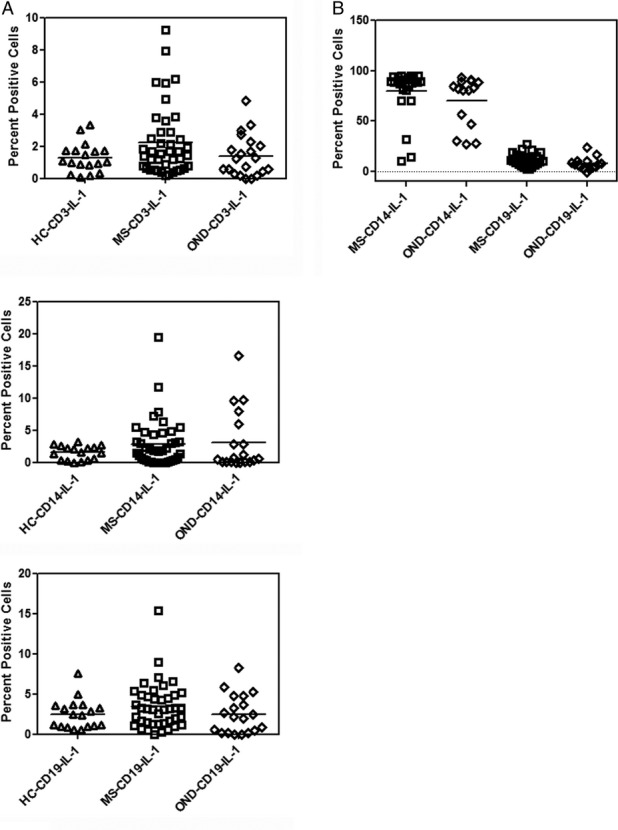
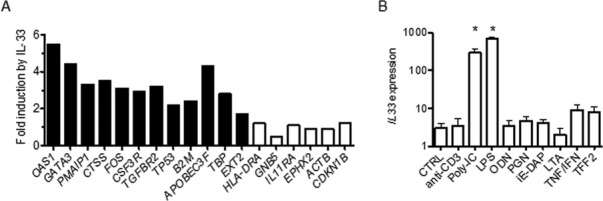
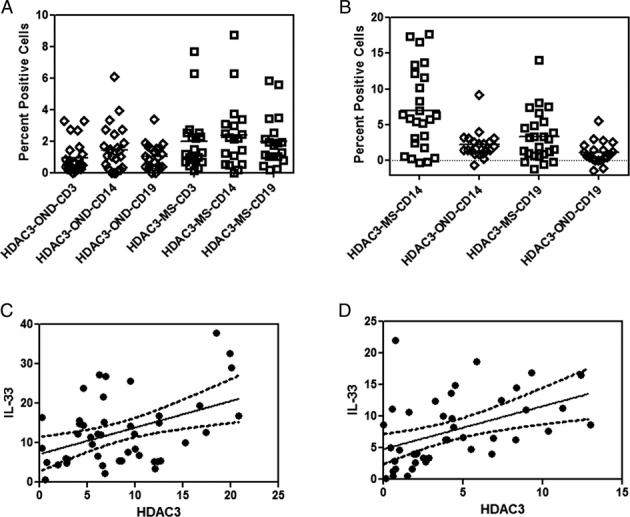
We examined the expression of IL-33 as an indicator of an innate immune response in relapsing remitting MS (RRMS) and controls. Based on our previous studies we proposed a link between the expression of IL-33 and IL-33 regulated genes to histone deacetylase (HDAC) activity and in particular HDAC3, an enzyme that plays a role in the epigenetic regulation of a number of genes including those which regulate inflammation. Our studies showed that intracellular expressions of IL-33 and IL-33 regulated genes are increased in patients with RRMS. In addition, following culture with TLR agonist lipopolysaccharide (LPS), there is increased induction of both IL-33 and HDAC3 in RRMS patients over that seen in controls. Also, culture of PBMC with IL-33 led to the expression of genes which overlapped with that seen in RRMS patients suggesting that the gene expression signature seen in RRMS may be driven by innate immune pathways. Expression of levels of IL-33 but not IL-1β (another gene regulated by TLR agonists) is completely inhibited by Trichostatin A (TSA) establishing a closer regulation of IL-33 but not IL-1β with HDAC. These results demonstrate the over expression of innate immune genes in RRMS and offer a causal link between the epigenetic regulation by HDAC and the induction of IL-33.
我们检测了白细胞介素-33(IL-33)的表达,将其作为复发缓解型多发性硬化症(RRMS)和对照组中固有免疫反应的一个指标。基于我们之前的研究,我们提出IL-33及其调控基因的表达与组蛋白脱乙酰酶(HDAC)活性之间存在联系,特别是HDAC3,该酶在许多基因的表观遗传调控中发挥作用,包括那些调节炎症的基因。我们的研究表明,RRMS患者中IL-33及其调控基因的细胞内表达增加。此外,在用Toll样受体(TLR)激动剂脂多糖(LPS)培养后,RRMS患者中IL-33和HDAC3的诱导水平高于对照组。而且,用IL-33培养外周血单核细胞(PBMC)导致了一些基因的表达,这些基因与RRMS患者中所见的基因重叠,这表明RRMS中所见的基因表达特征可能由固有免疫途径驱动。曲古抑菌素A(TSA)完全抑制了IL-33的表达水平,但未抑制IL-1β(另一个受TLR激动剂调控的基因)的表达,这表明HDAC对IL-33而非IL-1β有更紧密的调控。这些结果证明了RRMS中固有免疫基因的过度表达,并提供了HDAC的表观遗传调控与IL-33诱导之间的因果联系。