Department of Rehabilitation Medicine, The First Affiliated Hospital, Zhejiang University, Hangzhou, China.
Department of Anesthesiology, McGovern Medical School, University of Texas Health Science Center at Houston, Houston, TX, United States.
Front Immunol. 2021 May 17;12:654626. doi: 10.3389/fimmu.2021.654626. eCollection 2021.
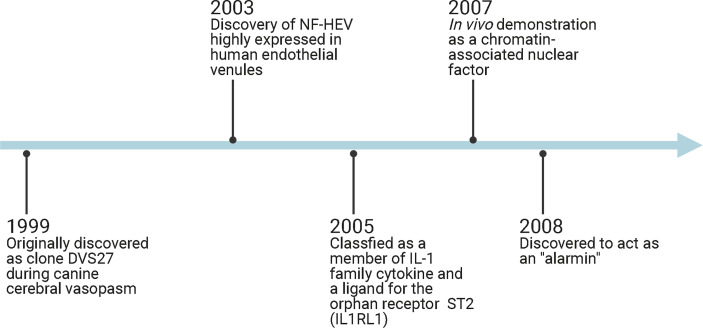
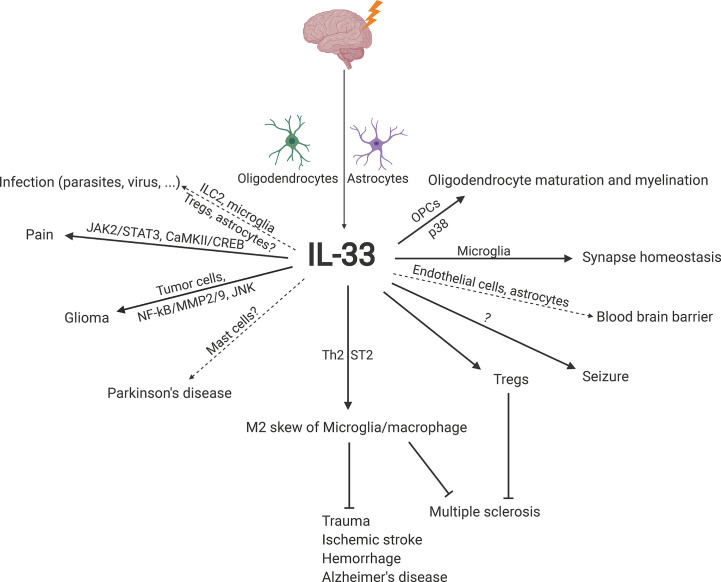
Interleukin-33 (IL-33), a member of the IL-1 cytokine family, is involved in various diseases. IL-33 exerts its effects via its heterodimeric receptor complex, which comprises suppression of tumorigenicity 2 (ST2) and the IL-1 receptor accessory protein (IL-1RAP). Increasing evidence has demonstrated that IL-33/ST2 signaling plays diverse but crucial roles in the homeostasis of the central nervous system (CNS) and the pathogenesis of CNS diseases, including neurodegenerative diseases, cerebrovascular diseases, infection, trauma, and ischemic stroke. In the current review, we focus on the functional roles and cellular signaling mechanisms of IL-33 in the CNS and evaluate the potential for diagnostic and therapeutic applications.
白细胞介素-33(IL-33)是白细胞介素-1 细胞因子家族的一员,参与多种疾病的发生。IL-33 通过其异二聚体受体复合物发挥作用,该复合物由肿瘤抑制因子 2(ST2)和白细胞介素-1 受体辅助蛋白(IL-1RAP)组成。越来越多的证据表明,IL-33/ST2 信号在中枢神经系统(CNS)的内稳态和 CNS 疾病的发病机制中发挥着多样化但至关重要的作用,包括神经退行性疾病、脑血管疾病、感染、创伤和缺血性中风。在本综述中,我们重点关注 IL-33 在中枢神经系统中的功能作用和细胞信号转导机制,并评估其在诊断和治疗中的应用潜力。