Soriano Ignacio, Morafraile Esther C, Vázquez Enrique, Antequera Francisco, Segurado Mónica
Instituto de Biología Funcional y Genómica, Consejo Superior de Investigaciones Científicas/ Universidad de Salamanca (CSIC/USAL), Campus Miguel de Unamuno, Salamanca 37007, Spain.
BMC Genomics. 2014 Sep 13;15(1):791. doi: 10.1186/1471-2164-15-791.
Eukaryotic genomes are replicated during S phase according to a temporal program. Several determinants control the timing of origin firing, including the chromatin environment and epigenetic modifications. However, how chromatin structure influences the timing of the activation of specific origins is still poorly understood.
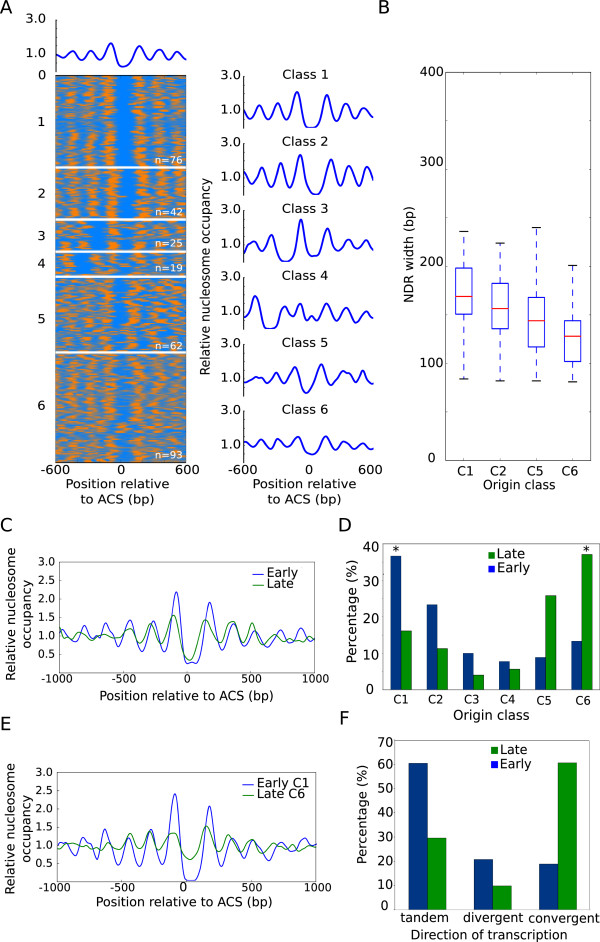
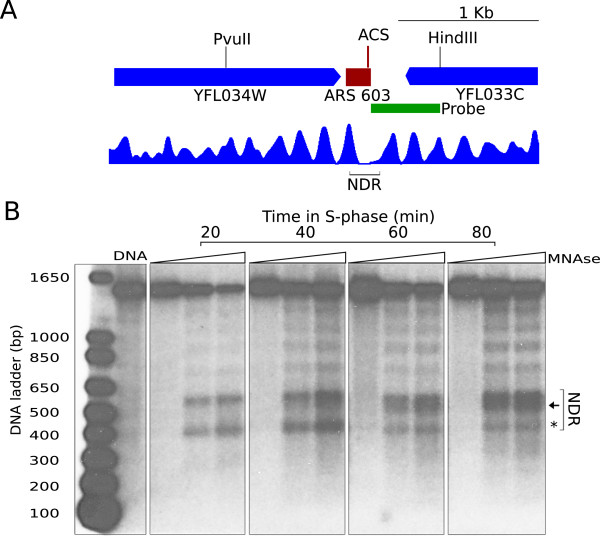
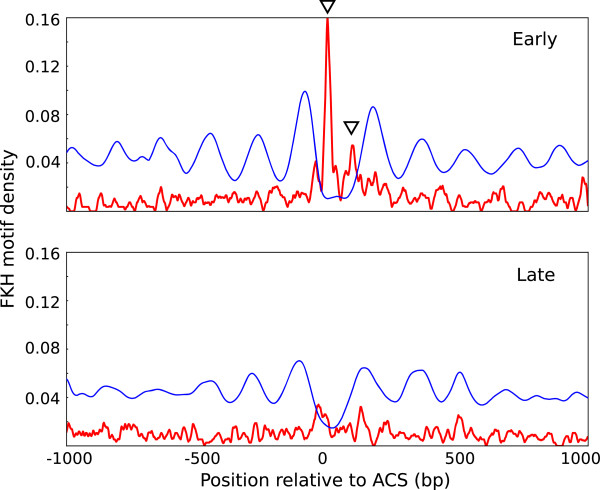
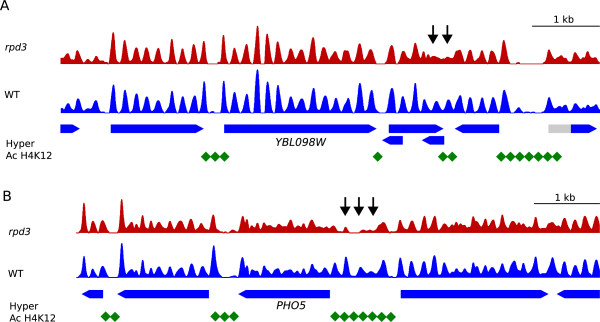
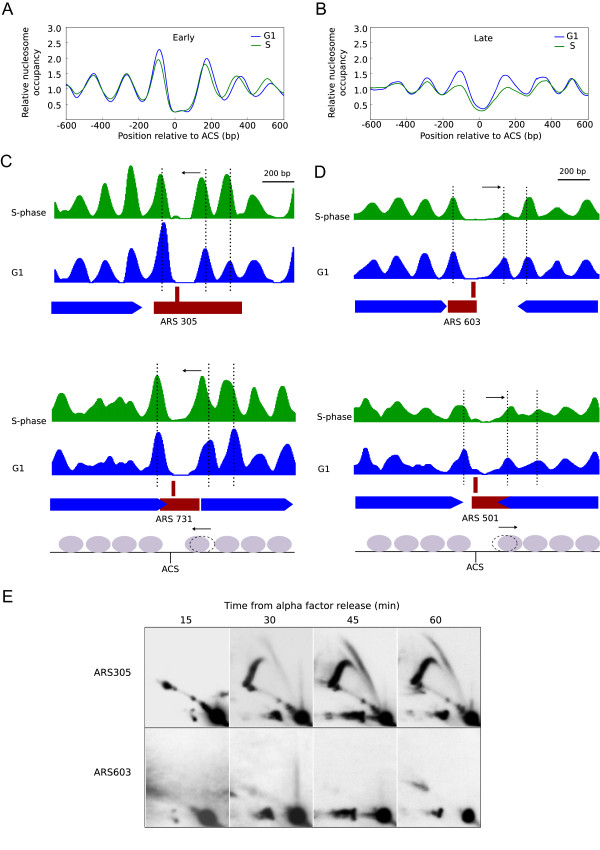
By performing high-resolution analysis of genome-wide nucleosome positioning we have identified different chromatin architectures at early and late replication origins. These different patterns are already established in G1 and are tightly correlated with the organization of adjacent transcription units. Moreover, specific early and late nucleosomal patterns are fixed robustly, even in rpd3 mutants in which histone acetylation and origin timing have been significantly altered. Nevertheless, higher histone acetylation levels correlate with the local modulation of chromatin structure, leading to increased origin accessibility. In addition, we conducted parallel analyses of replication and nucleosome dynamics that revealed that chromatin structure at origins is modulated during origin activation.
Our results show that early and late replication origins present distinctive nucleosomal configurations, which are preferentially associated to different genomic regions. Our data also reveal that origin structure is dynamic and can be locally modulated by histone deacetylation, as well as by origin activation. These data offer novel insight into the contribution of chromatin structure to origin selection and firing in budding yeast.
真核生物基因组在S期按照时间程序进行复制。多种决定因素控制着复制起点的起始时间,包括染色质环境和表观遗传修饰。然而,染色质结构如何影响特定复制起点的激活时间仍知之甚少。
通过对全基因组核小体定位进行高分辨率分析,我们在早期和晚期复制起点鉴定出了不同的染色质结构。这些不同模式在G1期就已确立,并且与相邻转录单元的组织紧密相关。此外,即使在组蛋白乙酰化和复制起点时间已显著改变的rpd3突变体中,特定的早期和晚期核小体模式也能稳定固定。尽管如此,较高的组蛋白乙酰化水平与染色质结构的局部调节相关,导致复制起点的可及性增加。此外,我们对复制和核小体动力学进行了平行分析,结果表明复制起点处的染色质结构在起点激活过程中受到调节。
我们的结果表明,早期和晚期复制起点呈现出独特的核小体构型,这些构型优先与不同的基因组区域相关。我们的数据还揭示了复制起点结构是动态的,并且可以通过组蛋白去乙酰化以及起点激活进行局部调节。这些数据为染色质结构在芽殖酵母中对复制起点选择和起始的贡献提供了新的见解。