School of Life Sciences, The University of Nottingham, Queen's Medical Centre, Nottingham NG7 2UH, UK, Deep Seq, The University of Nottingham, Queen's Medical Centre, Nottingham NG7 2UH, UK, Research Center for Epigenetic Disease, Institute of Molecular and Cellular Biosciences, The University of Tokyo, Tokyo, 113-0032, Japan and Institute for Complex Systems and Mathematical Biology, The University of Aberdeen, Aberdeen, AB24 3UE UK.
Nucleic Acids Res. 2014 Jan;42(1):e3. doi: 10.1093/nar/gkt878. Epub 2013 Oct 1.
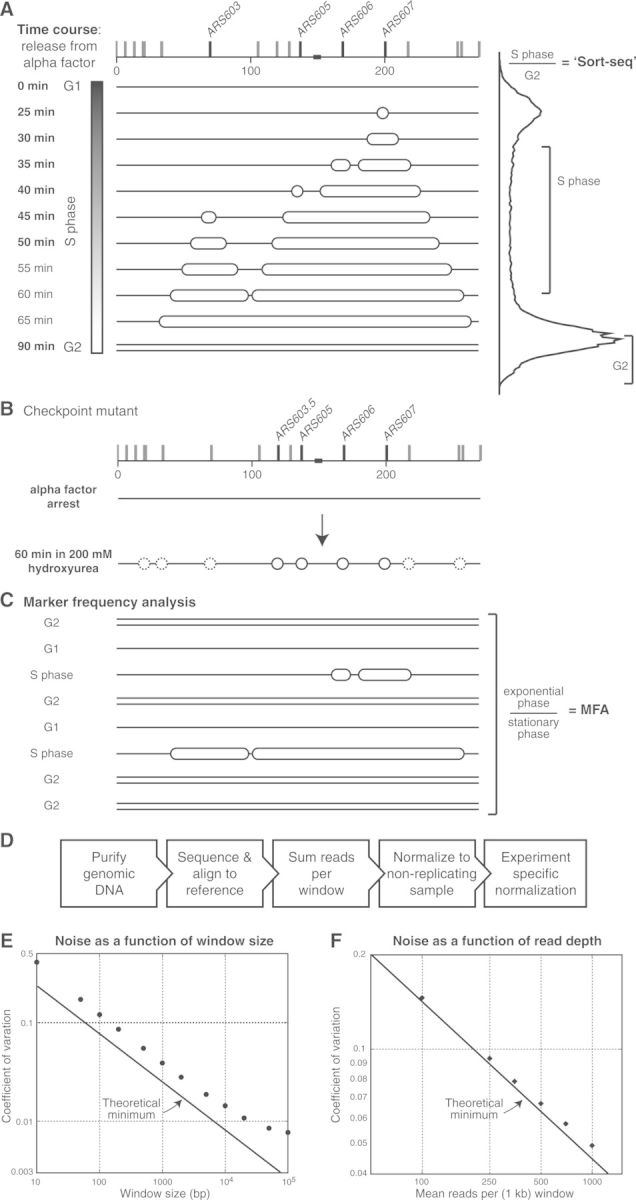
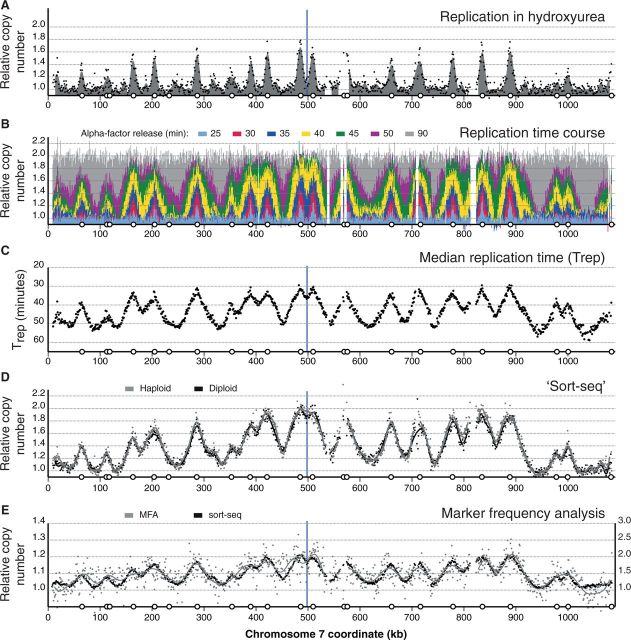
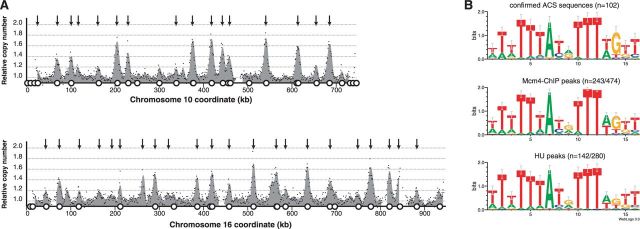
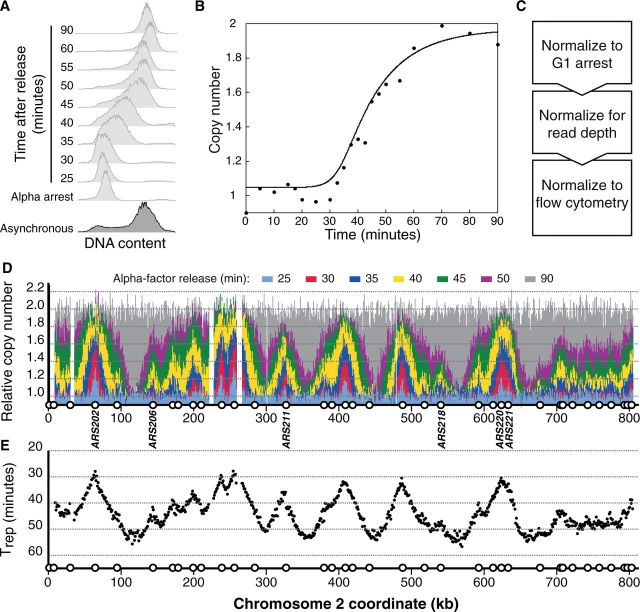
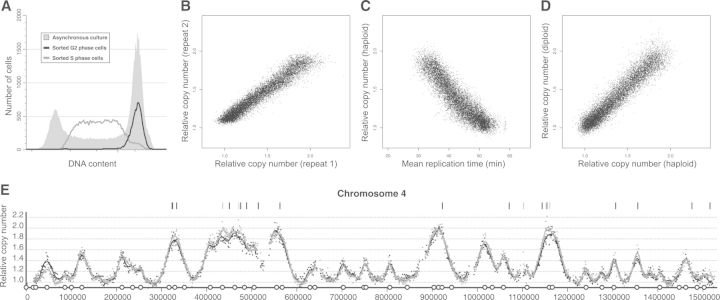
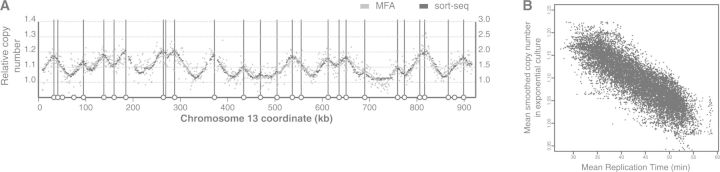
Eukaryotic genomes are replicated from multiple DNA replication origins. We present complementary deep sequencing approaches to measure origin location and activity in Saccharomyces cerevisiae. Measuring the increase in DNA copy number during a synchronous S-phase allowed the precise determination of genome replication. To map origin locations, replication forks were stalled close to their initiation sites; therefore, copy number enrichment was limited to origins. Replication timing profiles were generated from asynchronous cultures using fluorescence-activated cell sorting. Applying this technique we show that the replication profiles of haploid and diploid cells are indistinguishable, indicating that both cell types use the same cohort of origins with the same activities. Finally, increasing sequencing depth allowed the direct measure of replication dynamics from an exponentially growing culture. This is the first time this approach, called marker frequency analysis, has been successfully applied to a eukaryote. These data provide a high-resolution resource and methodological framework for studying genome biology.
真核生物基因组由多个 DNA 复制起点复制。我们提出了互补的深度测序方法来测量酿酒酵母中的起始位置和活性。通过测量同步 S 期期间 DNA 拷贝数的增加,可以精确地确定基因组复制。为了绘制起始位置,复制叉在接近起始点的位置停止,因此,拷贝数富集仅限于起始位置。使用荧光激活细胞分选从异步培养物中生成复制定时曲线。应用这项技术,我们表明单倍体和二倍体细胞的复制曲线无法区分,表明这两种细胞类型使用相同的起始位置簇,具有相同的活性。最后,增加测序深度允许从指数生长的培养物中直接测量复制动力学。这是这种称为标记频率分析的方法首次成功应用于真核生物。这些数据为研究基因组生物学提供了一个高分辨率的资源和方法框架。