Huang Zhan-Peng, Wang Da-Zhi
Department of Cardiology, Boston Children׳s Hospital, Harvard Medical School, 320 Longwood Avenue, Boston, MA 02115.
Trends Cardiovasc Med. 2014 Oct;24(7):267-72. doi: 10.1016/j.tcm.2014.07.005. Epub 2014 Aug 2.
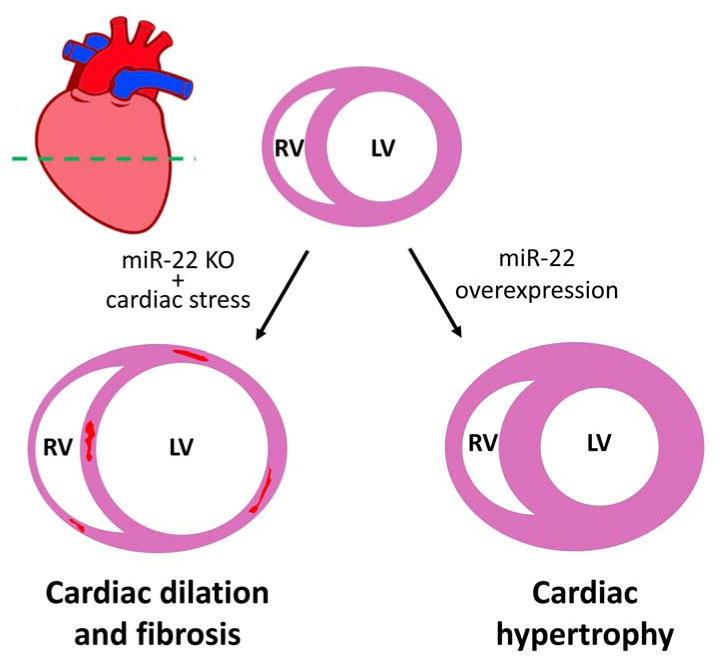
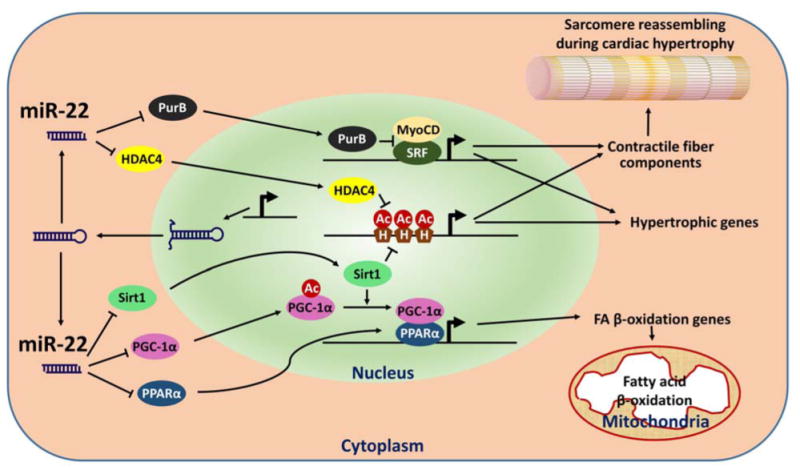
Regulation of gene expression during cardiac development and remodeling is very complicated, involving epigenetic, transcriptional, post-transcriptional, and translational regulation. Our understanding of the molecular mechanisms underlying cardiac remodeling is still far from complete. MicroRNAs are a class of small non-coding RNAs that have been shown to play critical roles in gene regulation in cardiovascular biology and disease. microRNA-22 (miR-22) is an evolutionally conserved miRNA that is highly expressed in the heart. Recent studies uncovered miR-22 as an important regulator for cardiac remodeling. miR-22 modulates the expression and function of genes involved in hypertrophic response, sarcomere reorganization, and metabolic program shift during cardiac remodeling. In this review, we will focus on the recent findings of miR-22 in cardiac remodeling and the therapeutic potential of this miRNA in the treatment of related defects resulting from adverse cardiac remodeling.
心脏发育和重塑过程中的基因表达调控非常复杂,涉及表观遗传、转录、转录后和翻译调控。我们对心脏重塑潜在分子机制的理解仍远未完善。微小RNA是一类小的非编码RNA,已被证明在心血管生物学和疾病的基因调控中起关键作用。微小RNA-22(miR-22)是一种在进化上保守的微小RNA,在心脏中高度表达。最近的研究发现miR-22是心脏重塑的重要调节因子。miR-22在心脏重塑过程中调节参与肥厚反应、肌节重组和代谢程序转变的基因的表达和功能。在这篇综述中,我们将重点关注miR-22在心脏重塑方面的最新研究结果,以及这种微小RNA在治疗由不良心脏重塑导致的相关缺陷方面的治疗潜力。