Immunobiotics Research Group , Tucuman , Argentina ; Laboratory of Immunobiotechnology, Reference Centre for Lactobacilli (CERELA-CONICET) , Tucuman , Argentina.
Cell Biology Laboratory, Graduate School of Agricultural Science, Tohoku University , Sendai , Japan.
Front Immunol. 2014 Sep 2;5:421. doi: 10.3389/fimmu.2014.00421. eCollection 2014.
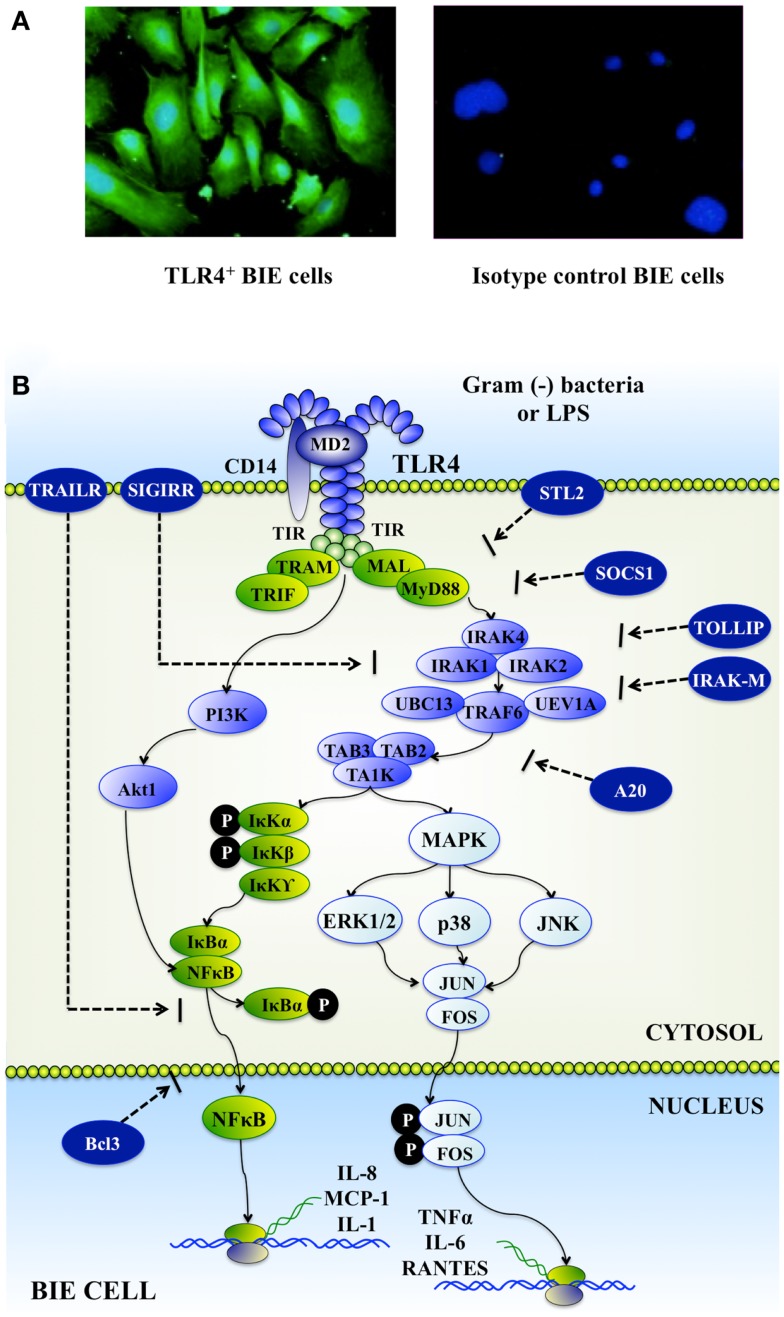
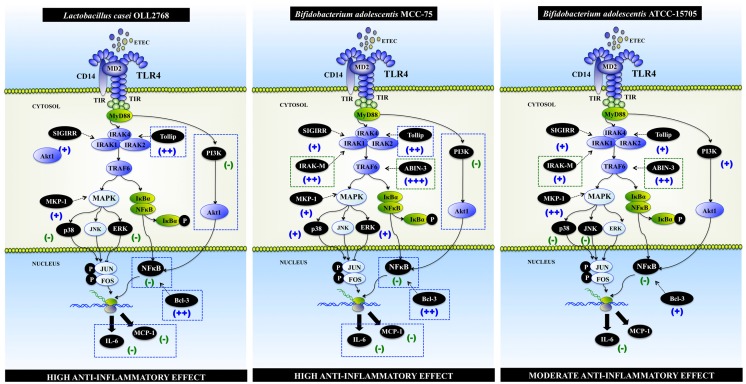
Intestinal epithelial cells (IECs) detect bacterial and viral associated molecular patterns via germline-encoded pattern-recognition receptors (PRRs) and are responsible for maintaining immune tolerance to the communities of resident commensal bacteria while being also capable to mount immune responses against pathogens. Toll-like receptors (TLRs) are a major class of PRRs expressed on IECs and immune cells, which are involved in the induction of both tolerance and inflammation. In the last decade, experimental and clinical evidence was generated to support the application of probiotics with immunoregulatory capacities (immunobiotics) for the prevention and treatment of several gastrointestinal inflammatory disorders in which TLRs exert a significant role. The majority of these studies were performed in mouse and human cell lines, and despite the growing interest in the bovine immune system due to the economic importance of cattle as livestock, only few studies have been conducted on cattle. In this regard, our group has established a bovine intestinal epithelial (BIE) cell line originally derived from fetal bovine intestinal epitheliocytes and used this cell line to evaluate the impact of immunobiotics in TLR-mediated inflammation. This review aims to summarize the current knowledge of the beneficial effects of immunobiotics in the regulation of intestinal inflammation/infection in cattle. Especially, we discuss the role of TLRs and their negative regulators in both the inflammatory response and the beneficial effects of immunobiotics in bovine IECs. This review article emphasizes the cellular and molecular interactions of immunobiotics with BIE cells through TLRs and gives the scientific basis for the development of immunomodulatory feed for bovine healthy development.
肠上皮细胞 (IECs) 通过胚系编码的模式识别受体 (PRRs) 检测细菌和病毒相关的分子模式,负责维持对常驻共生菌群落的免疫耐受,同时能够对病原体产生免疫反应。Toll 样受体 (TLRs) 是 IECs 和免疫细胞上表达的主要 PRR 类,参与诱导耐受和炎症。在过去的十年中,产生了实验和临床证据来支持具有免疫调节能力的益生菌 (免疫生物制剂) 在预防和治疗几种 TLRs 发挥重要作用的胃肠道炎症性疾病中的应用。这些研究大多数是在小鼠和人细胞系中进行的,尽管由于牛作为牲畜的经济重要性,人们对牛的免疫系统越来越感兴趣,但对牛的研究却很少。在这方面,我们的小组建立了一种源自胎牛肠上皮细胞的牛肠上皮 (BIE) 细胞系,并使用该细胞系评估了免疫生物制剂对 TLR 介导的炎症的影响。这篇综述旨在总结免疫生物制剂在调节牛肠道炎症/感染方面的有益作用的现有知识。特别是,我们讨论了 TLRs 及其负调节剂在牛 IECs 中的炎症反应和免疫生物制剂的有益作用中的作用。本文强调了免疫生物制剂通过 TLRs 与 BIE 细胞的细胞和分子相互作用,并为开发用于牛健康发育的免疫调节饲料提供了科学依据。