Department of Rehabilitation Medicine of Korean Medicine, Dongguk University Ilsan Hospital, Gyeongj-si, South Korea.
Front Immunol. 2019 Jul 3;10:1536. doi: 10.3389/fimmu.2019.01536. eCollection 2019.
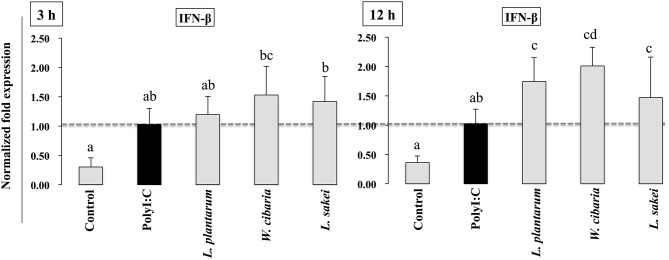
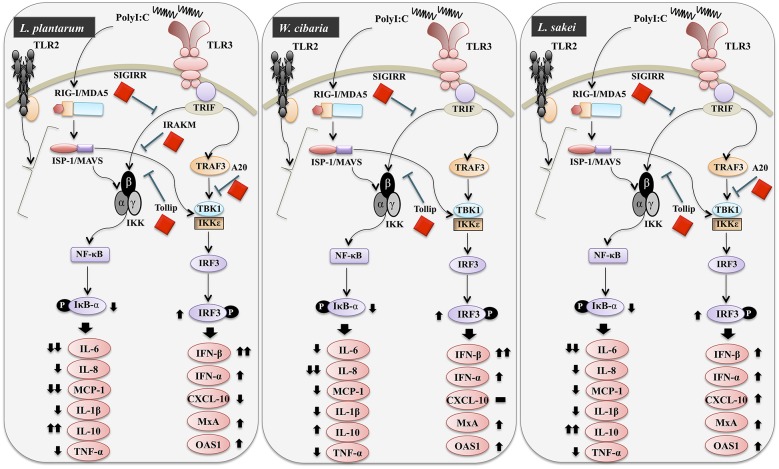
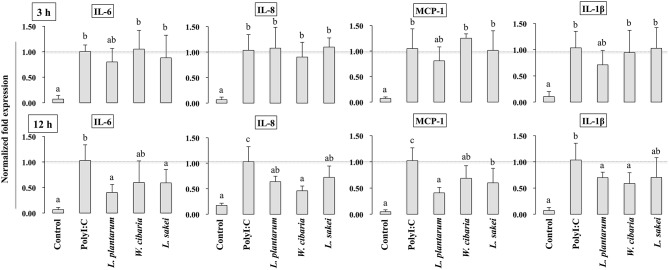
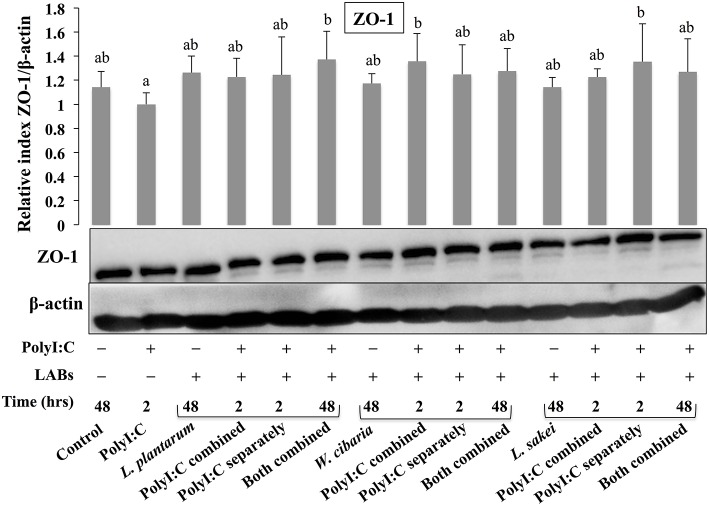
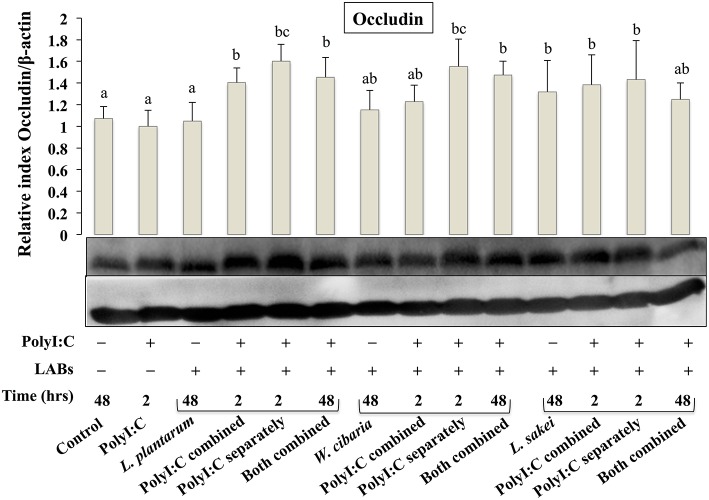
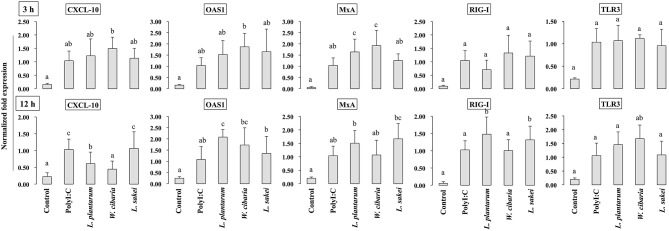
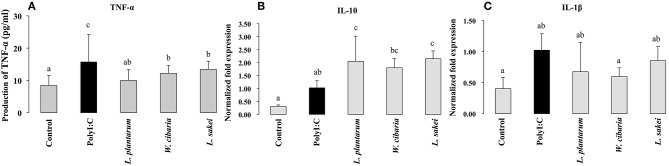
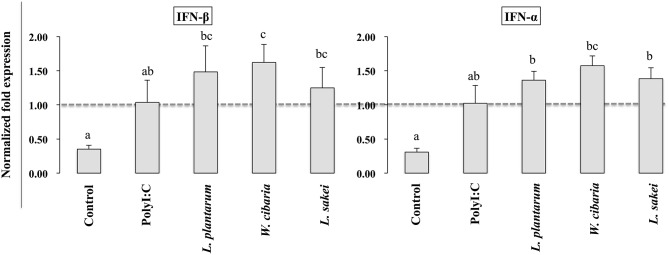
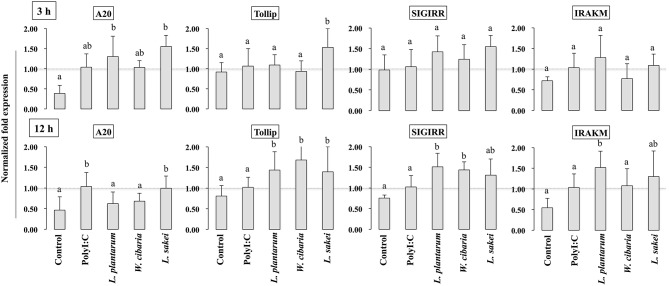
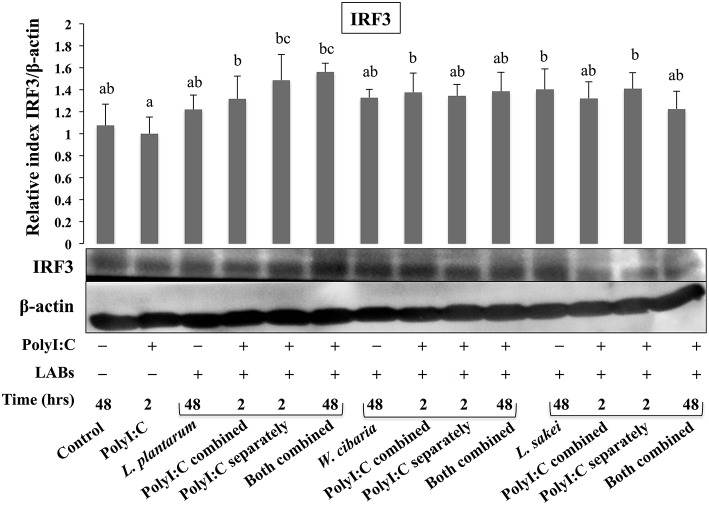
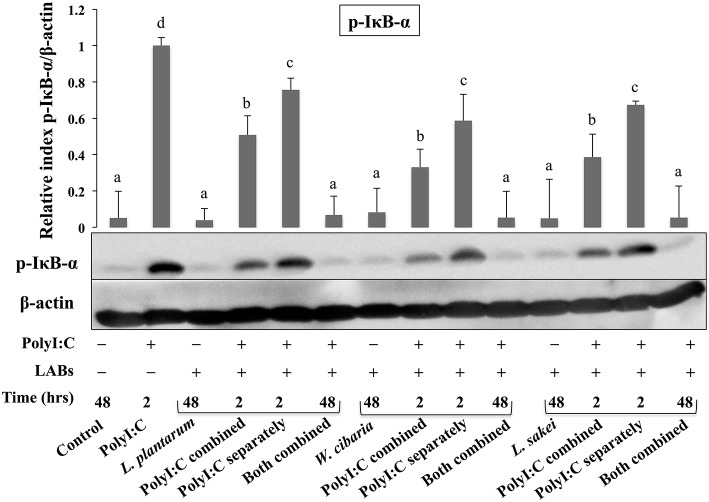
Many studies have demonstrated that immunobiotics with immunoregulatory functions improve the outcomes of several bacterial and viral infections by modulating the mucosal immune system. However, the precise mechanisms underlying the immunoregulatory and antiviral activities of immunobiotics have not yet been elucidated in detail. The present study was conducted to determine whether selected lactic acid bacteria (LAB) modulate toll-like receptor 3 (TLR3) agonist polyinosinic:polycytidylic acid (PolyI:C) induced viral response in human intestinal epithelial cells (IECs). PolyI:C increased the expression of interferon-β (IFN-β), interleukin-6 (IL-6), interleukin-8 (IL-8), monocyte chemoattractant protein (MCP-1), and interleukin-1β (IL-1β) in HCT116 cells, and these up-regulations were significantly altered when cells were pre-stimulated with LAB isolated from Korean fermented foods. LAB strains were capable to up-regulate IFN-β but down-regulated IL-6, IL-8, MCP-1, and IL-1β mRNA levels as compared with PolyI: C. HCT-116 cell treatment with LABs beneficially modulated the mRNA levels of C-X-C motif chemokine 10 (CXCL-10), 2-5A oligoadenylate synthetase 1 (OSA1), myxovirus resistance protein (MxA), TLR3, and retinoic acid inducible gene-I (RIG-I), and TLR negative regulators. In addition, LABs increased IFN-β, IFN-α, and interleukin-10 (IL-10) and decreased tumor necrosis factor-α (TNF-α) and IL-1β protein/mRNA levels in THP-1 cells. LABs also protected the cells by maintaining tight-junction proteins (zonula occludens-1 and occludin). The beneficial effects of these LABs were mediated via modulation of the interferon regulatory factor 3 (IRF3) and nuclear factor-kappa B (NF-κB) pathways. Overall, the results of this study indicate that immunobiotics have potent antiviral and anti-inflammatory activities that may use as antiviral substitutes for human and animal applications.
许多研究表明,具有免疫调节功能的免疫生物制剂通过调节黏膜免疫系统,改善了几种细菌和病毒感染的结局。然而,免疫生物制剂的免疫调节和抗病毒活性的确切机制尚未详细阐明。本研究旨在确定选定的乳酸菌(LAB)是否调节 Toll 样受体 3(TLR3)激动剂聚肌苷酸:聚胞苷酸(PolyI:C)诱导的人肠道上皮细胞(IEC)中的病毒反应。PolyI:C 增加了 HCT116 细胞中干扰素-β(IFN-β)、白细胞介素-6(IL-6)、白细胞介素-8(IL-8)、单核细胞趋化蛋白-1(MCP-1)和白细胞介素-1β(IL-1β)的表达,当细胞用来自韩国发酵食品的 LAB 预先刺激时,这些上调明显改变。与 PolyI:C 相比,LAB 菌株能够上调 IFN-β,但下调 IL-6、IL-8、MCP-1 和 IL-1β mRNA 水平。LAB 处理 HCT-116 细胞有益地调节 C-X-C 基序趋化因子 10(CXCL-10)、2-5A 寡聚腺苷酸合成酶 1(OSA1)、流感病毒抗性蛋白(MxA)、TLR3 和维甲酸诱导基因-I(RIG-I)以及 TLR 负调节剂的 mRNA 水平。此外,LAB 增加了 IFN-β、IFN-α 和白细胞介素-10(IL-10),并降低了 THP-1 细胞中的肿瘤坏死因子-α(TNF-α)和 IL-1β 蛋白/ mRNA 水平。LAB 还通过维持紧密连接蛋白(闭合蛋白-1 和闭合蛋白)来保护细胞。这些 LAB 的有益作用是通过调节干扰素调节因子 3(IRF3)和核因子-κB(NF-κB)途径介导的。总的来说,这项研究的结果表明,免疫生物制剂具有强大的抗病毒和抗炎活性,可作为人和动物应用的抗病毒替代品。