Starling Melissa J, Branson Nicholas, Cody Denis, Starling Timothy R, McGreevy Paul D
Faculty of Veterinary Science, University of Sydney, Camperdown, New South Wales, Australia.
Deakin Research, Deakin University, Burwood, Victoria, Australia.
PLoS One. 2014 Sep 17;9(9):e107794. doi: 10.1371/journal.pone.0107794. eCollection 2014.
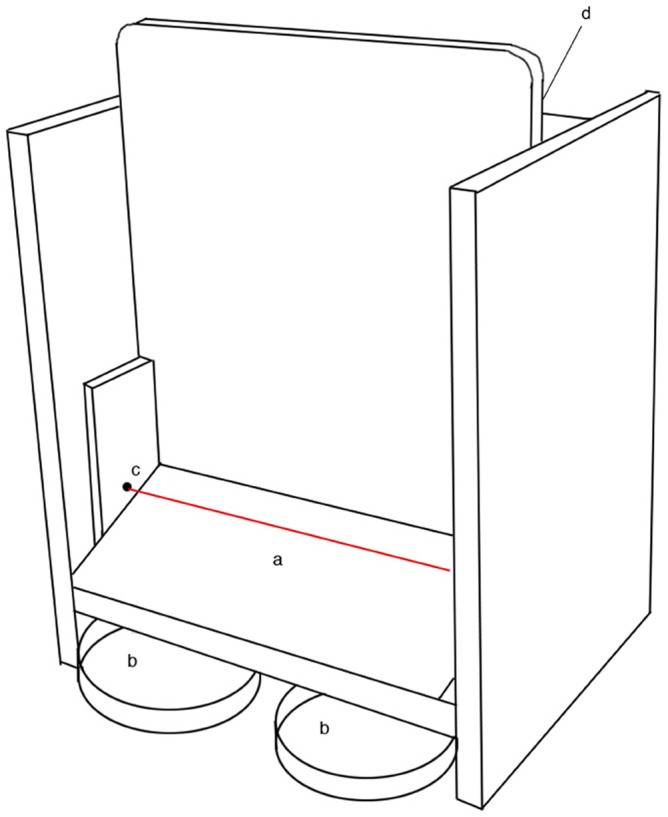
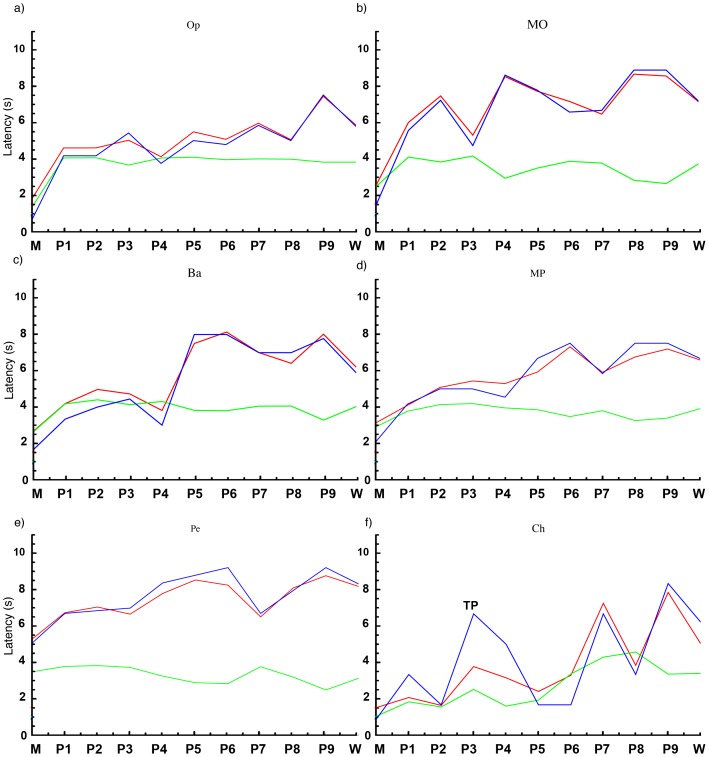
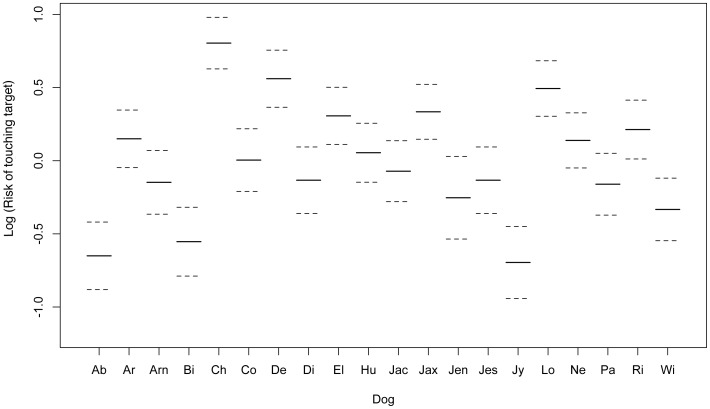
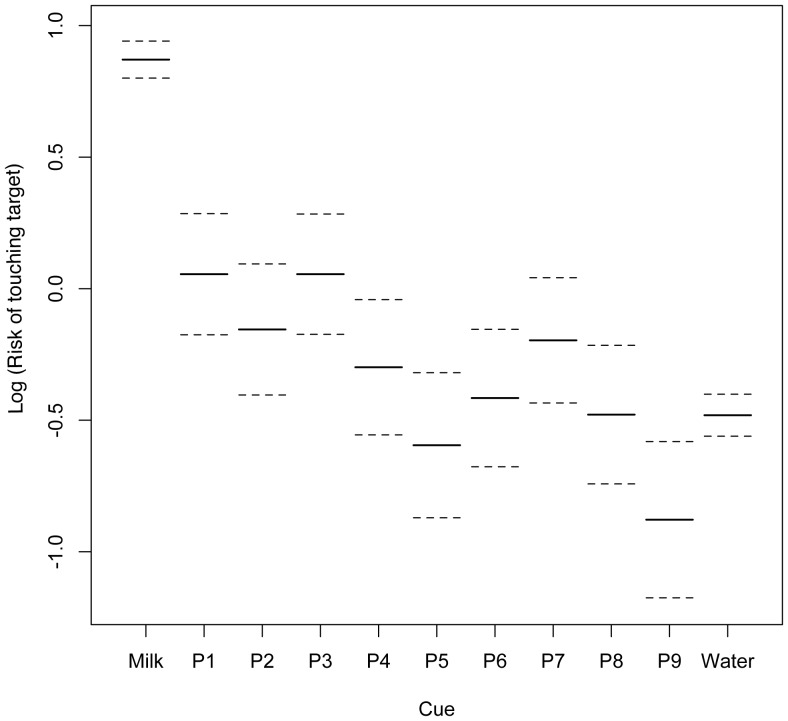
Recent advances in animal welfare science used judgement bias, a type of cognitive bias, as a means to objectively measure an animal's affective state. It is postulated that animals showing heightened expectation of positive outcomes may be categorised optimistic, while those showing heightened expectations of negative outcomes may be considered pessimistic. This study pioneers the use of a portable, automated apparatus to train and test the judgement bias of dogs. Dogs were trained in a discrimination task in which they learned to touch a target after a tone associated with a lactose-free milk reward and abstain from touching the target after a tone associated with water. Their judgement bias was then probed by presenting tones between those learned in the discrimination task and measuring their latency to respond by touching the target. A Cox's Proportional Hazards model was used to analyse censored response latency data. Dog and Cue both had a highly significant effect on latency and risk of touching a target. This indicates that judgement bias both exists in dogs and differs between dogs. Test number also had a significant effect, indicating that dogs were less likely to touch the target over successive tests. Detailed examination of the response latencies revealed tipping points where average latency increased by 100% or more, giving an indication of where dogs began to treat ambiguous cues as predicting more negative outcomes than positive ones. Variability scores were calculated to provide an index of optimism using average latency and standard deviation at cues after the tipping point. The use of a mathematical approach to assessing judgement bias data in animal studies offers a more detailed interpretation than traditional statistical analyses. This study provides proof of concept for the use of an automated apparatus for measuring cognitive bias in dogs.
动物福利科学的最新进展利用判断偏差(一种认知偏差)作为客观测量动物情感状态的手段。据推测,对积极结果表现出更高期望的动物可能被归类为乐观型,而对消极结果表现出更高期望的动物可能被视为悲观型。本研究率先使用便携式自动化设备来训练和测试狗的判断偏差。狗接受了一项辨别任务的训练,在该任务中,它们学会在与无乳糖牛奶奖励相关的音调响起后触摸目标,并在与水相关的音调响起后不触摸目标。然后,通过在辨别任务中所学音调之间呈现音调并测量它们通过触摸目标做出反应的潜伏期来探究它们的判断偏差。使用Cox比例风险模型来分析删失的反应潜伏期数据。狗和提示对潜伏期和触摸目标的风险都有非常显著的影响。这表明判断偏差在狗中既存在,而且不同的狗之间也存在差异。测试次数也有显著影响,表明在连续测试中狗触摸目标的可能性较小。对反应潜伏期的详细检查揭示了临界点,即平均潜伏期增加100%或更多的点,这表明狗开始将模糊线索视为预测负面结果多于正面结果的点。计算变异分数以使用临界点后提示处的平均潜伏期和标准差提供乐观指数。在动物研究中使用数学方法评估判断偏差数据比传统统计分析提供了更详细的解释。本研究为使用自动化设备测量狗的认知偏差提供了概念验证。