Simpson Claire L, Wojciechowski Robert, Oexle Konrad, Murgia Federico, Portas Laura, Li Xiaohui, Verhoeven Virginie J M, Vitart Veronique, Schache Maria, Hosseini S Mohsen, Hysi Pirro G, Raffel Leslie J, Cotch Mary Frances, Chew Emily, Klein Barbara E K, Klein Ronald, Wong Tien Yin, van Duijn Cornelia M, Mitchell Paul, Saw Seang Mei, Fossarello Maurizio, Wang Jie Jin, Polašek Ozren, Campbell Harry, Rudan Igor, Oostra Ben A, Uitterlinden André G, Hofman Albert, Rivadeneira Fernando, Amin Najaf, Karssen Lennart C, Vingerling Johannes R, Döring Angela, Bettecken Thomas, Bencic Goran, Gieger Christian, Wichmann H-Erich, Wilson James F, Venturini Cristina, Fleck Brian, Cumberland Phillippa M, Rahi Jugnoo S, Hammond Chris J, Hayward Caroline, Wright Alan F, Paterson Andrew D, Baird Paul N, Klaver Caroline C W, Rotter Jerome I, Pirastu Mario, Meitinger Thomas, Bailey-Wilson Joan E, Stambolian Dwight
National Human Genome Research Institute, National Institutes of Health, Baltimore, Maryland, United States of America.
National Human Genome Research Institute, National Institutes of Health, Baltimore, Maryland, United States of America; Department of Epidemiology, Johns Hopkins Bloomberg School of Public Health, Baltimore, Maryland, United States of America.
PLoS One. 2014 Sep 18;9(9):e107110. doi: 10.1371/journal.pone.0107110. eCollection 2014.
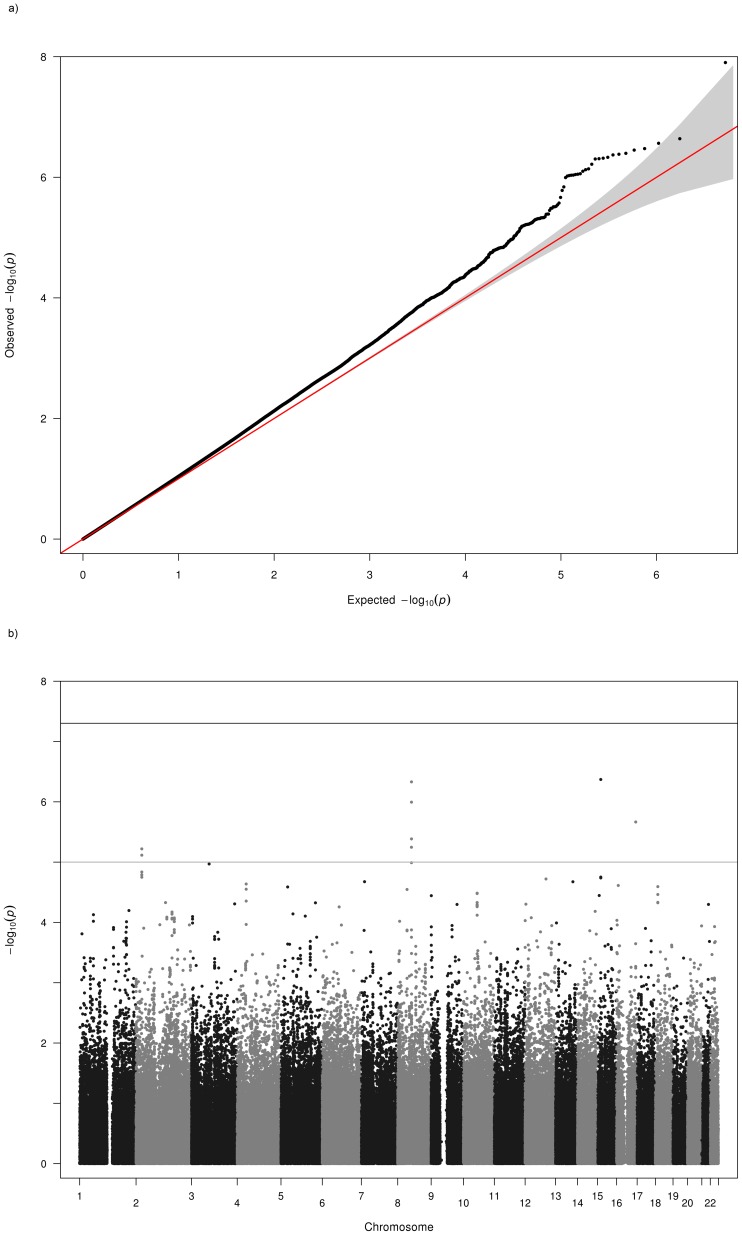
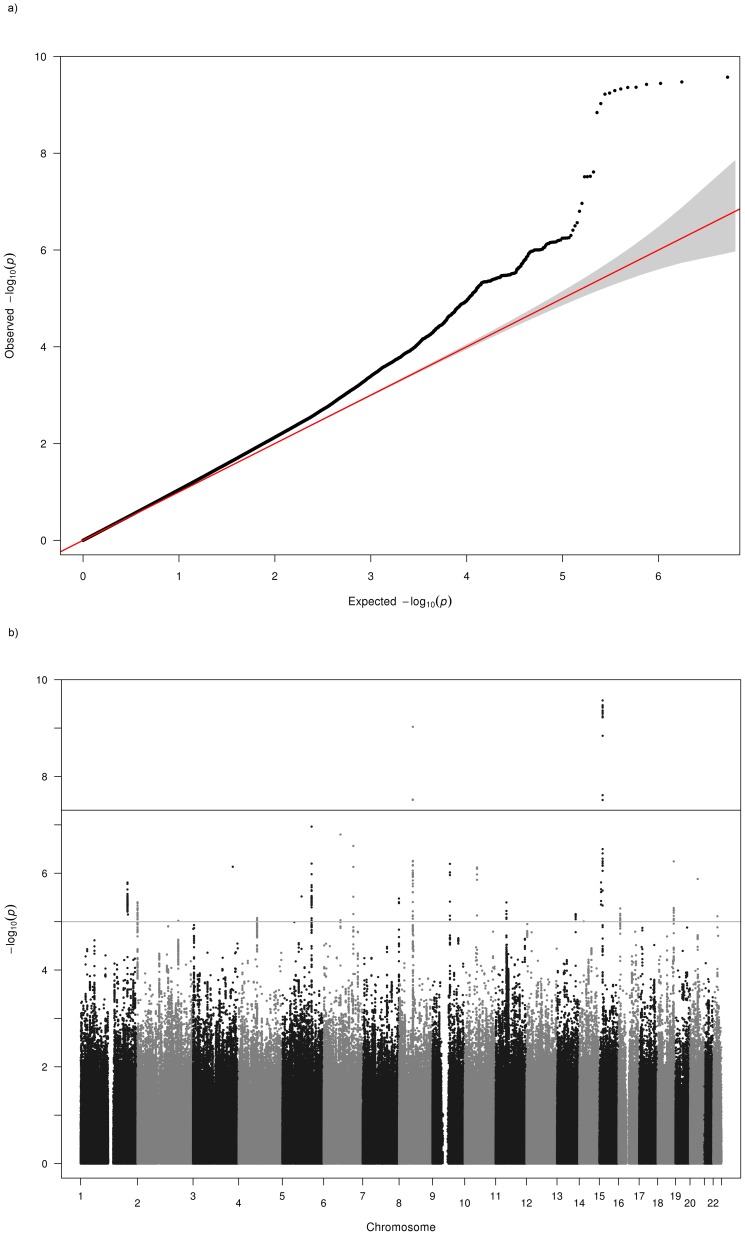
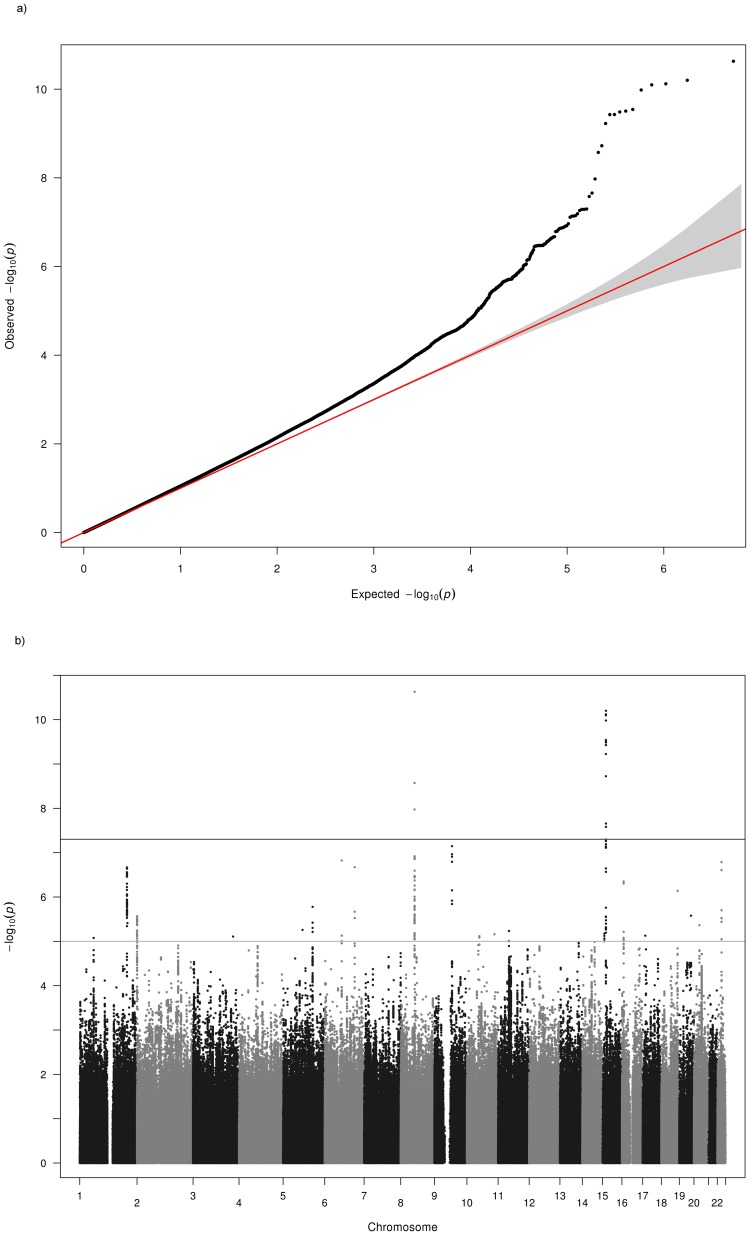
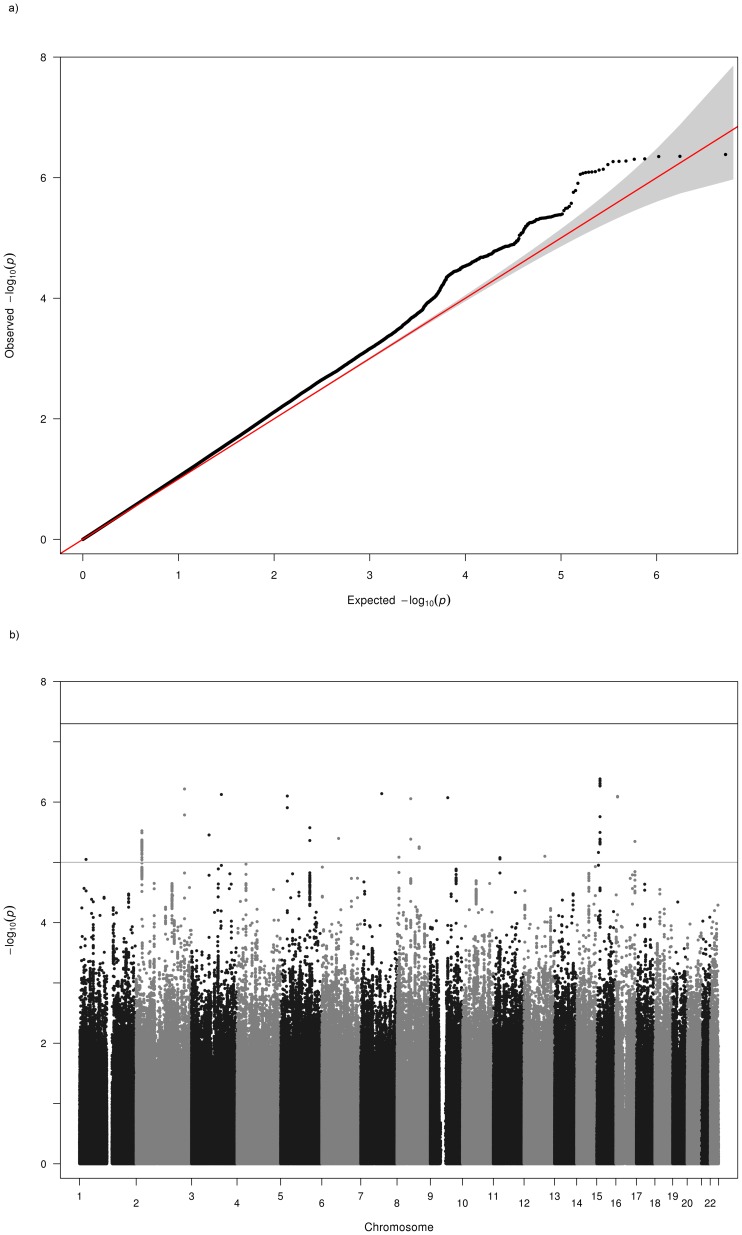
Refractive error (RE) is a complex, multifactorial disorder characterized by a mismatch between the optical power of the eye and its axial length that causes object images to be focused off the retina. The two major subtypes of RE are myopia (nearsightedness) and hyperopia (farsightedness), which represent opposite ends of the distribution of the quantitative measure of spherical refraction. We performed a fixed effects meta-analysis of genome-wide association results of myopia and hyperopia from 9 studies of European-derived populations: AREDS, KORA, FES, OGP-Talana, MESA, RSI, RSII, RSIII and ERF. One genome-wide significant region was observed for myopia, corresponding to a previously identified myopia locus on 8q12 (p = 1.25×10(-8)), which has been reported by Kiefer et al. as significantly associated with myopia age at onset and Verhoeven et al. as significantly associated to mean spherical-equivalent (MSE) refractive error. We observed two genome-wide significant associations with hyperopia. These regions overlapped with loci on 15q14 (minimum p value = 9.11×10(-11)) and 8q12 (minimum p value 1.82×10(-11)) previously reported for MSE and myopia age at onset. We also used an intermarker linkage- disequilibrium-based method for calculating the effective number of tests in targeted regional replication analyses. We analyzed myopia (which represents the closest phenotype in our data to the one used by Kiefer et al.) and showed replication of 10 additional loci associated with myopia previously reported by Kiefer et al. This is the first replication of these loci using myopia as the trait under analysis. "Replication-level" association was also seen between hyperopia and 12 of Kiefer et al.'s published loci. For the loci that show evidence of association to both myopia and hyperopia, the estimated effect of the risk alleles were in opposite directions for the two traits. This suggests that these loci are important contributors to variation of refractive error across the distribution.
屈光不正(RE)是一种复杂的多因素疾病,其特征是眼睛的屈光力与其眼轴长度不匹配,导致物体图像聚焦在视网膜之外。RE的两种主要亚型是近视(近视眼)和远视(远视眼),它们代表了球镜验光定量测量分布的相反两端。我们对来自欧洲裔人群的9项研究(年龄相关眼病研究(AREDS)、德国KORA研究、法国E3N研究、葡萄牙OGP-Talana研究、美国MESA研究、英国RSI研究、RSII研究、RSIII研究和欧洲屈光不正研究(ERF))中近视和远视的全基因组关联结果进行了固定效应荟萃分析。观察到一个与近视相关的全基因组显著区域,对应于先前在8q12上确定的一个近视基因座(p = 1.25×10⁻⁸),Kiefer等人已报道该基因座与近视发病年龄显著相关,Verhoeven等人则报道其与平均球镜等效(MSE)屈光不正显著相关。我们观察到两个与远视相关的全基因组显著关联。这些区域与先前报道的与MSE和近视发病年龄相关的15q14(最小p值 = 9.11×10⁻¹¹)和8q12(最小p值1.82×10⁻¹¹)基因座重叠。我们还使用了一种基于标记间连锁不平衡的方法来计算靶向区域复制分析中的有效检验次数。我们分析了近视(这是我们数据中与Kiefer等人使用的最接近的表型),并显示了先前Kiefer等人报道的另外10个与近视相关的基因座的复制。这是首次以近视作为分析性状对这些基因座进行复制。在远视与Kiefer等人发表的12个基因座之间也发现了“复制水平”的关联。对于显示出与近视和远视均相关证据的基因座,风险等位基因对这两个性状的估计效应方向相反。这表明这些基因座是整个分布中屈光不正变异的重要贡献因素。