Yazdanpanahi Nasrin, Behbahani Mandana, Yektaeian Afsaneh
Department of Biochemistry, Falavarjan Branch, Islamic Azad University, Isfahan, Iran.
Department of Biotechnology, Faculty of Advanced Sciences and Technologies, University of Isfahan, Iran, Isfahan.
Iran J Pharm Res. 2014 Spring;13(2):719-24.
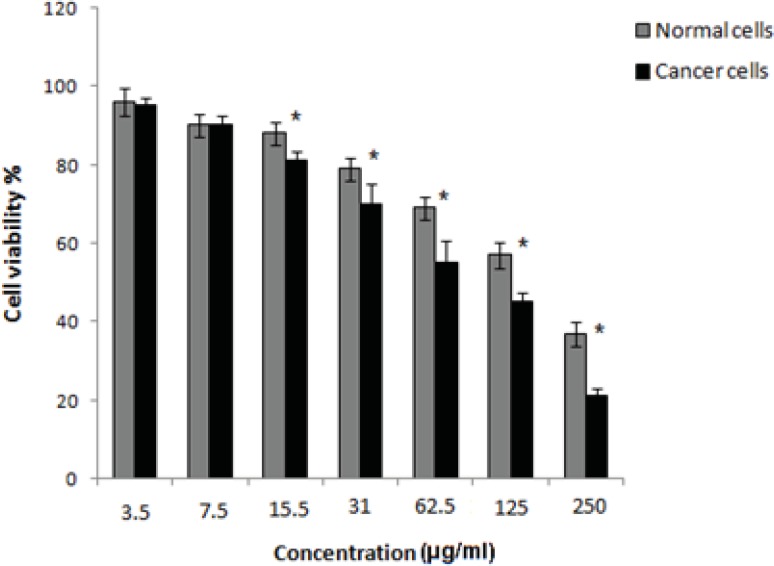
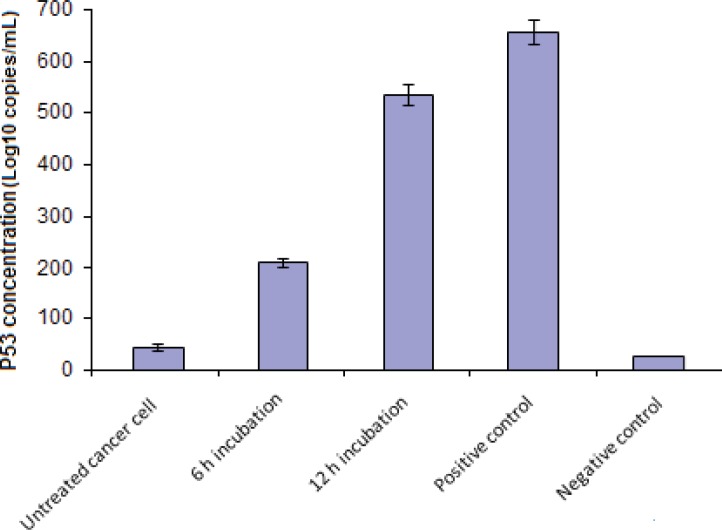
Boswellia has been widely used in traditional medicine for the treatment of different diseases such as cancer in Iran. The aim of this study was to evaluate the effect of the gum methanol extract of Boswellia thurifera on the viability and P53 gene expression of cultured breast cancer cells. The gum methanol extract was obtained in various concentrations using the maceration method. Normal (HEK-293) and cancer (MDA-MB-231) human cells were cultured and treated with various concentrations of the extract. Then MTT assay was used for the study of cytotoxic effect of the extract and real time PCR method was also applied for the investigation of P53 gene expression in cancer cells. The IC50 of the extract against cancer cells was 80 µg/mL and had less cytotoxic effect in normal cells. The effect of the extract was dose dependent. Induction of P53 expression by extract was also significantly more in treated cancer cells than untreated cells. This inductive effect in cells was higher after 12 h treatment than it was after 6 h. The results of the current study show that gum methanol extract of Boswellia thurifera has probably anti-cancer effects and could induce P53 gene transcription and toxicity in the cultured breast cancer cell line. The increase of P53 gene specific mRNA may be a mechanism of gum methanol extract induced cytotoxicity. However, for a definitive conclusion, further studies on other cell lines as well as animal models and subsequent clinical studies are warranted.
在伊朗,乳香已被广泛用于传统医学中治疗多种疾病,如癌症。本研究的目的是评估瑟氏乳香树胶甲醇提取物对培养的乳腺癌细胞活力和P53基因表达的影响。采用浸渍法获得不同浓度的树胶甲醇提取物。培养正常(HEK - 293)和癌症(MDA - MB - 231)人类细胞,并用不同浓度的提取物进行处理。然后使用MTT法研究提取物的细胞毒性作用,并采用实时PCR法研究癌细胞中P53基因的表达。提取物对癌细胞的IC50为80μg/mL,对正常细胞的细胞毒性作用较小。提取物的作用呈剂量依赖性。与未处理的细胞相比,并在处理后的癌细胞中,提取物对P53表达的诱导作用也明显更强。在细胞中,12小时处理后的诱导作用高于6小时处理后的诱导作用。本研究结果表明,瑟氏乳香树胶甲醇提取物可能具有抗癌作用,并可诱导培养的乳腺癌细胞系中P53基因转录和毒性。P53基因特异性mRNA的增加可能是树胶甲醇提取物诱导细胞毒性的一种机制。然而,为得出明确结论,有必要对其他细胞系以及动物模型进行进一步研究,并随后开展临床研究。