Zhou Yurong, Han Guocan, Wang Yue, Hu Xi, Li Zhiming, Chen Lumin, Bai Weixian, Luo Jingfeng, Zhang Yajing, Sun Jihong, Yang Xiaoming
1. Department of Radiology, Sir Run Run Shaw Hospital, Zhejiang University School of Medicine, Hangzhou, Zhejiang, China.
1. Department of Radiology, Sir Run Run Shaw Hospital, Zhejiang University School of Medicine, Hangzhou, Zhejiang, China. ; 2. Image-Guided Bio-Molecular Intervention Research, Department of Radiology, University of Washington School of Medicine, Seattle, Washington, USA.
Theranostics. 2014 Sep 10;4(11):1145-52. doi: 10.7150/thno.10006. eCollection 2014.
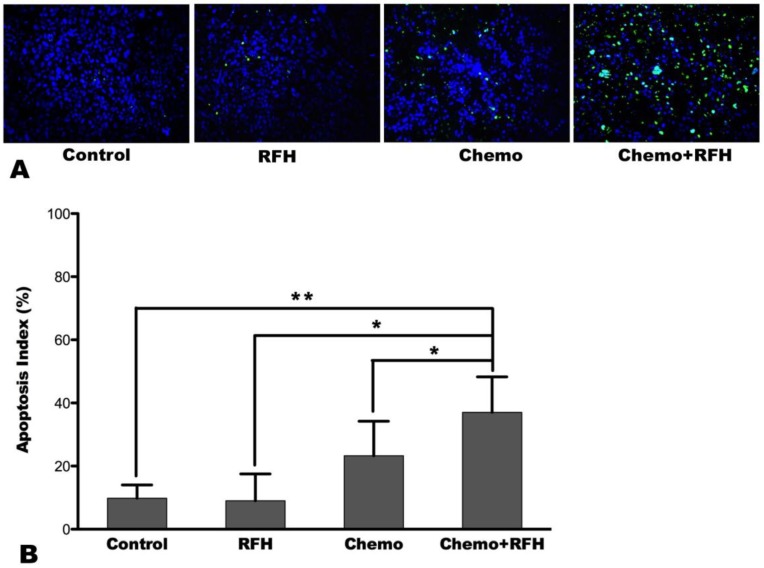
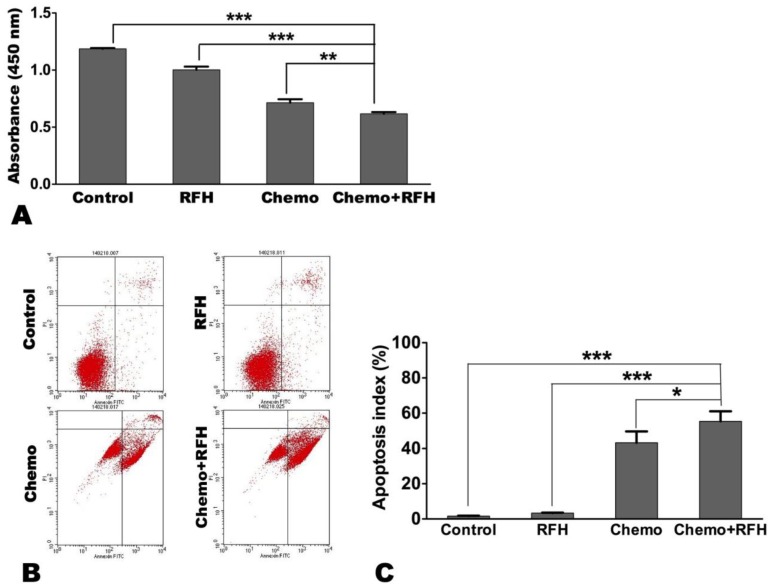
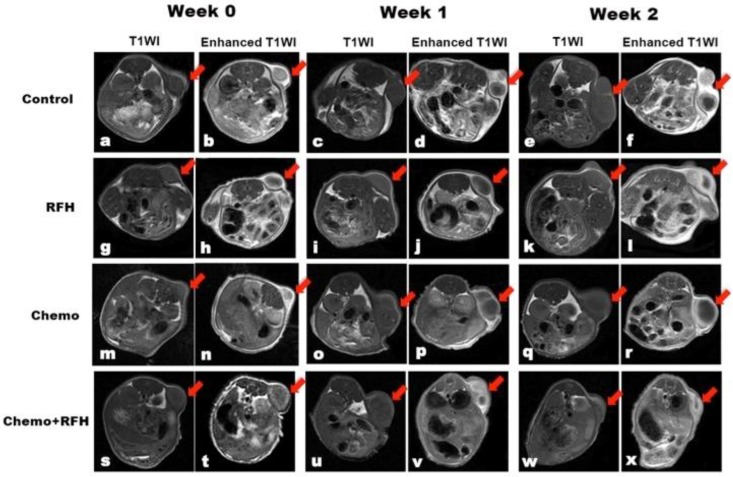
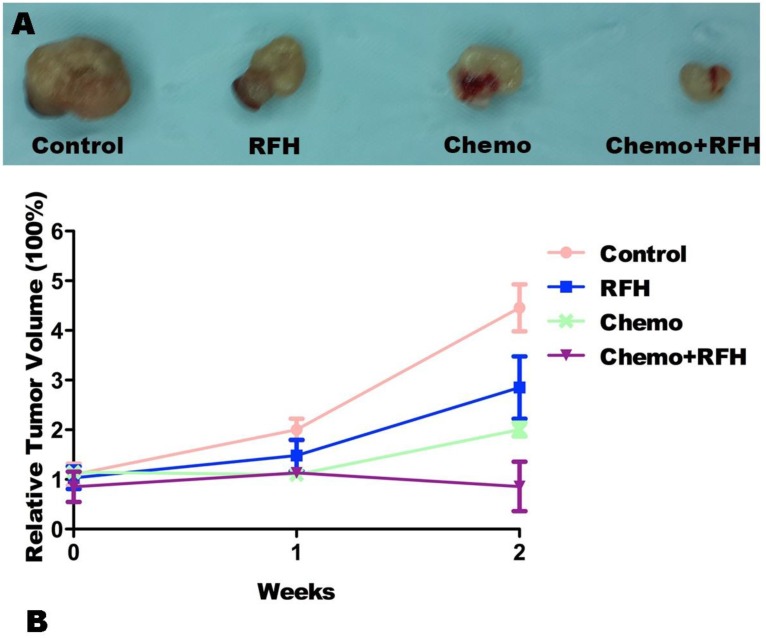
Breast cancer is the most common malignancy in women worldwide. Recent developments in minimally invasive interventional radiology techniques have significantly improved breast cancer treatment. This study aimed to develop a novel technique for the local management of breast cancers using radiofrequency heat (RFH). We performed both in vitro experiments using human breast cancer cells and in vivo validation in xenograft animal models with magnetic resonance imaging (MRI) and pathological correlation to investigate the feasibility of our approach. Four treatment groups, including (1) no treatment (control), (2) RFH-only, (3) chemo (doxorubicin)-only, and (4) combination therapy with both doxorubicin and RFH, were conducted in each experiment. In vitro combination therapy significantly decreased breast cancer cell proliferation while increased their apoptosis index compared to the other three groups. MRI demonstrated a significant tumor size reduction in animals treated with combination therapy compared to those receiving other treatments in vivo. Such result was further confirmed by pathological examination. In conclusion, our findings suggests that RFH can enhance the therapeutic efficiency of doxorubicin on breast cancers, thus establishing the basis for future development of interventional molecular image-guided local chemotherapy for breast malignancies.
乳腺癌是全球女性中最常见的恶性肿瘤。微创介入放射学技术的最新进展显著改善了乳腺癌的治疗。本研究旨在开发一种使用射频热(RFH)对乳腺癌进行局部治疗的新技术。我们进行了使用人乳腺癌细胞的体外实验以及在异种移植动物模型中的体内验证,并结合磁共振成像(MRI)和病理相关性来研究我们方法的可行性。每个实验设置了四个治疗组,包括(1)不治疗(对照组)、(2)仅RFH、(3)仅化疗(阿霉素)以及(4)阿霉素和RFH联合治疗。与其他三组相比,体外联合治疗显著降低了乳腺癌细胞的增殖,同时增加了其凋亡指数。MRI显示,与体内接受其他治疗的动物相比,联合治疗的动物肿瘤大小显著减小。病理检查进一步证实了这一结果。总之,我们的研究结果表明RFH可提高阿霉素对乳腺癌的治疗效果,从而为未来开发用于乳腺恶性肿瘤的介入分子影像引导局部化疗奠定基础。