Jedrychowski Wiesław A, Perera Frederica P, Camann David, Spengler John, Butscher Maria, Mroz Elzbieta, Majewska Renata, Flak Elżbieta, Jacek Ryszard, Sowa Agata
Chair of Epidemiology and Preventive Medicine, Jagiellonian University Medical College, 7, Kopernika Street, Krakow, Poland,
Environ Sci Pollut Res Int. 2015 Mar;22(5):3631-9. doi: 10.1007/s11356-014-3627-8. Epub 2014 Sep 26.
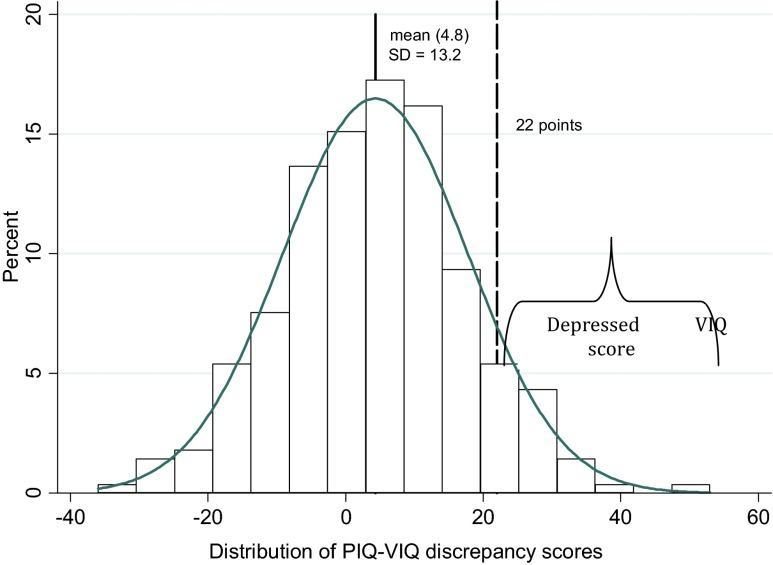
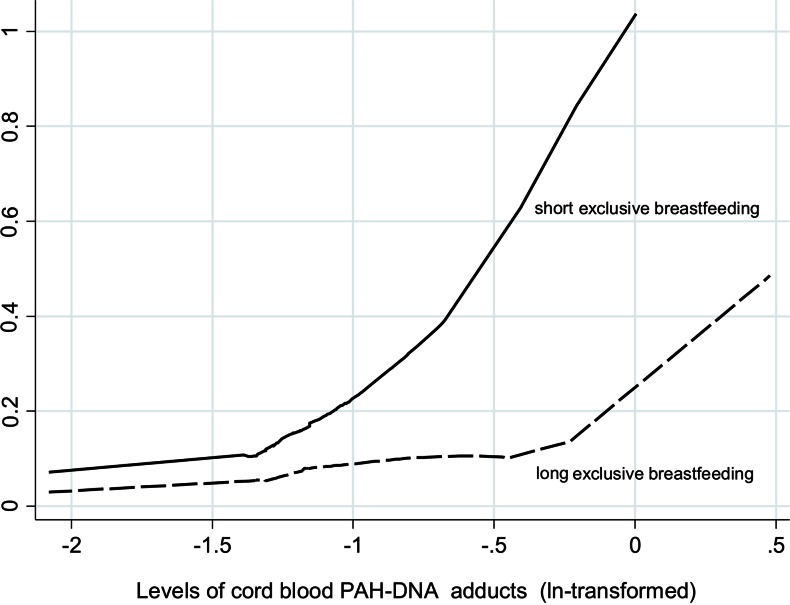
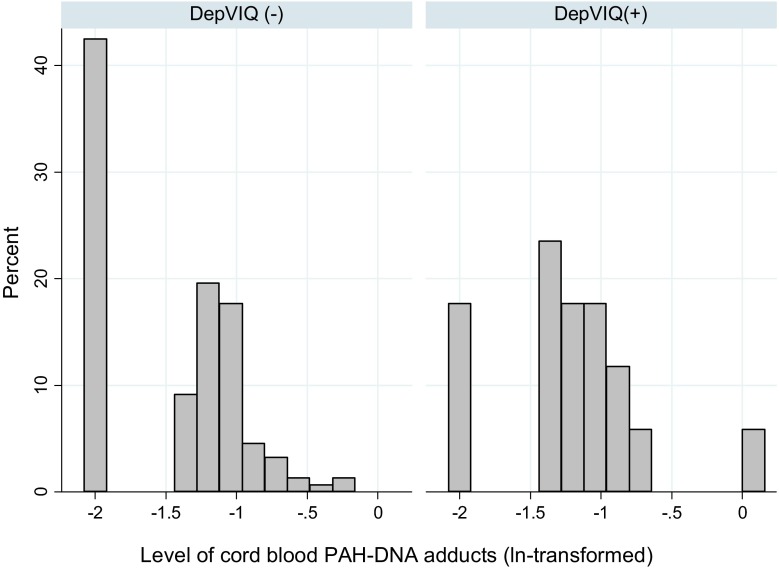
Polycyclic aromatic hydrocarbons (PAHs) are widespread environmental pollutants produced by combustion of fossil fuel and other organic materials. Both experimental animal and human studies have reported the harmful impacts of PAH compounds on fetal growth and neurodevelopment, including verbal IQ of children. Here, we have assessed the association between cognitive function of children and prenatal PAH exposures. The study is part of an ongoing, longitudinal investigation of the health effects of prenatal exposure to air pollution on infants and children in Krakow, Poland. The subjects in this report included 170 children whose mothers were enrolled to the study in the first or second trimester of pregnancy whose cord blood were tested for PAH-DNA adducts and who were assessed at age 7 using the Wechsler Intelligence Scale for Children-Revised (WISC-R). The outcome of a priori interest was depressed verbal IQ index (DepVIQ), which is the difference between WISC-R performance and verbal IQ scores. Prenatal PAH exposure was measured by cord blood PAH-DNA adducts, an individual dosimeter, integrating exposure from various sources of exposure over the gestational period. The estimated effect of prenatal PAH exposure on cognitive function was adjusted in multivariable regression for a set of potential confounders (child's gender, parity, maternal education, breastfeeding practice, environmental tobacco smoke (ETS), and postnatal PAH exposure). The prevalence of DepVIQ was significantly higher in children with detectable PAH-DNA adducts compared to those with undetectable adducts (13.7 vs. 4.4 %,). Binary multivariable regression documented that the relative risk of DepVIQ increased threefold with a ln-unit increase in cord blood adducts (relative risk (RR) = 3.0, 95 % confidence interval (CI) 1.3-6.8). Postnatal PAH exposure also increased the risk of DepVIQ (RR = 1.6, 95 % CI 1.1-2.5). Long-term exclusive breastfeeding (at least 6 months) showed a protective effect (RR = 0.3, 95 % CI 0.1-0.9). In conclusion, these results provide further evidence that PAHs are harmful to the developing fetal brain with effects extending through childhood, with implications for the academic success of the children.
多环芳烃(PAHs)是由化石燃料和其他有机材料燃烧产生的广泛存在的环境污染物。实验动物和人体研究均报告了PAH化合物对胎儿生长和神经发育的有害影响,包括儿童的语言智商。在此,我们评估了儿童认知功能与产前PAH暴露之间的关联。该研究是对波兰克拉科夫市产前暴露于空气污染对婴幼儿健康影响的一项正在进行的纵向调查的一部分。本报告中的研究对象包括170名儿童,他们的母亲在怀孕的头三个月或第二个月被纳入该研究,其脐带血接受了PAH-DNA加合物检测,并在7岁时使用韦氏儿童智力量表修订版(WISC-R)进行评估。预先感兴趣的结果是语言智商指数降低(DepVIQ),即WISC-R表现得分与语言智商得分之间的差异。产前PAH暴露通过脐带血PAH-DNA加合物进行测量,这是一种个体剂量计,整合了孕期来自各种暴露源的暴露情况。在多变量回归中,针对一组潜在混杂因素(儿童性别、产次、母亲教育程度、母乳喂养习惯、环境烟草烟雾(ETS)和产后PAH暴露)对产前PAH暴露对认知功能的估计影响进行了调整。与PAH-DNA加合物检测不到的儿童相比,检测到PAH-DNA加合物的儿童中DepVIQ的患病率显著更高(分别为13.7%和4.4%)。二元多变量回归表明,脐带血加合物每增加一个自然对数单位,DepVIQ的相对风险增加三倍(相对风险(RR)=3.0,95%置信区间(CI)1.3 - 6.8)。产后PAH暴露也增加了DepVIQ的风险(RR = 1.6,95% CI 1.1 - 2,5)。长期纯母乳喂养(至少6个月)显示出保护作用(RR = 0.3,95% CI 0.1 - 0.9)。总之,这些结果提供了进一步的证据,表明PAHs对发育中的胎儿大脑有害,其影响会持续到儿童期,这对儿童的学业成功具有重要意义。