Britta Elizandra Aparecida, Scariot Débora Botura, Falzirolli Hugo, Ueda-Nakamura Tânia, Silva Cleuza Conceição, Filho Benedito Prado Dias, Borsali Redouane, Nakamura Celso Vataru
BMC Microbiol. 2014 Sep 26;14:236. doi: 10.1186/s12866-014-0236-0.
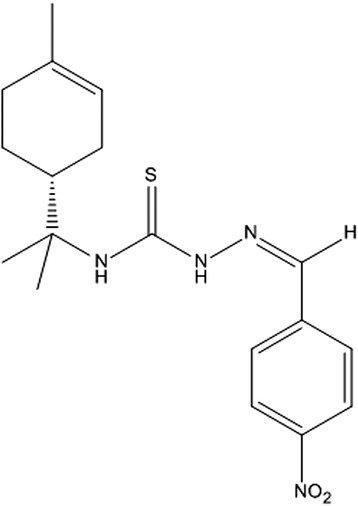
The treatment of leishmaniasis with pentavalent antimonials is problematic because of their toxicity. Investigations of potentially active molecules are important to discover less toxic drugs that are viable economic alternatives for the treatment of leishmaniasis. Thiosemicarbazones are a group of molecules that are known for their wide versatility and biological activity. In the present study, we examined the antileishmania activity, mechanism of action, and biochemical alterations produced by a novel molecule, 4-nitrobenzaldehyde thiosemicarbazone (BZTS), derived from S-limonene against Leishmania amazonensis.
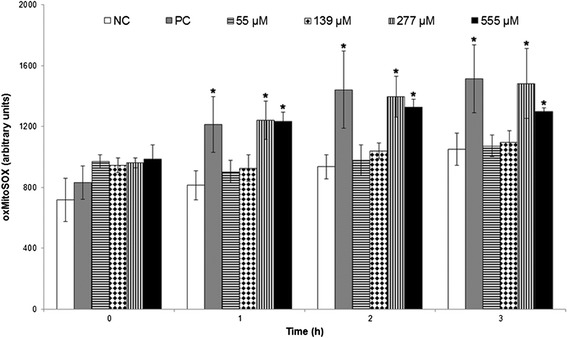
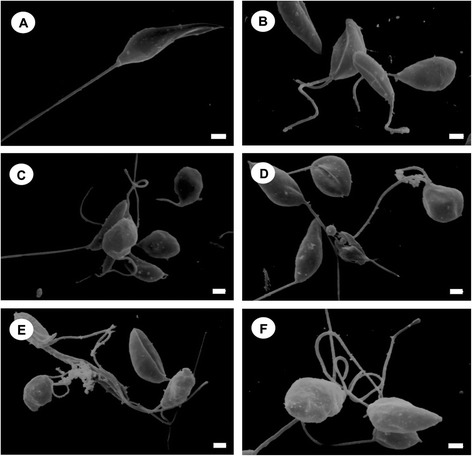
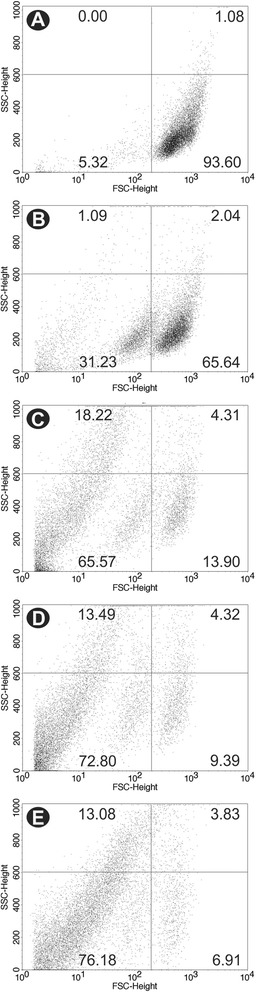
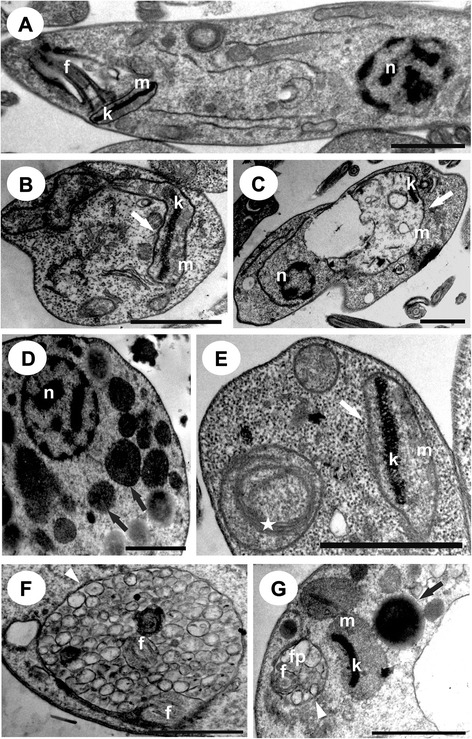
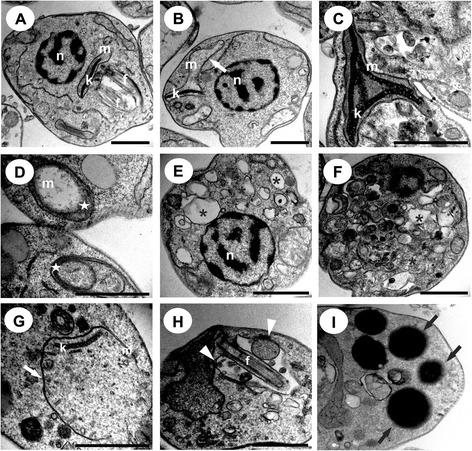
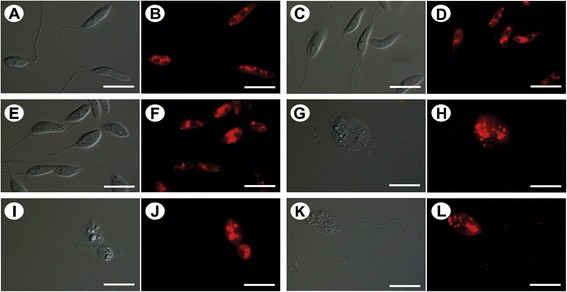
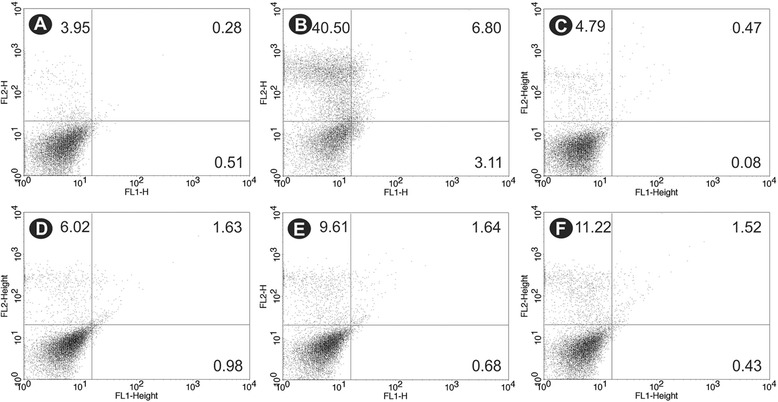
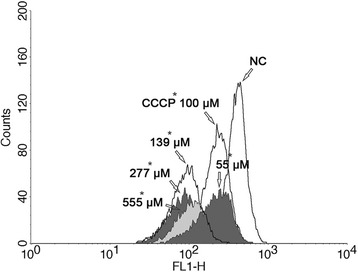
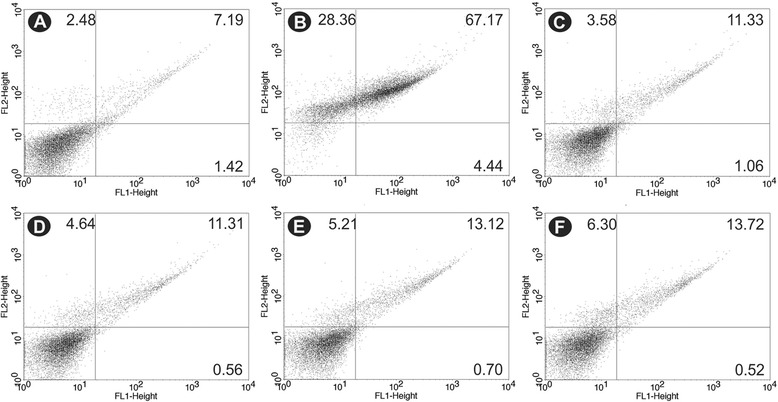
BZTS inhibited the growth of the promastigote and axenic amastigote forms, with an IC50 of 3.8 and 8.0 μM, respectively. Intracellular amastigotes were inhibited by the compound with an IC50 of 7.7 μM. BZTS also had a CC50 of 88.8 μM for the macrophage strain J774A1. BZTS altered the shape, size, and ultrastructure of the parasites, including damage to mitochondria, reflected by extensive swelling and disorganization of the inner mitochondrial membrane, intense cytoplasmic vacuolization, and the presence of concentric membrane structures inside the organelle. Cytoplasmic lipid bodies, vesicles inside vacuoles in the flagellar pocket, and enlargement were also observed. BZTS did not induce alterations in the plasma membrane or increase annexin-V fluorescence intensity, indicating no phosphatidylserine exposure. However, it induced the production of mitochondrial superoxide anion radicals.
The present results indicate that BZTS induced dramatic effects on the ultrastructure of L. amazonensis, which might be associated with mitochondrial dysfunction and oxidative damage, leading to parasite death.
由于五价锑化合物具有毒性,因此用其治疗利什曼病存在问题。研究具有潜在活性的分子对于发现毒性较小且在经济上可行的治疗利什曼病替代药物非常重要。硫代氨基脲是一类以广泛的通用性和生物活性而闻名的分子。在本研究中,我们研究了一种源自 S-柠檬烯的新型分子 4-硝基苯甲醛硫代氨基脲(BZTS)对亚马逊利什曼原虫的抗利什曼原虫活性、作用机制及产生的生化改变。
BZTS 抑制前鞭毛体和无菌无鞭毛体形式的生长,IC50 分别为 3.8 和 8.0 μM。该化合物抑制细胞内无鞭毛体,IC50 为 7.7 μM。BZTS 对巨噬细胞系 J774A1 的 CC50 为 88.8 μM。BZTS 改变了寄生虫的形状、大小和超微结构,包括线粒体损伤,表现为线粒体内膜广泛肿胀和紊乱、强烈的细胞质空泡化以及细胞器内同心膜结构的存在。还观察到细胞质脂滴、鞭毛袋液泡内的小泡以及肿大。BZTS 未诱导质膜改变或增加膜联蛋白 -V 荧光强度,表明没有磷脂酰丝氨酸暴露。然而,它诱导了线粒体超氧阴离子自由基的产生。
目前的结果表明,BZTS 对亚马逊利什曼原虫的超微结构产生了显著影响,这可能与线粒体功能障碍和氧化损伤有关,导致寄生虫死亡。