Chiang Tzu-Ching, Lu Ru-Band, Hsieh Shulan, Chang Yun-Hsuan, Yang Yen-Kuang
The Brain and Mind Institute, The University of Western Ontario, London, Ontario, Canada; Department of Psychology, National Chung Cheng University, Chiayi, Taiwan.
Department of Psychiatry, College of Medicine, National Cheng Kung University & Hospital, Tainan, Taiwan; Institute of Behavioral Medicine, College of Medicine, National Cheng Kung University, Tainan, Taiwan; Institute of Allied Health Sciences, College of Medicine, National Cheng Kung University, Tainan, Taiwan.
PLoS One. 2014 Sep 26;9(9):e106943. doi: 10.1371/journal.pone.0106943. eCollection 2014.
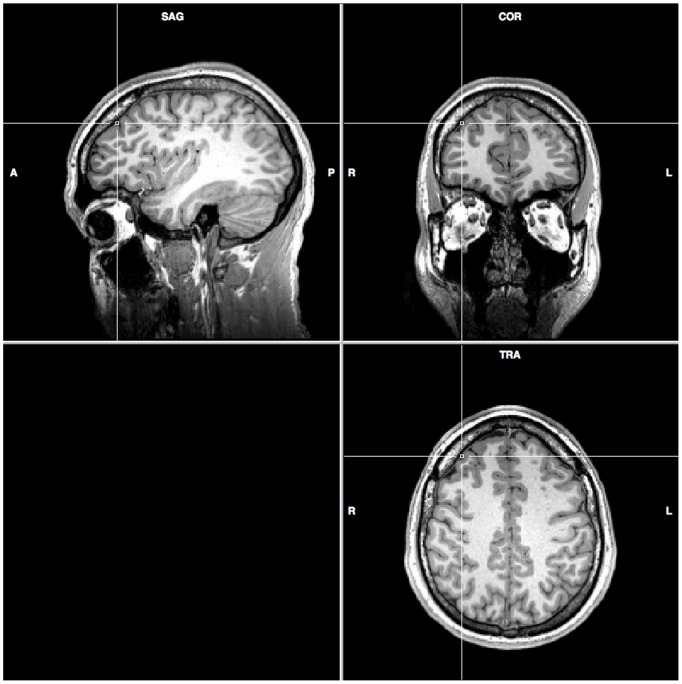
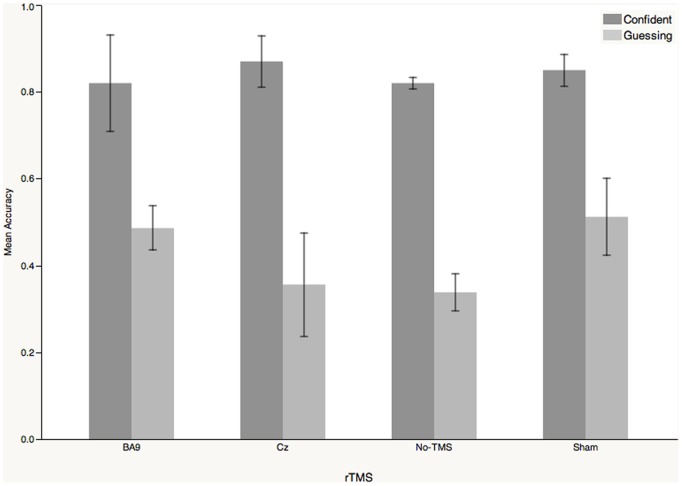
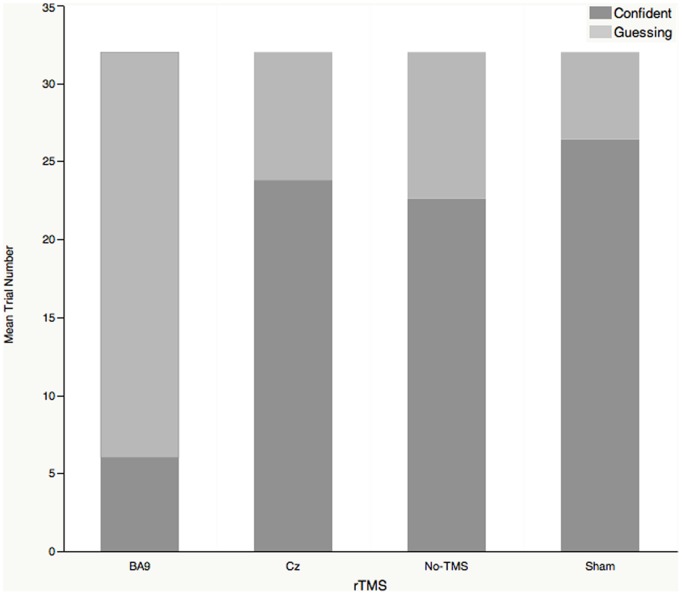
Nelson and Narens have proposed a metacognition model that dissociates the objective processing of information (object-level) and the subjective evaluation of the performance (i.e., the metalevel). Neurophysiological evidence also indicates that the prefrontal cortices (PFC) are the brain areas which perform the metalevel function [1]-[3]. A corresponding neural mechanism of Nelson and Narens's model, called dynamic filtering theory [4], [5], indicates that object-level processing is distributed in the posterior cortices and regulated by the prefrontal cortices with a filtering or gating mechanism to select appropriate signals and suppress inappropriate signals and noise. Based on this model, a hypothesis can be developed that, in the case of uncertainty or overloading of object-level processing, the prefrontal cortices will become more active in order to modulate signals and noise. This hypothesis is supported by a recent fMRI study [6] showing that the PFC (Brodmann area 9, BA9) was activated when subjects were overloaded in a bimodal attentional task, compared to a unimodal task. Here, we report a study showing that applying repetitive transmagnetic stimulation (rTMS) over the BA9 in order to interfere with its functional activity resulted in significant increas in guessed responses, compared to three other control conditions (i.e., no-TMS, sham TMS on BA9, and rTMS on Cz). The results are compatible with the dynamic filtering theory and suggest that a malfunction of the PFC would weaken the quality of meta-cognitive percepts and increase the number of guessed responses.
纳尔逊和纳伦斯提出了一种元认知模型,该模型将信息的客观处理(对象层面)与对表现的主观评估(即元层面)区分开来。神经生理学证据还表明,前额叶皮质(PFC)是执行元层面功能的脑区[1]-[3]。纳尔逊和纳伦斯模型的一种相应神经机制,称为动态过滤理论[4],[5],表明对象层面的处理分布在后部皮质,并由前额叶皮质通过过滤或门控机制进行调节,以选择合适的信号并抑制不合适的信号和噪声。基于该模型,可以提出一个假设,即在对象层面处理出现不确定性或过载的情况下,前额叶皮质将变得更加活跃,以便调节信号和噪声。最近一项功能磁共振成像研究[6]支持了这一假设,该研究表明,与单峰任务相比,当受试者在双峰注意力任务中过载时,PFC(布罗德曼区域9,BA9)被激活。在此,我们报告一项研究,该研究表明,与其他三种对照条件(即无TMS、BA9上的假TMS和Cz上的rTMS)相比,在BA9上施加重复经颅磁刺激(rTMS)以干扰其功能活动会导致猜测反应显著增加。结果与动态过滤理论相符,并表明PFC功能失调会削弱元认知感知的质量并增加猜测反应的数量。