Cheng Qijin, Li Hong, Silenzio Vincent, Caine Eric D
HKJC Centre for Suicide Research and Prevention, The University of Hong Kong, Hong Kong SAR, and Department of Psychiatry, University of Rochester Medical Center, Rochester, New York, United States of America.
School of Management, University of Chinese Academy of Sciences, Beijing, China, and Department of Psychiatry, University of Rochester Medical Center, Rochester, New York, United States of America.
PLoS One. 2014 Sep 26;9(9):e108724. doi: 10.1371/journal.pone.0108724. eCollection 2014.
Despite the common use of contagion to analogize the spread of suicide, there is a lack of rigorous assessment of the underlying concept or theory supporting the use of this term. The present study aims to examine the varied definitions and potential utility of the term contagion in suicide-related research.
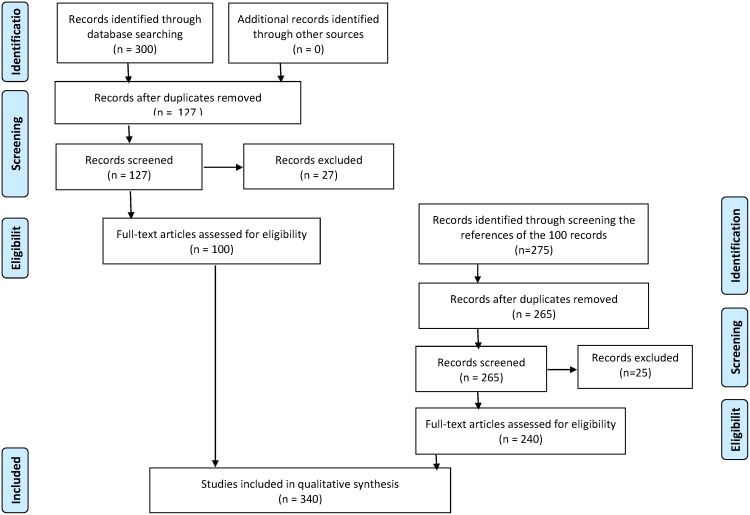
100 initial records and 240 reference records in English were identified as relevant with our research objectives, through systematic literature screening. We then conducted narrative syntheses of various definitions and assessed their potential value for generating new research.
20.3% of the 340 records used contagion as equivalent to clustering (contagion-as-cluster); 68.5% used it to refer to various, often related mechanisms underlying the clustering phenomenon (contagion-as-mechanism); and 11.2% without clear definition. Under the category of contagion-as-mechanism, four mechanisms have been proposed to explain how suicide clusters occurred: transmission (contagion-as-transmission), imitation (contagion-as-imitation), contextual influence (contagion-as-context), and affiliation (contagion-as-affiliation). Contagion-as-cluster both confounds and constrains inquiry into suicide clustering by blending proposed mechanism with the phenomenon to be studied. Contagion-as-transmission is, in essence, a double or internally redundant metaphor. Contagion-as-affiliation and contagion-as-context involve mechanisms that are common mechanisms that often occur independently of apparent contagion, or may serve as a facilitating background. When used indiscriminately, these terms may create research blind spots. Contagion-as-imitation combines perspectives from psychology, sociology, and public health research and provides the greatest heuristic utility for examining whether and how suicide and suicidal behaviors may spread among persons at both individual and population levels.
Clarifying the concept of "suicide contagion" is an essential step for more thoroughly investigating its mechanisms. Developing a clearer understanding of the apparent spread of suicide-promoting influences can, in turn, offer insights necessary to build the scientific foundation for prevention and intervention strategies that can be applied at both individual and community levels.
尽管人们普遍用传染来类比自杀的传播,但对于支持使用该术语的潜在概念或理论缺乏严格评估。本研究旨在探讨“传染”一词在自杀相关研究中的不同定义及其潜在效用。
通过系统的文献筛选,确定了100条初始记录和240条英文参考文献记录与我们的研究目标相关。然后,我们对各种定义进行了叙述性综合,并评估了它们对开展新研究的潜在价值。
在340条记录中,20.3%将“传染”等同于聚集(传染即聚集);68.5%用它来指代聚集现象背后的各种、通常相关的机制(传染即机制);11.2%未给出明确的定义。在“传染即机制”类别下,已提出四种机制来解释自杀聚集是如何发生的:传播(传染即传播)、模仿(传染即模仿)、情境影响(传染即情境)和归属(传染即归属)。“传染即聚集”通过将所提出的机制与待研究的现象混为一谈,既混淆又限制了对自杀聚集的探究。“传染即传播”本质上是一个双重的或内部冗余的隐喻。“传染即归属”和“传染即情境”所涉及的机制是常见机制,这些机制通常独立于明显的传染而发生,或者可能作为一种促进背景。如果不加区分地使用,这些术语可能会造成研究盲点。“传染即模仿”结合了心理学、社会学和公共卫生研究的观点,为研究自杀及自杀行为是否以及如何在个体和人群层面传播提供了最大的启发式效用。
明确“自杀传染”的概念是更深入研究其机制的关键一步。更清楚地理解促进自杀的影响因素的明显传播,进而可以为构建可应用于个体和社区层面的预防和干预策略的科学基础提供必要的见解。