Smith Shari E, Figley Sarah A, Schreyer David J, Paterson Phyllis G
College of Pharmacy and Nutrition, University of Saskatchewan, Saskatoon, Saskatchewan, Canada; Cameco MS Neuroscience Research Center, Saskatoon City Hospital, Saskatoon, Saskatchewan, Canada.
Department of Anatomy and Cell Biology, University of Saskatchewan, Saskatoon, Saskatchewan, Canada; Cameco MS Neuroscience Research Center, Saskatoon City Hospital, Saskatoon, Saskatchewan, Canada.
PLoS One. 2014 Sep 26;9(9):e107570. doi: 10.1371/journal.pone.0107570. eCollection 2014.
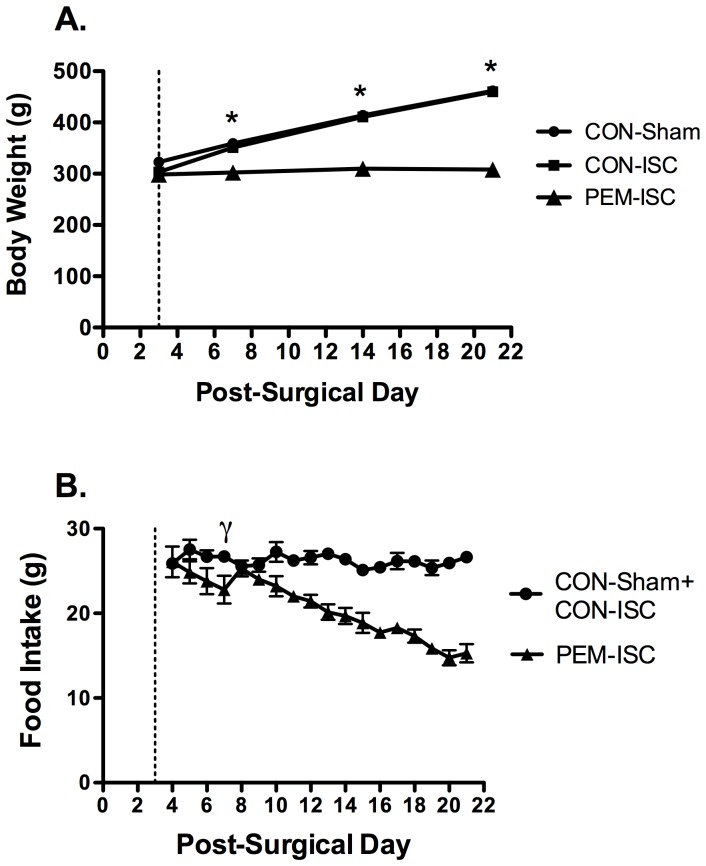
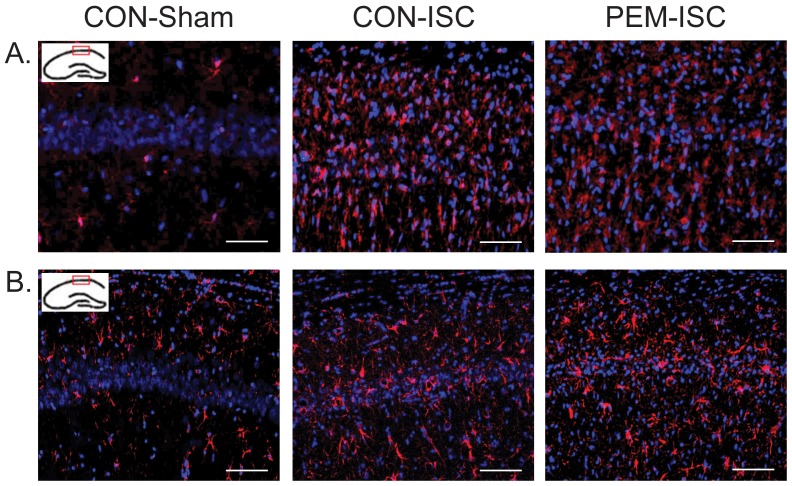
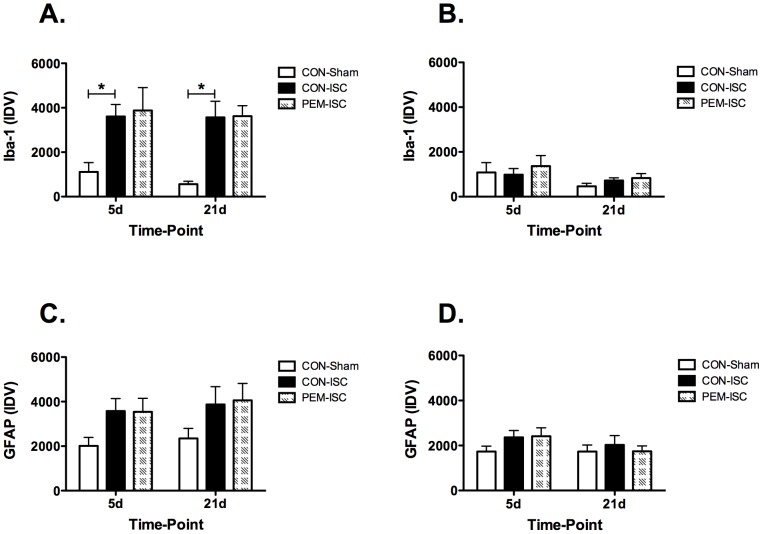
Protein-energy malnutrition (PEM) is a common post-stroke problem. PEM can independently induce a systemic acute-phase response, and pre-existing malnutrition can exacerbate neuroinflammation induced by brain ischemia. In contrast, the effects of PEM developing in the post-ischemic period have not been studied. Since excessive inflammation can impede brain remodeling, we investigated the effects of post-ischemic malnutrition on neuroinflammation, the acute-phase reaction, and neuroplasticity-related proteins. Male, Sprague-Dawley rats were exposed to global forebrain ischemia using the 2-vessel occlusion model or sham surgery. The sham rats were assigned to control diet (18% protein) on day 3 after surgery, whereas the rats exposed to global ischemia were assigned to either control diet or a low protein (PEM, 2% protein) diet. Post-ischemic PEM decreased growth associated protein-43, synaptophysin and synaptosomal-associated protein-25 immunofluorescence within the hippocampal CA3 mossy fiber terminals on day 21, whereas the glial response in the hippocampal CA1 and CA3 subregions was unaltered by PEM. No systemic acute-phase reaction attributable to global ischemia was detected in control diet-fed rats, as reflected by serum concentrations of alpha-2-macroglobulin, alpha-1-acid glycoprotein, haptoglobin, and albumin. Acute exposure to the PEM regimen after global brain ischemia caused an atypical acute-phase response. PEM decreased the serum concentrations of albumin and haptoglobin on day 5, with the decreases sustained to day 21. Serum alpha-2-macroglobulin concentrations were significantly higher in malnourished rats on day 21. This provides the first direct evidence that PEM developing after brain ischemia exerts wide-ranging effects on mechanisms important to stroke recovery.
蛋白质 - 能量营养不良(PEM)是中风后常见的问题。PEM可独立引发全身急性期反应,而既往存在的营养不良会加剧脑缺血诱导的神经炎症。相比之下,缺血后发生的PEM的影响尚未得到研究。由于过度炎症会阻碍脑重塑,我们研究了缺血后营养不良对神经炎症、急性期反应和神经可塑性相关蛋白的影响。雄性Sprague-Dawley大鼠采用双血管闭塞模型接受全脑缺血或假手术。假手术大鼠在术后第3天给予对照饮食(蛋白质含量18%),而接受全脑缺血的大鼠则给予对照饮食或低蛋白(PEM,蛋白质含量2%)饮食。缺血后PEM在第21天降低了海马CA3苔藓纤维终末内生长相关蛋白43、突触素和突触体相关蛋白25的免疫荧光,而海马CA1和CA3亚区的胶质反应未因PEM而改变。对照饮食喂养的大鼠未检测到归因于全脑缺血的全身急性期反应,这由血清中α-2-巨球蛋白、α-1-酸性糖蛋白、触珠蛋白和白蛋白的浓度反映。全脑缺血后急性暴露于PEM方案会引起非典型急性期反应。PEM在第5天降低了白蛋白和触珠蛋白的血清浓度,这种降低持续到第21天。营养不良大鼠在第21天血清α-2-巨球蛋白浓度显著更高。这提供了首个直接证据,表明脑缺血后发生的PEM对中风恢复的重要机制具有广泛影响。