Kang Ya'an, Ling Jianhua, Suzuki Rei, Roife David, Chopin-Laly Xavier, Truty Mark J, Chatterjee Deyali, Wang Huamin, Thomas Ryan M, Katz Matthew H, Chiao Paul J, Fleming Jason B
Department of Surgical Oncology, The University of Texas M.D. Anderson Cancer Center, Houston, Texas, United States of America.
Department of Molecular and Cellular Biology, The University of Texas M.D. Anderson Cancer Center, Houston, Texas, United States of America.
PLoS One. 2014 Sep 29;9(9):e107948. doi: 10.1371/journal.pone.0107948. eCollection 2014.
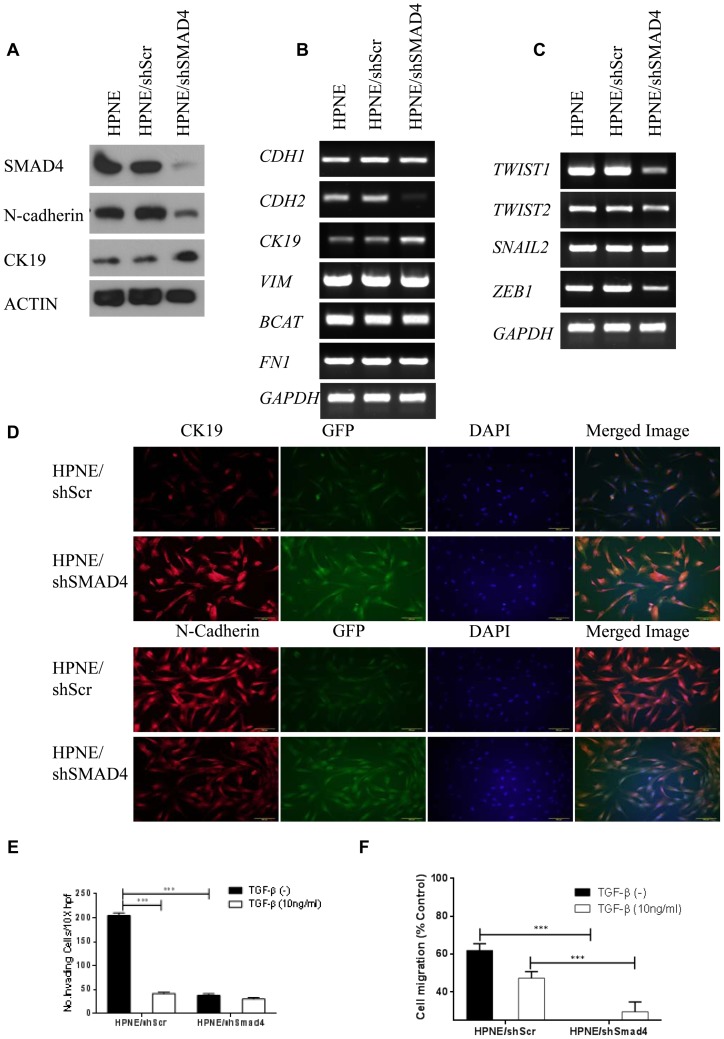
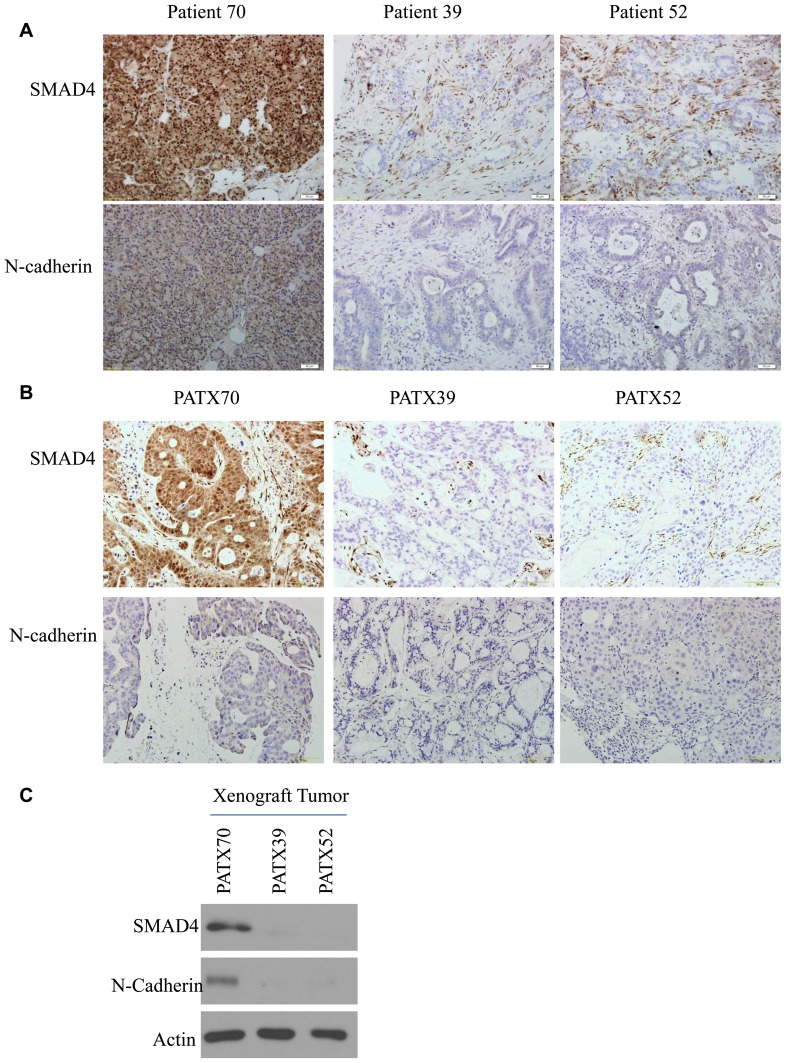
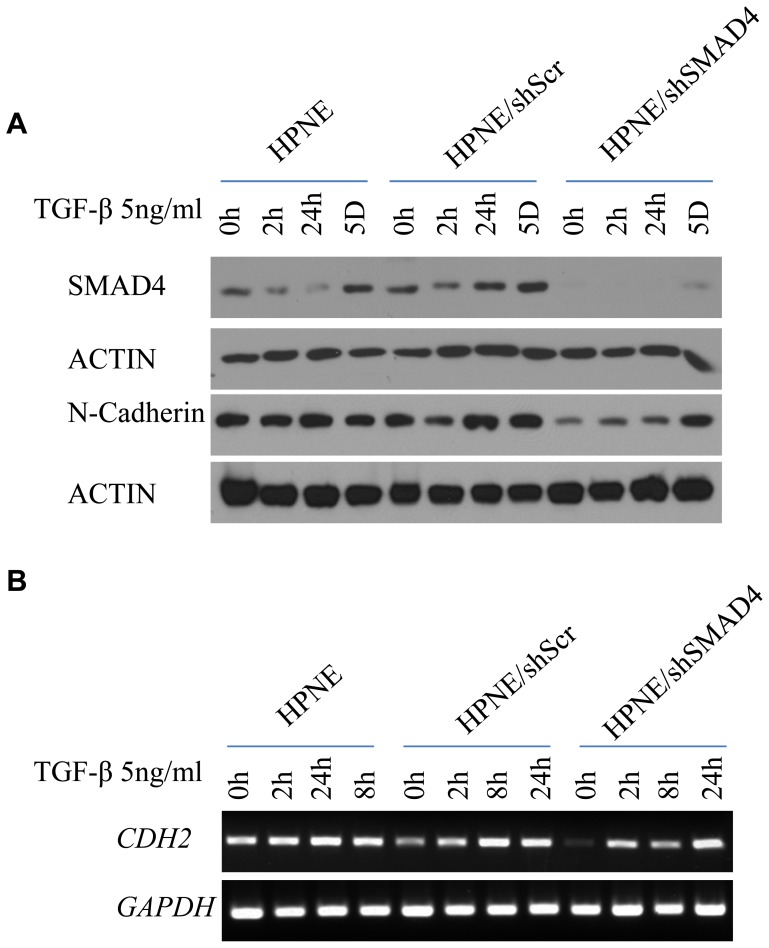
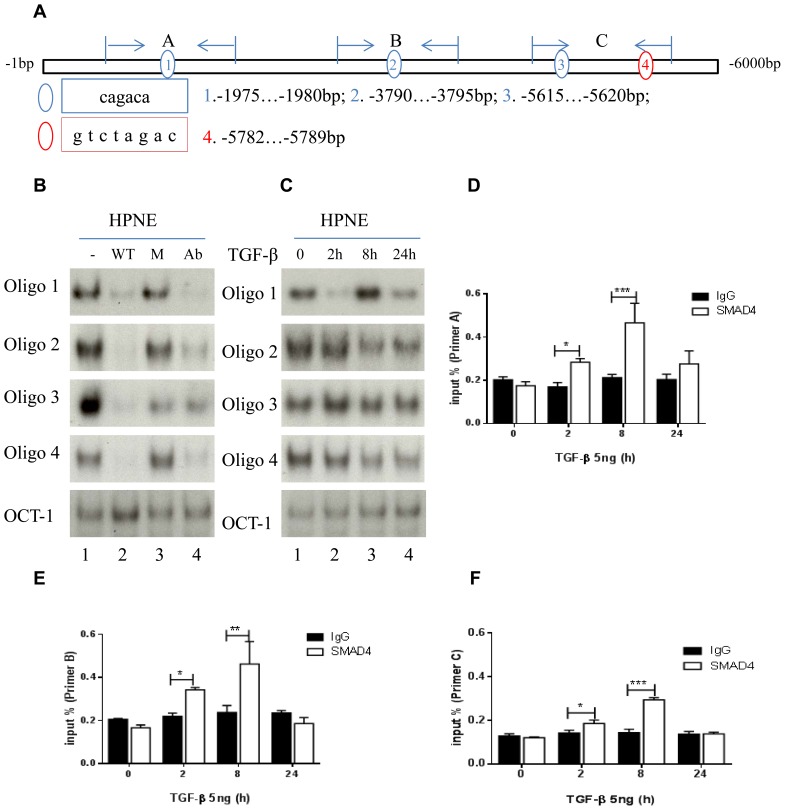
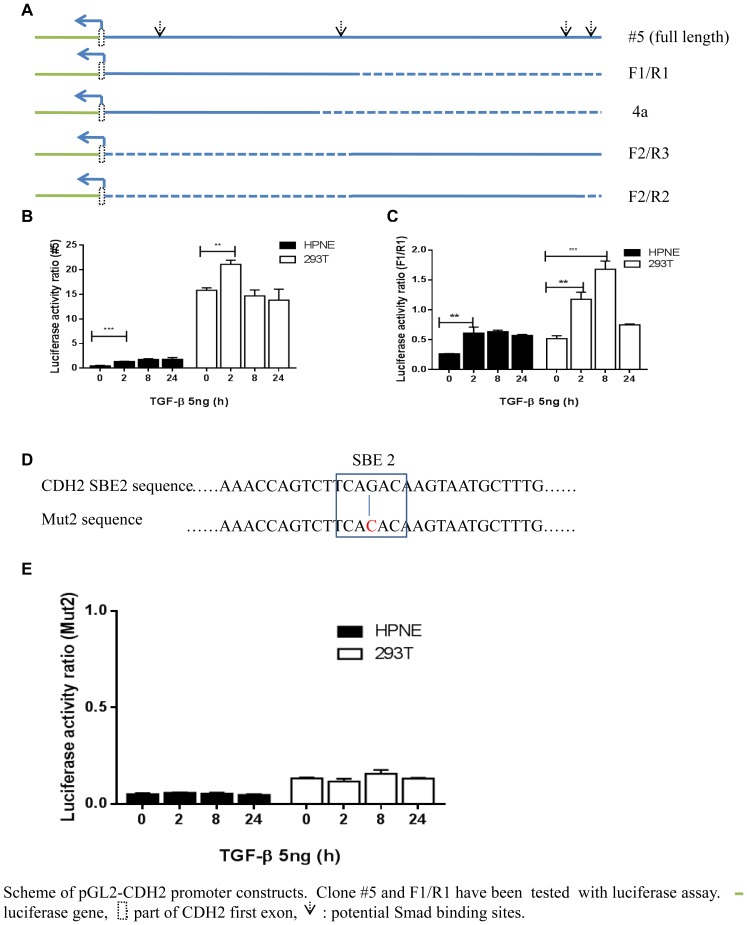
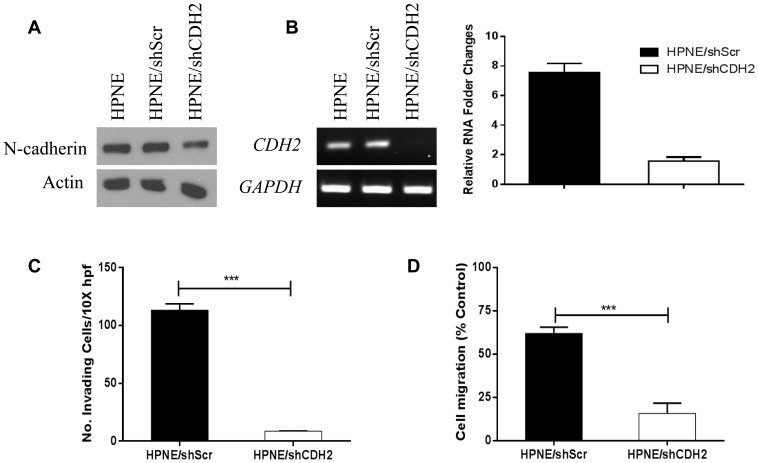
Expression of the cellular adhesion protein N-cadherin is a critical event during epithelial-mesenchymal transition (EMT). The SMAD4 protein has been identified as a mediator of transforming growth factor-β (TGF-β) superfamily signaling, which regulates EMT, but the mechanisms linking TGF-β signaling to N-cadherin expression remain unclear. When the TGF-β pathway is activated, SMAD proteins, including the common mediator SMAD4, are subsequently translocated into the nucleus, where they influence gene transcription via SMAD binding elements (SBEs). Here we describe a mechanism for control of CDH2, the gene encoding N-cadherin, through the canonical TGFβ-SMAD4 pathway. We first identified four previously undescribed SBEs within the CDH2 promoter. Using telomerase immortalized human pancreatic ductal epithelium, we found that TGF-β stimulation prompted specific SMAD4 binding to all four SBEs. Luciferase reporter and SMAD4-knockdown experiments demonstrated that specific SMAD4 binding to the SBE located at -3790 bp to -3795 bp within the promoter region of CDH2 was necessary for TGF-β-stimulated transcription. Expression of N-cadherin on the surface of epithelial cells facilitates motility and invasion, and we demonstrated that knockdown of SMAD4 causes decreased N-cadherin expression, which results in diminished migration and invasion of human pancreatic ductal epithelial cells. Similar reduction of cell motility was produced after CDH2 knockdown. Together, these findings suggest that SMAD4 is critical for the TGF-β-driven upregulation of N-cadherin and the resultant invasive phenotype of human pancreatic ductal epithelial cells during EMT.
细胞黏附蛋白N-钙黏蛋白的表达是上皮-间质转化(EMT)过程中的关键事件。SMAD4蛋白已被确定为转化生长因子-β(TGF-β)超家族信号传导的介质,该信号传导调节EMT,但将TGF-β信号传导与N-钙黏蛋白表达联系起来的机制仍不清楚。当TGF-β途径被激活时,包括共同介质SMAD4在内的SMAD蛋白随后会转移到细胞核中,在那里它们通过SMAD结合元件(SBE)影响基因转录。在这里,我们描述了一种通过经典的TGFβ-SMAD4途径控制编码N-钙黏蛋白的基因CDH2的机制。我们首先在CDH2启动子内鉴定出四个先前未描述的SBE。使用端粒酶永生化的人胰腺导管上皮,我们发现TGF-β刺激促使特定的SMAD4与所有四个SBE结合。荧光素酶报告基因和SMAD4敲低实验表明,TGF-β刺激转录需要特定的SMAD4与CDH2启动子区域中位于-3790 bp至-3795 bp处的SBE结合。上皮细胞表面N-钙黏蛋白的表达促进了细胞的运动和侵袭,并且我们证明敲低SMAD4会导致N-钙黏蛋白表达降低,从而导致人胰腺导管上皮细胞的迁移和侵袭减少。敲低CDH2后也产生了类似的细胞运动性降低。总之,这些发现表明,SMAD4对于TGF-β驱动的N-钙黏蛋白上调以及EMT过程中人类胰腺导管上皮细胞由此产生的侵袭表型至关重要。