Meyer zu Hörste Gerd, Cordes Steffen, Mausberg Anne K, Zozulya Alla L, Wessig Carsten, Sparwasser Tim, Mathys Christian, Wiendl Heinz, Hartung Hans-Peter, Kieseier Bernd C
Department of Neurology, Heinrich-Heine-University, Medical Faculty, Düsseldorf, Germany.
Department of Neurology, Julius-Maximilians-University, Würzburg, Germany.
PLoS One. 2014 Oct 6;9(10):e108756. doi: 10.1371/journal.pone.0108756. eCollection 2014.
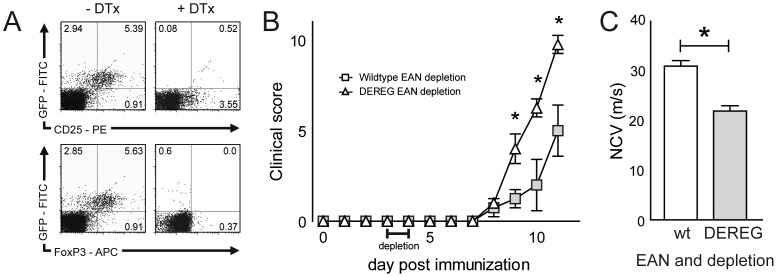
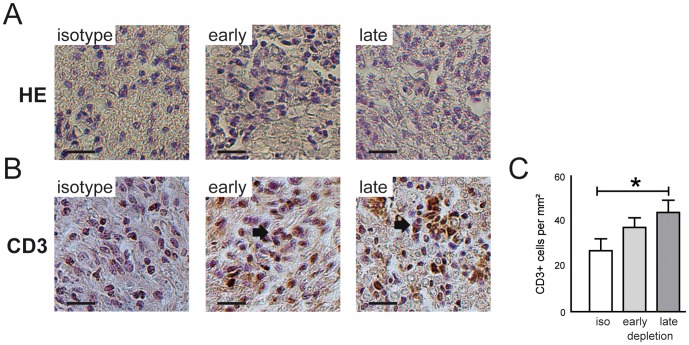
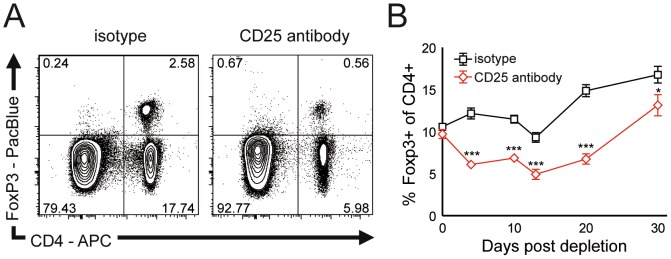
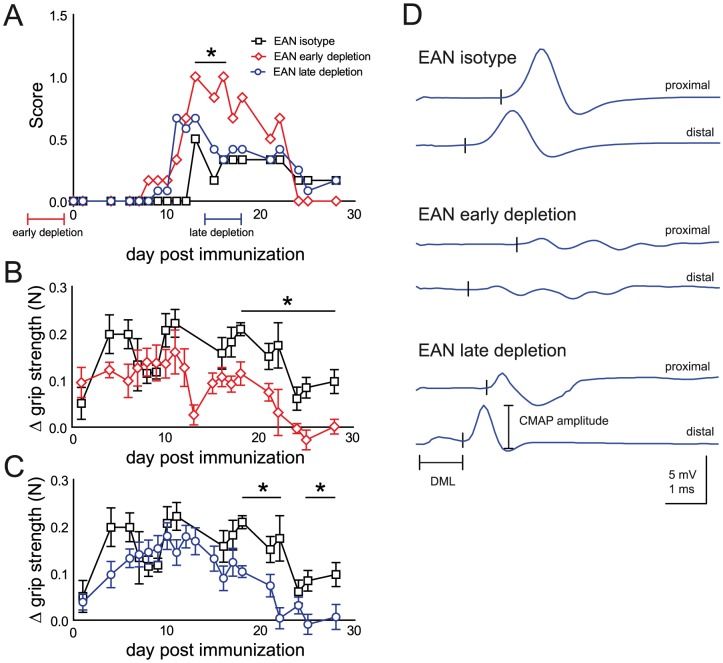
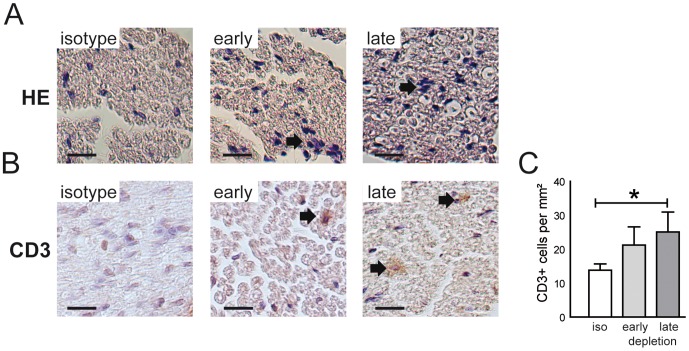
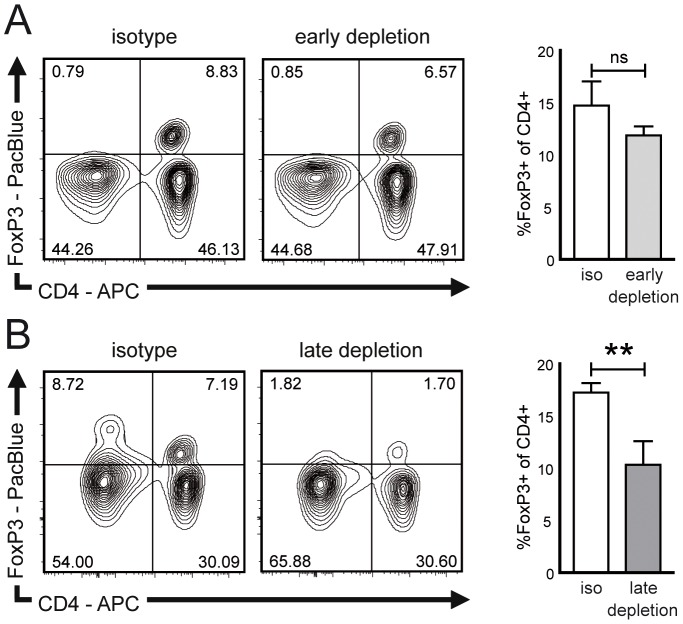
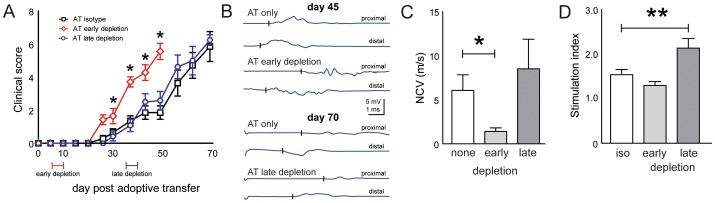
Inflammatory neuropathies represent disabling human autoimmune disorders with considerable disease variability. Animal models provide insights into defined aspects of their disease pathogenesis. Forkhead box P3 (FoxP3)+ regulatory T lymphocytes (Treg) are anti-inflammatory cells that maintain immune tolerance and counteract tissue damage in a variety of immune-mediated disorders. Dysfunction or a reduced frequency of Tregs have been associated with different human autoimmune disorders. We here analyzed the functional relevance of Tregs in determining disease manifestation and severity in murine models of autoimmune neuropathies. We took advantage of the DEREG mouse system allowing depletion of Treg with high specificity as well as anti-CD25 directed antibodies to deplete Tregs in mice in actively induced experimental autoimmune neuritis (EAN). Furthermore antibody-depletion was performed in an adoptive transfer model of chronic neuritis. Early Treg depletion increased clinical EAN severity both in active and adoptive transfer chronic neuritis. This was accompanied by increased proliferation of myelin specific T cells and histological signs of peripheral nerve inflammation. Late stage Treg depletion after initial disease manifestation however did not exacerbate inflammatory neuropathy symptoms further. We conclude that Tregs determine disease severity in experimental autoimmune neuropathies during the initial priming phase, but have no major disease modifying function after disease manifestation. Potential future therapeutic approaches targeting Tregs should thus be performed early in inflammatory neuropathies.
炎性神经病是导致人类致残的自身免疫性疾病,具有显著的疾病变异性。动物模型有助于深入了解其疾病发病机制的特定方面。叉头框P3(FoxP3)+调节性T淋巴细胞(Treg)是抗炎细胞,可维持免疫耐受并抵消多种免疫介导疾病中的组织损伤。Tregs功能障碍或频率降低与不同的人类自身免疫性疾病有关。我们在此分析了Tregs在自身免疫性神经病小鼠模型中对疾病表现和严重程度的功能相关性。我们利用DEREG小鼠系统,该系统能够高度特异性地清除Tregs,同时利用抗CD25抗体在主动诱导的实验性自身免疫性神经炎(EAN)小鼠中清除Tregs。此外,在慢性神经炎的过继转移模型中进行抗体清除。早期清除Tregs会增加主动和过继转移慢性神经炎中临床EAN的严重程度。这伴随着髓鞘特异性T细胞增殖增加以及周围神经炎症的组织学迹象。然而,在疾病最初表现后进行晚期Tregs清除并没有进一步加重炎性神经病症状。我们得出结论,Tregs在实验性自身免疫性神经病的初始致敏阶段决定疾病严重程度,但在疾病表现后没有主要的疾病修饰功能。因此,针对Tregs的潜在未来治疗方法应在炎性神经病的早期进行。