Bahl Vasundhra, Jacob Peyton, Havel Christopher, Schick Suzaynn F, Talbot Prue
Department of Cell Biology and Neuroscience, University of California Riverside, Riverside, California, United States of America; Environmental Toxicology Graduate Program, University of California Riverside, Riverside, California, United States of America.
Department of Clinical Pharmacology, University of California San Francisco, San Francisco, California, United States of America.
PLoS One. 2014 Oct 6;9(10):e108258. doi: 10.1371/journal.pone.0108258. eCollection 2014.
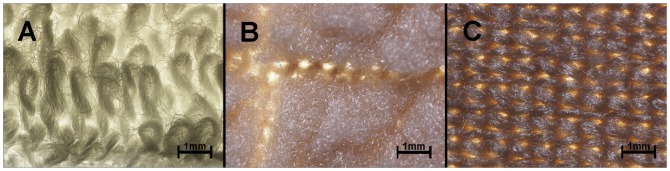
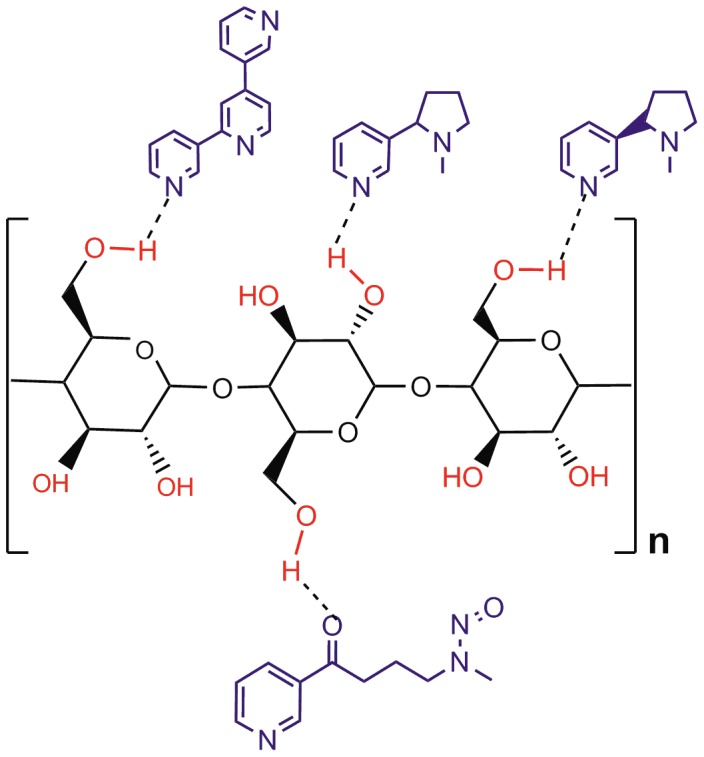
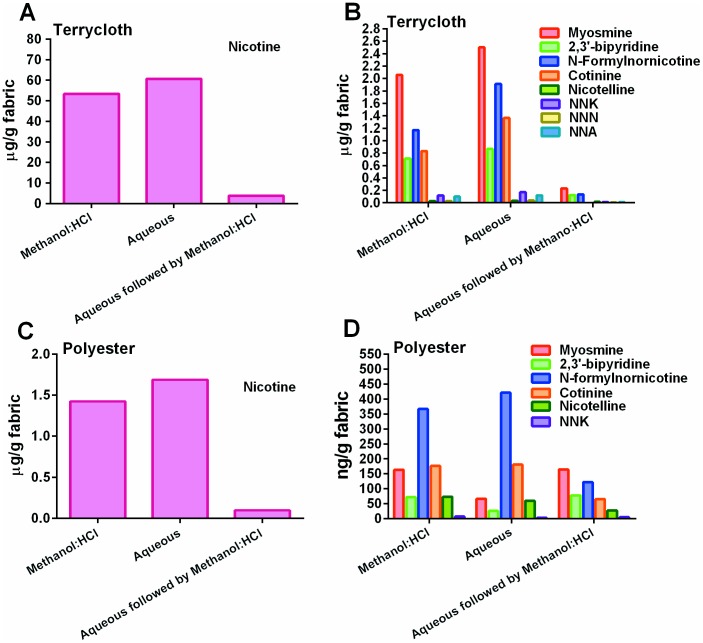
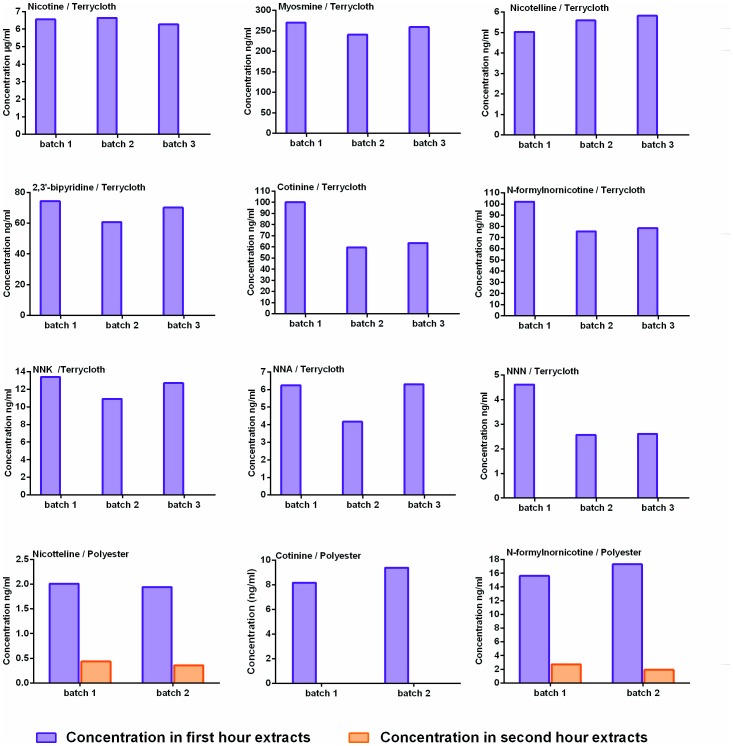
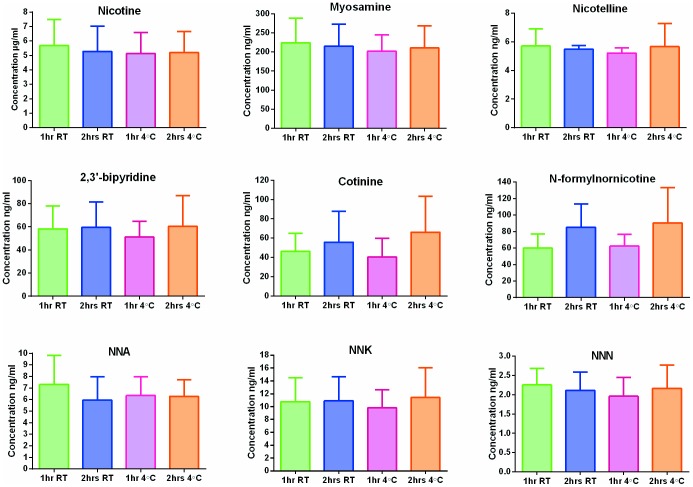
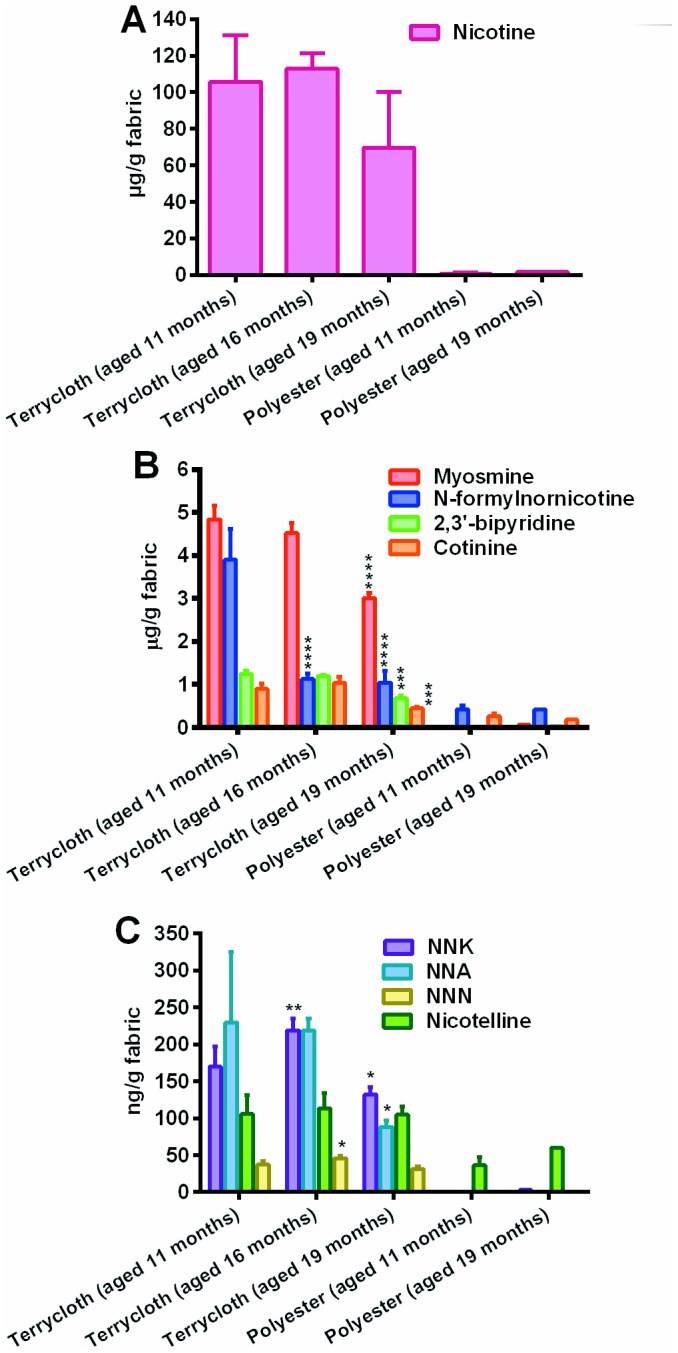
Thirdhand smoke (THS) refers to components of secondhand smoke that stick to indoor surfaces and persist in the environment. Little is known about exposure levels and possible remediation measures to reduce potential exposure in contaminated areas. This study deals with the effect of aging on THS components and evaluates possible exposure levels and remediation measures. We investigated the concentration of nicotine, five nicotine related alkaloids, and three tobacco specific nitrosamines (TSNAs) in smoke exposed fabrics. Two different extraction methods were used. Cotton terry cloth and polyester fleece were exposed to smoke in controlled laboratory conditions and aged before extraction. Liquid chromatography-tandem mass spectrometry was used for chemical analysis. Fabrics aged for 19 months after smoke exposure retained significant amounts of THS chemicals. During aqueous extraction, cotton cloth released about 41 times as much nicotine and about 78 times the amount of tobacco specific nitrosamines (TSNAs) as polyester after one hour of aqueous extraction. Concentrations of nicotine and TSNAs in extracts of terry cloth exposed to smoke were used to estimate infant/toddler oral exposure and adult dermal exposure to THS. Nicotine exposure from THS residue can be 6.8 times higher in toddlers and 24 times higher in adults and TSNA exposure can be 16 times higher in toddlers and 56 times higher in adults than what would be inhaled by a passive smoker. In addition to providing exposure estimates, our data could be useful in developing remediation strategies and in framing public health policies for indoor environments with THS.
三手烟(THS)是指附着在室内表面并在环境中持续存在的二手烟成分。关于污染区域的暴露水平以及降低潜在暴露的可能补救措施,人们了解甚少。本研究探讨了老化对三手烟成分的影响,并评估了可能的暴露水平和补救措施。我们调查了烟雾暴露织物中尼古丁、五种与尼古丁相关的生物碱以及三种烟草特有亚硝胺(TSNAs)的浓度。使用了两种不同的提取方法。棉毛巾布和聚酯绒在受控实验室条件下暴露于烟雾中,并在提取前进行老化处理。采用液相色谱 - 串联质谱法进行化学分析。烟雾暴露后老化19个月的织物仍保留了大量的三手烟化学物质。在水提取过程中,一小时后棉布释放的尼古丁量约为聚酯的41倍,烟草特有亚硝胺(TSNAs)的量约为聚酯的78倍。烟雾暴露的毛巾布提取物中尼古丁和TSNAs的浓度用于估计婴幼儿经口暴露和成人经皮暴露于三手烟的情况。与被动吸烟者吸入量相比,三手烟残留物导致的尼古丁暴露在幼儿中可能高6.8倍,在成人中可能高24倍;TSNA暴露在幼儿中可能高16倍,在成人中可能高56倍。除了提供暴露估计值外,我们的数据在制定补救策略以及制定针对存在三手烟的室内环境的公共卫生政策方面可能会有所帮助。