Irving Amy A, Yoshimi Kazuto, Hart Marcia L, Parker Taybor, Clipson Linda, Ford Madeline R, Kuramoto Takashi, Dove William F, Amos-Landgraf James M
McArdle Laboratory for Cancer Research, Department of Oncology, University of Wisconsin-Madison, Madison, WI 53792, USA.
Institute of Laboratory Animals, Graduate School of Medicine, Kyoto University, Kyoto 606-8501, Japan.
Dis Model Mech. 2014 Nov;7(11):1215-25. doi: 10.1242/dmm.016980. Epub 2014 Oct 2.
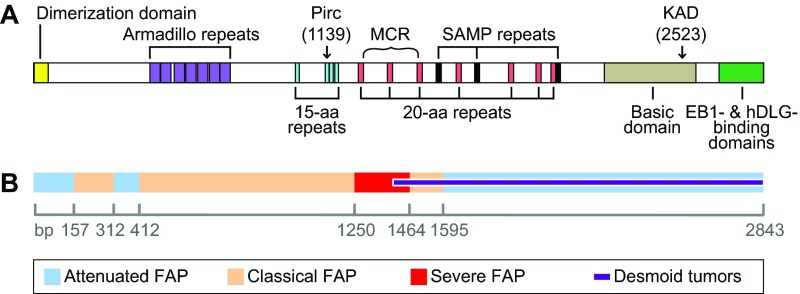
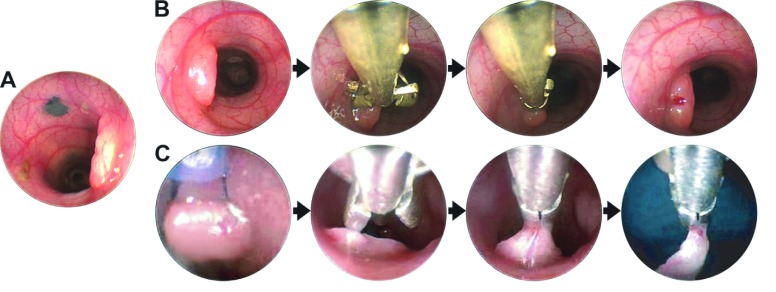
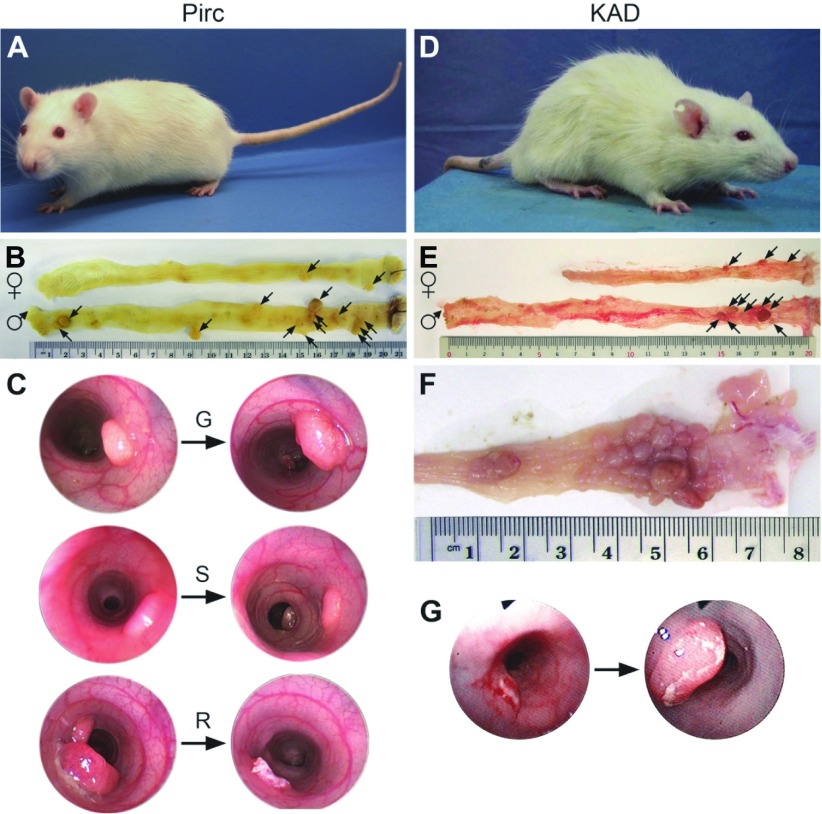
Prior to the advent of genetic engineering in the mouse, the rat was the model of choice for investigating the etiology of cancer. Now, recent advances in the manipulation of the rat genome, combined with a growing recognition of the physiological differences between mice and rats, have reignited interest in the rat as a model of human cancer. Two recently developed rat models, the polyposis in the rat colon (Pirc) and Kyoto Apc Delta (KAD) strains, each carry mutations in the intestinal-cancer-associated adenomatous polyposis coli (Apc) gene. In contrast to mouse models carrying Apc mutations, in which cancers develop mainly in the small intestine rather than in the colon and there is no gender bias, these rat models exhibit colonic predisposition and gender-specific susceptibility, as seen in human colon cancer. The rat also provides other experimental resources as a model organism that are not provided by the mouse: the structure of its chromosomes facilitates the analysis of genomic events, the size of its colon permits longitudinal analysis of tumor growth, and the size of biological samples from the animal facilitates multiplexed molecular analyses of the tumor and its host. Thus, the underlying biology and experimental resources of these rat models provide important avenues for investigation. We anticipate that advances in disease modeling in the rat will synergize with resources that are being developed in the mouse to provide a deeper understanding of human colon cancer.
在小鼠基因工程出现之前,大鼠是研究癌症病因的首选模型。如今,大鼠基因组操作的最新进展,加上对小鼠和大鼠生理差异的认识不断加深,重新点燃了人们对将大鼠作为人类癌症模型的兴趣。最近开发的两种大鼠模型,即大鼠结肠息肉病(Pirc)和京都Apc Delta(KAD)品系,均在与肠道癌相关的腺瘤性息肉病大肠杆菌(Apc)基因中携带突变。与携带Apc突变的小鼠模型不同,在小鼠模型中癌症主要发生在小肠而非结肠且无性别差异,这些大鼠模型表现出结肠易感性和性别特异性易感性,如同人类结肠癌所见。作为一种模式生物,大鼠还提供了小鼠所不具备的其他实验资源:其染色体结构便于分析基因组事件,其结肠大小允许对肿瘤生长进行纵向分析,并且来自该动物的生物样本大小便于对肿瘤及其宿主进行多重分子分析。因此,这些大鼠模型的潜在生物学特性和实验资源为研究提供了重要途径。我们预计大鼠疾病模型的进展将与小鼠正在开发的资源协同作用,以更深入地了解人类结肠癌。