Department of Surgery, National Research & Development Center for Hepatobiliary Cancer, Pusan National University Yangsan Hospital, Gyeongnam 626-770, Republic of Korea.
Biomedical Research Institute, Pusan National University Hospital, Pusan 602-739, Republic of Korea.
Nanoscale Res Lett. 2014 Sep 24;9(1):525. doi: 10.1186/1556-276X-9-525. eCollection 2014.
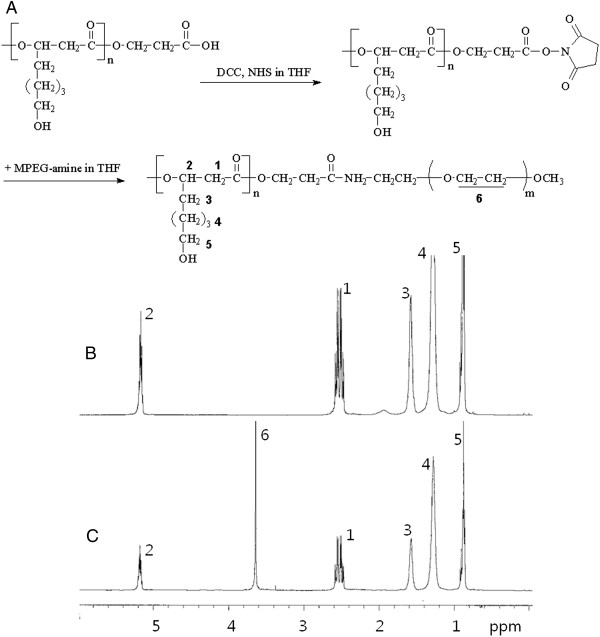
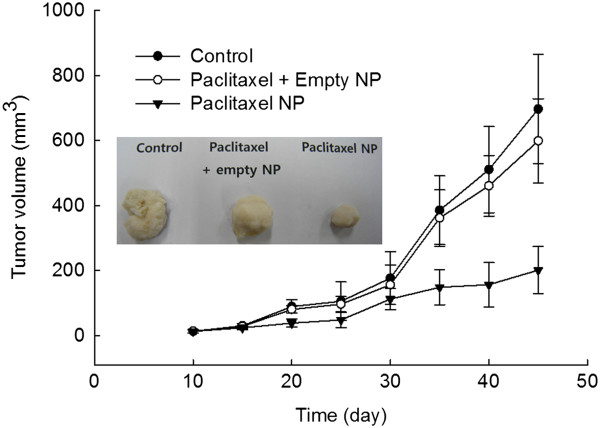
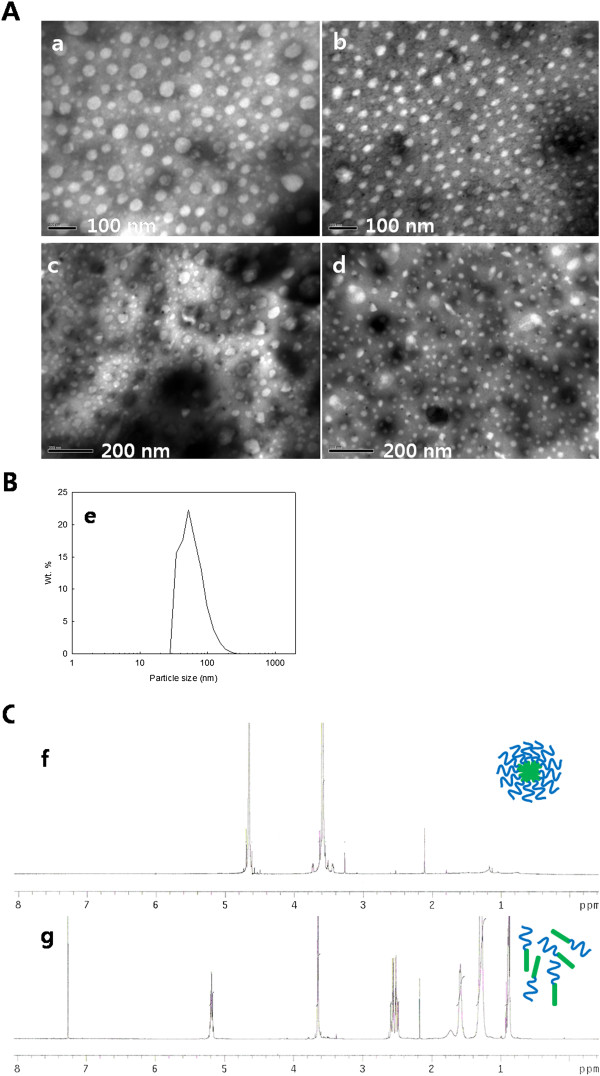
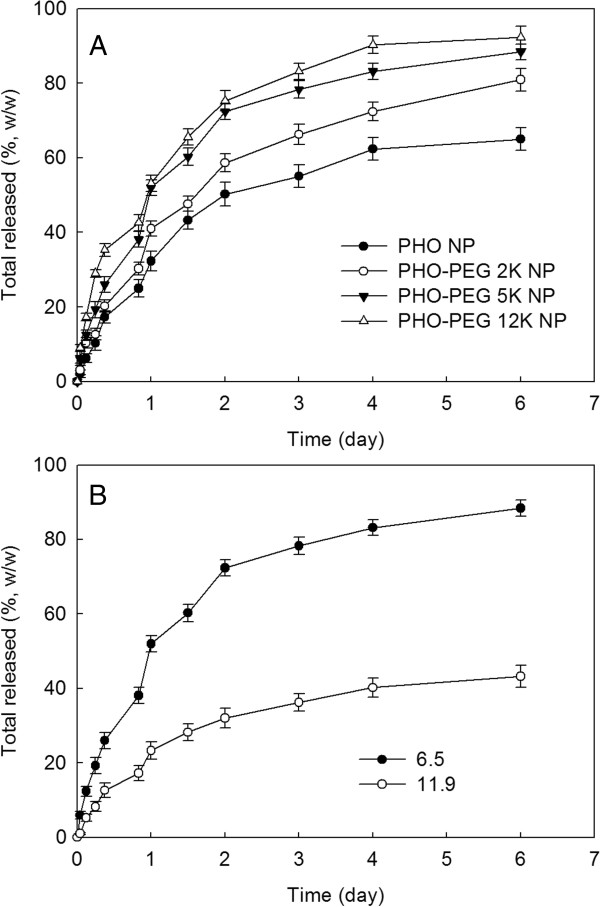
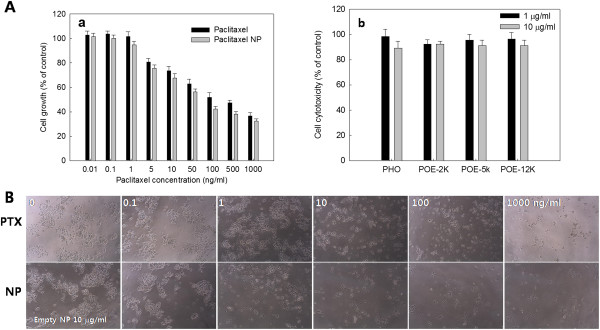
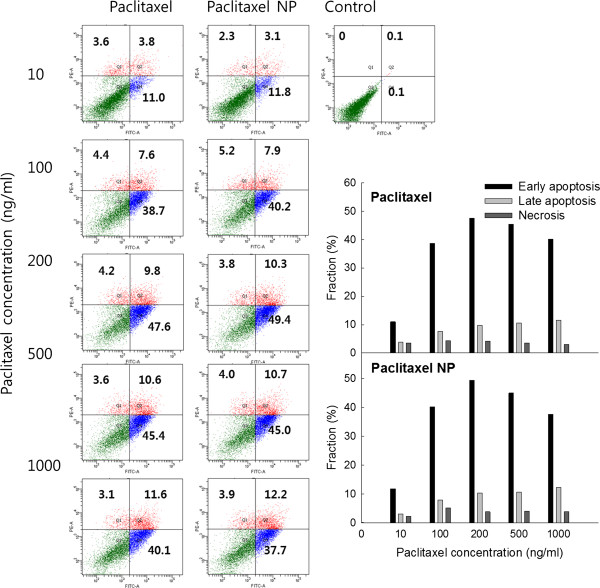
Block copolymers composed of poly(3-hydroxyoctanoate) (PHO) and methoxy poly(ethylene glycol) (PEG) were synthesized to prepare paclitaxel-incorporated nanoparticle for antitumor drug delivery. In a (1)H-NMR study, chemical structures of PHO/PEG block copolymers were confirmed and their molecular weight (M.W.) was analyzed with gel permeation chromatography (GPC). Paclitaxel as a model anticancer drug was incorporated into the nanoparticles of PHO/PEG block copolymer. They have spherical shapes and their particle sizes were less than 100 nm. In a (1)H-NMR study in D2O, specific peaks of PEG solely appeared while peaks of PHO disappeared, indicating that nanoparticles have core-shell structures. The higher M.W. of PEG decreased loading efficiency and particle size. The higher drug feeding increased drug contents and average size of nanoparticles. In the drug release study, the higher M.W. of PEG block induced the acceleration of drug release rate. The increase in drug contents induced the slow release rate of drug. In an antitumor activity study in vitro, paclitaxel nanoparticles have practically similar anti-proliferation activity against HCT116 human colon carcinoma cells. In an in vivo animal study using HCT116 colon carcinoma cell-bearing mice, paclitaxel nanoparticles have enhanced antitumor activity compared to paclitaxel itself. Therefore, paclitaxel-incorporated nanoparticles of PHO/PEG block copolymer are a promising vehicle for antitumor drug delivery.
聚(3-羟基辛酸酯)(PHO)和甲氧基聚(乙二醇)(PEG)组成的嵌段共聚物被合成以制备用于抗肿瘤药物递送的紫杉醇纳米颗粒。在 1H-NMR 研究中,确认了 PHO/PEG 嵌段共聚物的化学结构,并通过凝胶渗透色谱(GPC)分析了其分子量(MW)。紫杉醇作为模型抗癌药物被掺入 PHO/PEG 嵌段共聚物的纳米颗粒中。它们具有球形形状,粒径小于 100nm。在 D2O 中的 1H-NMR 研究中,仅出现 PEG 的特征峰,而 PHO 的峰消失,表明纳米颗粒具有核壳结构。PEG 的较高 MW 降低了载药效率和粒径。较高的药物进料增加了药物含量和纳米颗粒的平均粒径。在药物释放研究中,PEG 嵌段的较高 MW 诱导了药物释放速率的加速。药物含量的增加导致药物释放速度减慢。在体外抗肿瘤活性研究中,紫杉醇纳米颗粒对 HCT116 人结肠癌细胞具有相似的抗增殖活性。在使用 HCT116 结肠癌细胞荷瘤小鼠的体内动物研究中,与紫杉醇本身相比,紫杉醇纳米颗粒增强了抗肿瘤活性。因此,PHO/PEG 嵌段共聚物的紫杉醇纳米颗粒是一种有前途的抗肿瘤药物递送载体。