Prakash Priyanka, Lee Wing-Hin, Loo Ching-Yee, Wong Hau Seung Jeremy, Parumasivam Thaigarajan
School of Pharmaceutical Sciences, Universiti Sains Malaysia, Minden 11800, Penang, Malaysia.
Faculty of Pharmacy and Health Sciences, Royal College of Medicine Perak, Universiti Kuala Lumpur (RCMP UniKL), Ipoh 30450, Perak, Malaysia.
Nanomaterials (Basel). 2022 Jan 5;12(1):175. doi: 10.3390/nano12010175.
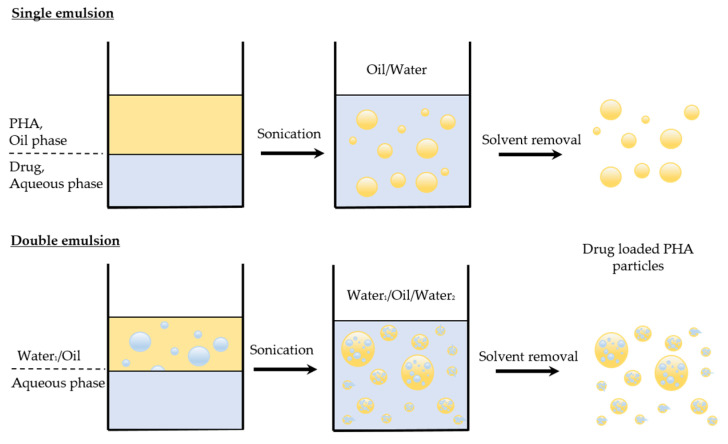
Polyhydroxyalkanoates (PHAs) are natural polymers produced under specific conditions by certain organisms, primarily bacteria, as a source of energy. These up-and-coming bioplastics are an undeniable asset in enhancing the effectiveness of drug delivery systems, which demand characteristics like non-immunogenicity, a sustained and controlled drug release, targeted delivery, as well as a high drug loading capacity. Given their biocompatibility, biodegradability, modifiability, and compatibility with hydrophobic drugs, PHAs often provide a superior alternative to free drug therapy or treatments using other polymeric nanocarriers. The many formulation methods of existing PHA nanocarriers, such as emulsion solvent evaporation, nanoprecipitation, dialysis, and in situ polymerization, are explained in this review. Due to their flexibility that allows for a vessel tailormade to its intended application, PHA nanocarriers have found their place in diverse therapy options like anticancer and anti-infective treatments, which are among the applications of PHA nanocarriers discussed in this article. Despite their many positive attributes, the advancement of PHA nanocarriers to clinical trials of drug delivery applications has been stunted due to the polymers' natural hydrophobicity, controversial production materials, and high production costs, among others. These challenges are explored in this review, alongside their existing solutions and alternatives.
聚羟基脂肪酸酯(PHA)是某些生物体(主要是细菌)在特定条件下产生的天然聚合物,作为一种能量来源。这些新兴的生物塑料在提高药物递送系统的有效性方面是一项不可否认的资产,药物递送系统需要具备非免疫原性、持续和可控的药物释放、靶向递送以及高载药量等特性。鉴于其生物相容性、生物降解性、可改性以及与疏水药物的相容性,PHA通常为游离药物治疗或使用其他聚合物纳米载体的治疗提供了一种更好的选择。本综述解释了现有PHA纳米载体的多种制备方法,如乳液溶剂蒸发法、纳米沉淀法、透析法和原位聚合法。由于PHA纳米载体具有灵活性,能够根据其预期应用定制载体,因此在多种治疗选择中都有应用,如抗癌和抗感染治疗,本文将讨论PHA纳米载体的这些应用。尽管PHA纳米载体有许多积极特性,但由于聚合物的天然疏水性、有争议的生产材料以及高生产成本等因素,PHA纳米载体在药物递送应用的临床试验进展受到了阻碍。本综述探讨了这些挑战以及现有的解决方案和替代方案。