Osanai Makoto, Lee Gang-Hong
Department of Pathology, Kochi University School of Medicine, Kohasu, Oko-cho, Nankoku, Kochi 783-8505, Japan.
BMC Res Notes. 2014 Oct 7;7:697. doi: 10.1186/1756-0500-7-697.
Retinoic acid (RA) is a critical regulator of cell differentiation, proliferation, and apoptosis in various cell types. Recently, the RA-metabolizing enzyme CYP26A1 (cytochrome P450, family 26, subfamily A, polypeptide 1) has been shown to have an oncogenic function in breast carcinogenesis. However, the relevance of elevated CYP26A1 expression in human cancers remains to be clarified.
We immunohistochemically examined the expression of CYP26A1 in cervical squamous cell carcinoma (SCC) and its precursors, including low- and high-grade squamous intraepithelial lesions (LSIL and HSIL, respectively), as well as head and neck cancer (HNC). The association between CYP26A1 expression and a number of clinicopathological parameters was also evaluated.
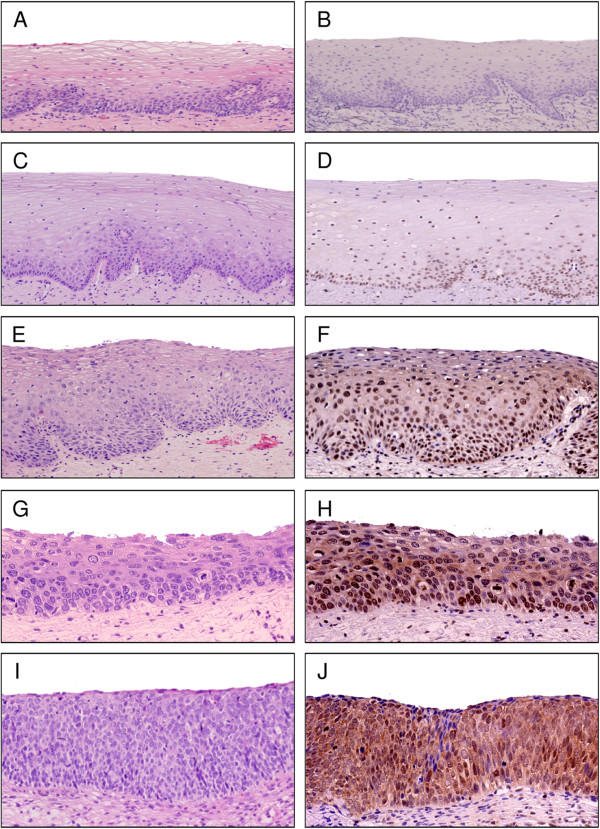
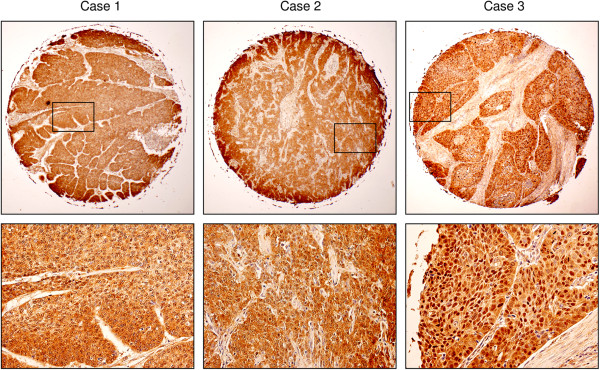
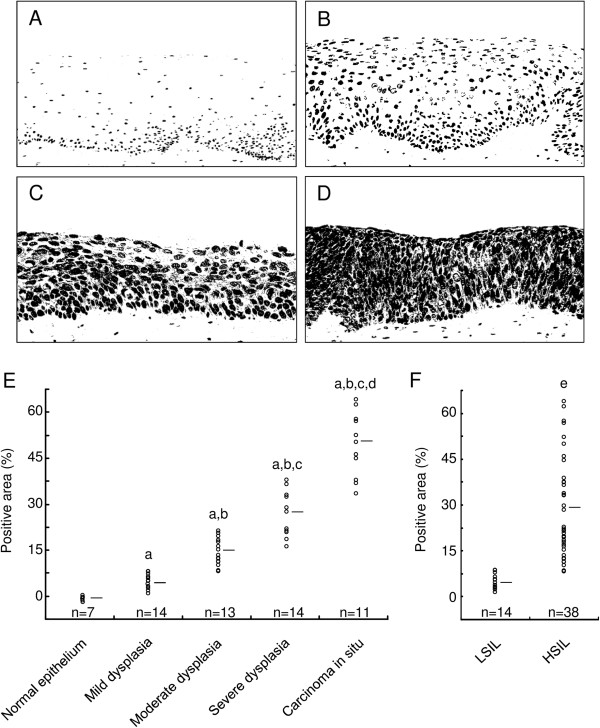
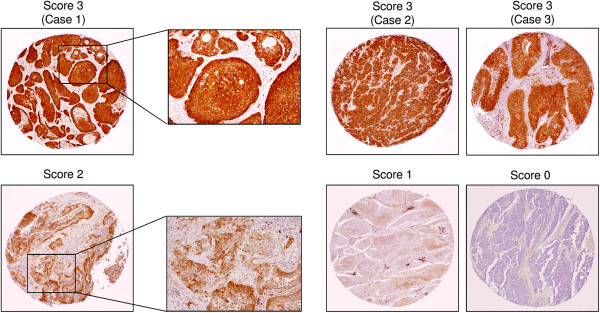
CYP26A1 was not expressed in normal cervical epithelium. CYP26A1 expression was present in LSIL but limited to basal and parabasal cells. HSIL cases exhibited strong nuclear expression of CYP26A1 and mixed cytoplasmic expression patterns with widely distributed expression toward the epithelial surface. Importantly, strong cytoplasmic staining of CYP26A1 was observed in 19 of 50 (38%) patients with cervical SCC. Elevated expression of CYP26A1 was significantly associated with younger age (<50 years) and lymph node involvement (pN). Similarly, CYP26A1 was not expressed in non-neoplastic tissues of the head and neck, but strong cytoplasmic staining of CYP26A1 was observed in 52 of 128 (41%) HNC cases. Such strong CYP26A1 expression was significantly associated with the primary tumor stage of carcinomas (pT) and the pathological tumor-node-metastasis (pTNM) stage in HNC.
Our results indicated an elevated CYP26A1 expression in malignant and precancerous dysplastic lesions of the human cervix, which also increased with the progression of cervical squamous neoplasia. In addition, this report is the first to demonstrate the increased expression of CYP26A1 in HNC and its significant correlation with primary tumor growth. These data suggested that CYP26A1 overexpression might contribute to the development and progression of cervical malignancies and squamous neoplasia of the head and neck.
视黄酸(RA)是多种细胞类型中细胞分化、增殖和凋亡的关键调节因子。最近,RA代谢酶CYP26A1(细胞色素P450,家族26,亚家族A,多肽1)已被证明在乳腺癌发生过程中具有致癌功能。然而,CYP26A1表达升高在人类癌症中的相关性仍有待阐明。
我们采用免疫组织化学方法检测了CYP26A1在宫颈鳞状细胞癌(SCC)及其前驱病变中的表达,包括低级别和高级别鳞状上皮内病变(分别为LSIL和HSIL),以及头颈部癌(HNC)。还评估了CYP26A1表达与一些临床病理参数之间的关联。
CYP26A1在正常宫颈上皮中不表达。CYP26A1表达存在于LSIL中,但仅限于基底细胞和副基底细胞。HSIL病例表现出CYP26A1的强核表达以及混合的细胞质表达模式,且向上皮表面广泛分布。重要的是,在50例宫颈SCC患者中的19例(38%)观察到CYP26A1的强细胞质染色。CYP26A1表达升高与较年轻年龄(<50岁)和淋巴结受累(pN)显著相关。同样,CYP26A1在头颈部非肿瘤组织中不表达,但在128例HNC病例中的52例(41%)观察到CYP26A1的强细胞质染色。这种强烈的CYP26A1表达与HNC中癌的原发肿瘤分期(pT)和病理肿瘤-淋巴结-转移(pTNM)分期显著相关。
我们的结果表明CYP26A1在人类宫颈的恶性和癌前发育异常病变中表达升高,且随着宫颈鳞状上皮瘤变的进展而增加。此外,本报告首次证明CYP26A1在HNC中表达增加及其与原发肿瘤生长的显著相关性。这些数据表明CYP26A1过表达可能有助于宫颈恶性肿瘤和头颈部鳞状上皮瘤变的发生和发展。