Agircan Fikret Gurkan, Schiebel Elmar
Zentrum für Molekulare Biologie der Universität Heidelberg, DKFZ-ZMBH Allianz, Heidelberg, Germany.
PLoS Genet. 2014 Oct 9;10(10):e1004672. doi: 10.1371/journal.pgen.1004672. eCollection 2014 Oct.
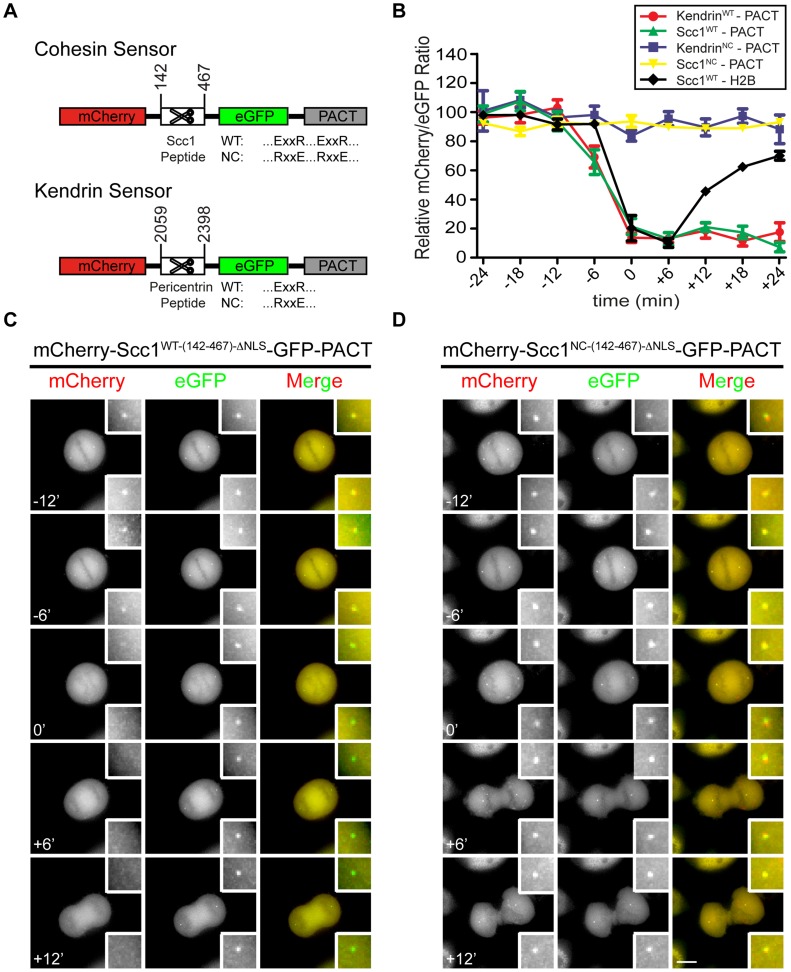
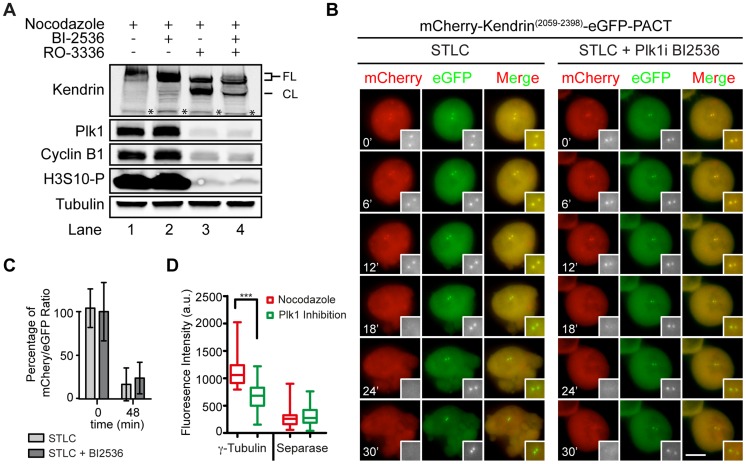
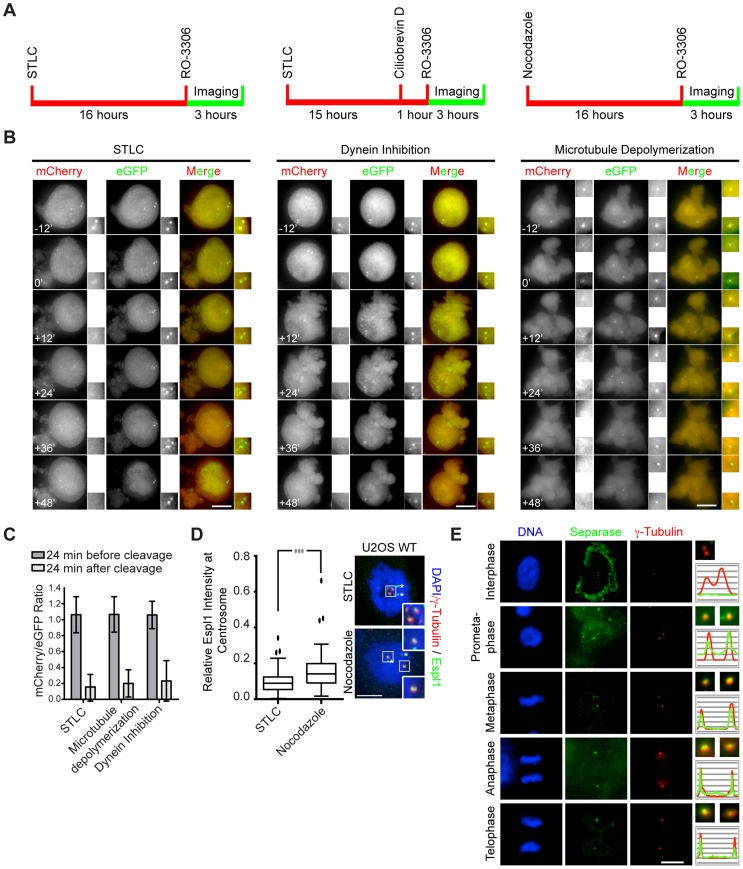
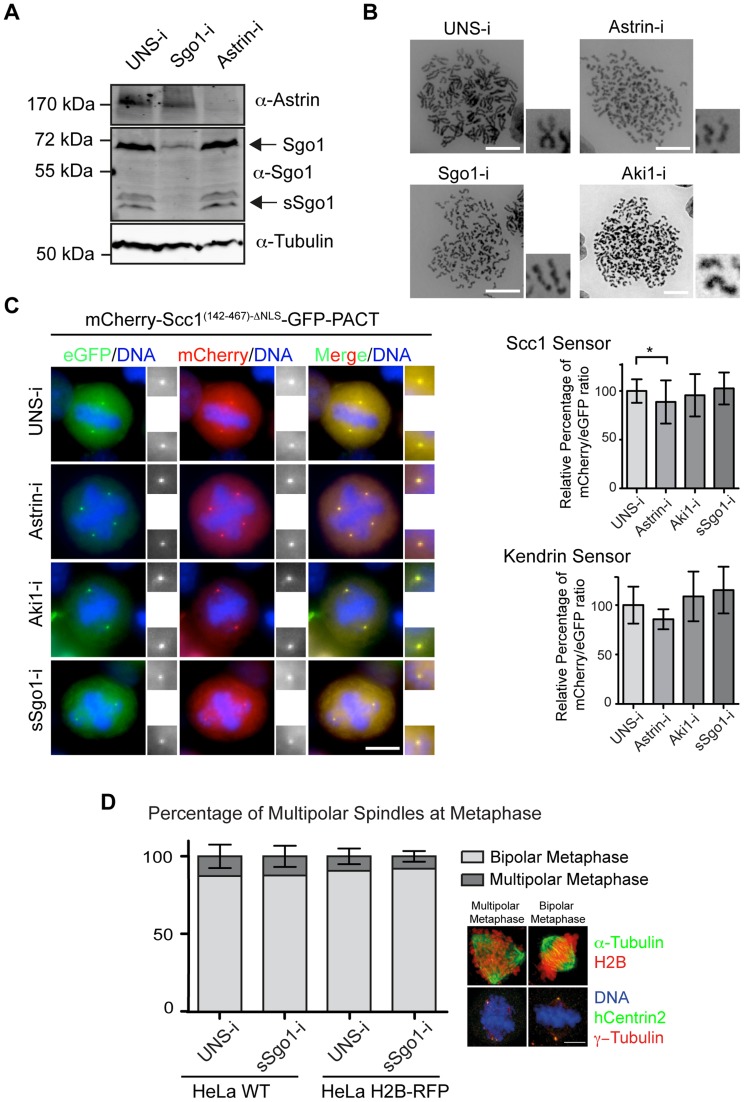
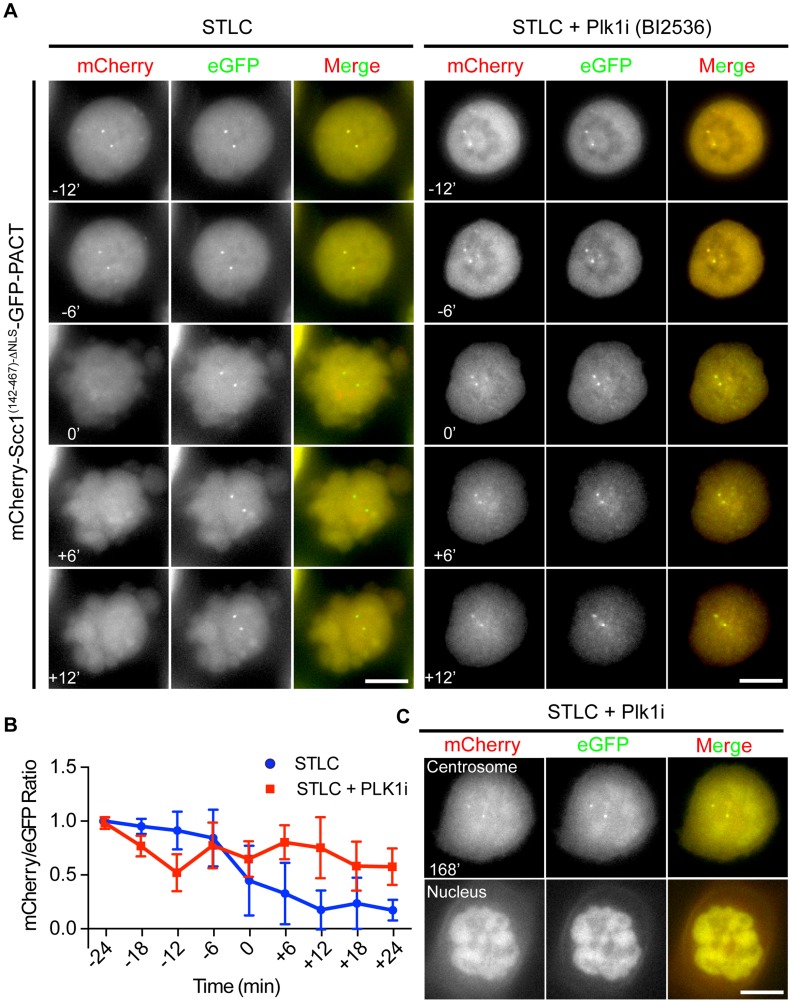
Separase is best known for its function in sister chromatid separation at the metaphase-anaphase transition. It also has a role in centriole disengagement in late mitosis/G1. To gain insight into the activity of separase at centrosomes, we developed two separase activity sensors: mCherry-Scc1(142-467)-ΔNLS-eGFP-PACT and mCherry-kendrin(2059-2398)-eGFP-PACT. Both localize to the centrosomes and enabled us to monitor local separase activity at the centrosome in real time. Both centrosomal sensors were cleaved by separase before anaphase onset, earlier than the corresponding H2B-mCherry-Scc1(142-467)-eGFP sensor at chromosomes. This indicates that substrate cleavage by separase is not synchronous in the cells. Depletion of the proteins astrin or Aki1, which have been described as inhibitors of centrosomal separase, did not led to a significant activation of separase at centrosomes, emphasizing the importance of direct separase activity measurements at the centrosomes. Inhibition of polo-like kinase Plk1, on the other hand, decreased the separase activity towards the Scc1 but not the kendrin reporter. Together these findings indicate that Plk1 regulates separase activity at the level of substrate affinity at centrosomes and may explain in part the role of Plk1 in centriole disengagement.
分离酶因其在中期-后期转换时姐妹染色单体分离中的作用而最为人所知。它在有丝分裂后期/G1期的中心粒脱离过程中也发挥作用。为了深入了解分离酶在中心体的活性,我们开发了两种分离酶活性传感器:mCherry-Scc1(142 - 467)-ΔNLS-eGFP-PACT和mCherry-kendrin(2059 - 2398)-eGFP-PACT。两者都定位于中心体,使我们能够实时监测中心体处的局部分离酶活性。在后期开始前,两种中心体传感器都被分离酶切割,比染色体上相应的H2B-mCherry-Scc1(142 - 467)-eGFP传感器更早。这表明分离酶对底物的切割在细胞中并不同步。已被描述为中心体分离酶抑制剂的蛋白astrin或Aki1的缺失,并未导致中心体处分离酶的显著激活,这强调了在中心体直接测量分离酶活性的重要性。另一方面,抑制polo样激酶Plk1会降低分离酶对Scc1的活性,但不会降低对kendrin报告基因的活性。这些发现共同表明,Plk1在中心体处底物亲和力水平上调节分离酶活性,这可能部分解释了Plk1在中心粒脱离中的作用。