Favaretto Francesca, Milan Gabriella, Collin Gayle B, Marshall Jan D, Stasi Fabio, Maffei Pietro, Vettor Roberto, Naggert Jürgen K
Department of Medicine, University of Padua, Padua, Italy.
The Jackson Laboratory, Bar Harbor, Maine, United States of America.
PLoS One. 2014 Oct 9;9(10):e109540. doi: 10.1371/journal.pone.0109540. eCollection 2014.
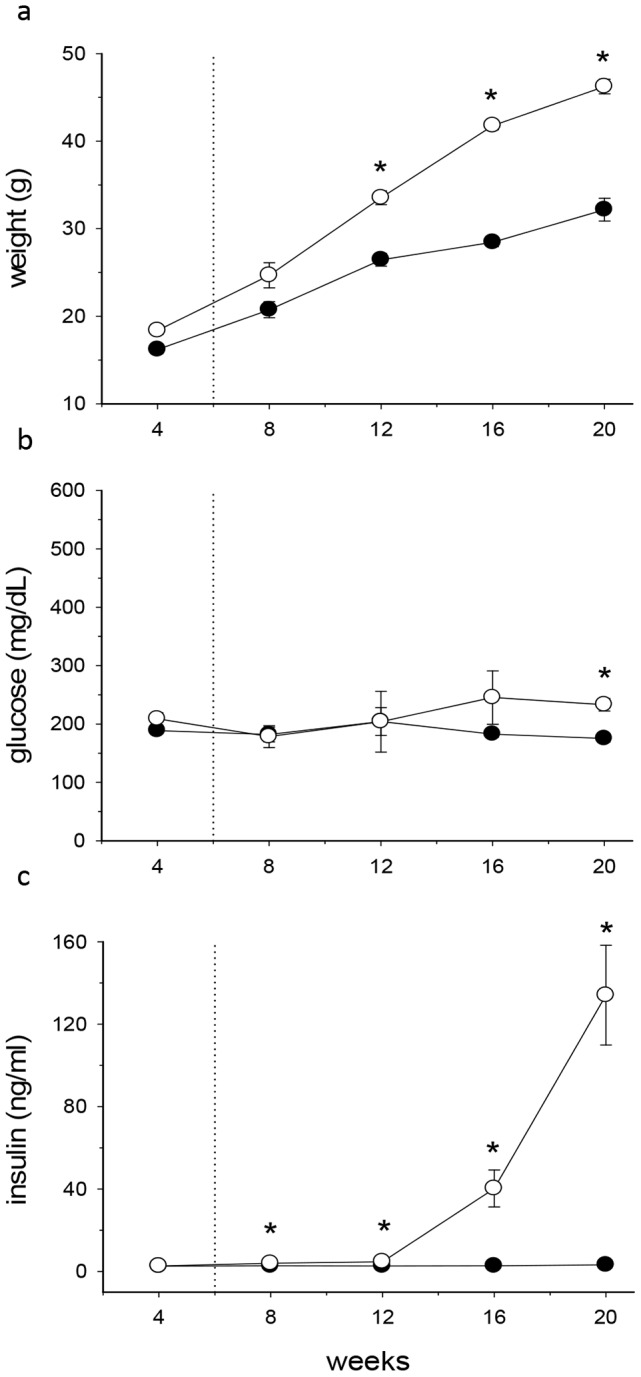
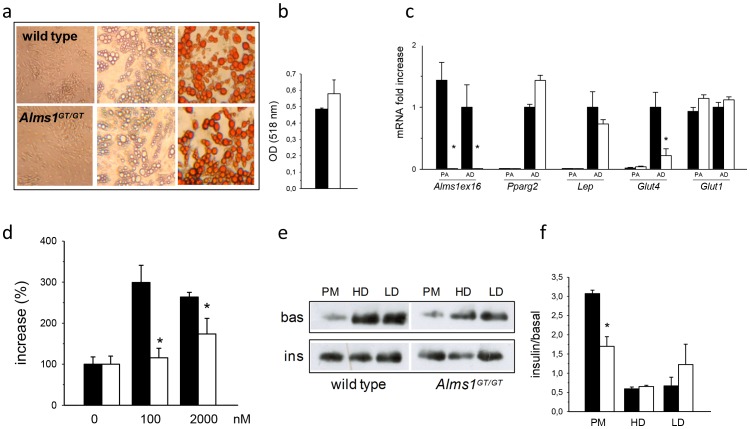
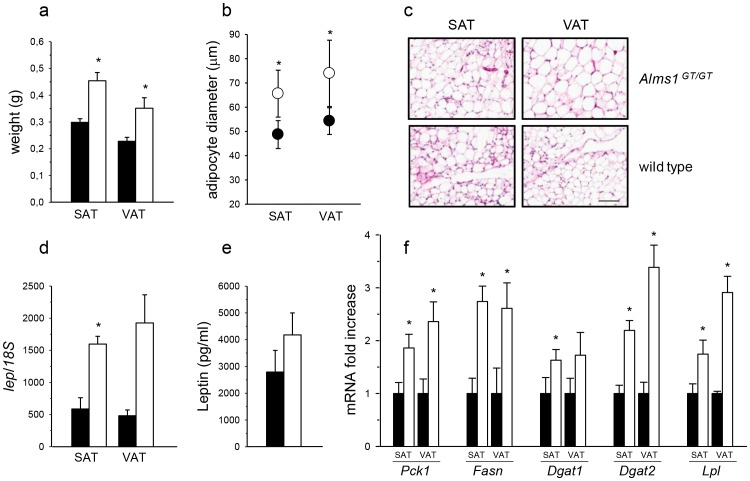
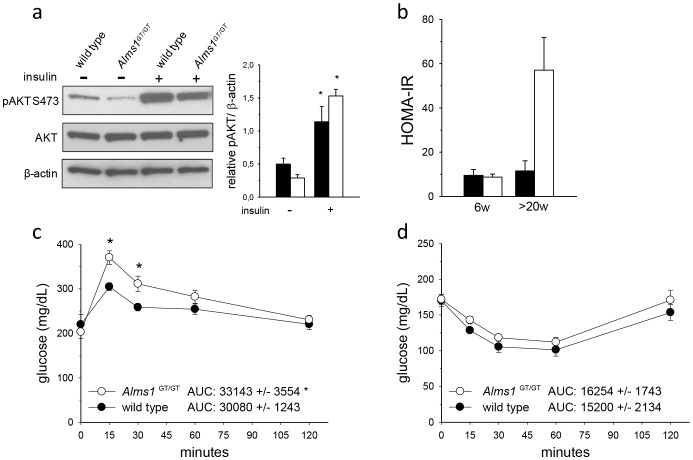
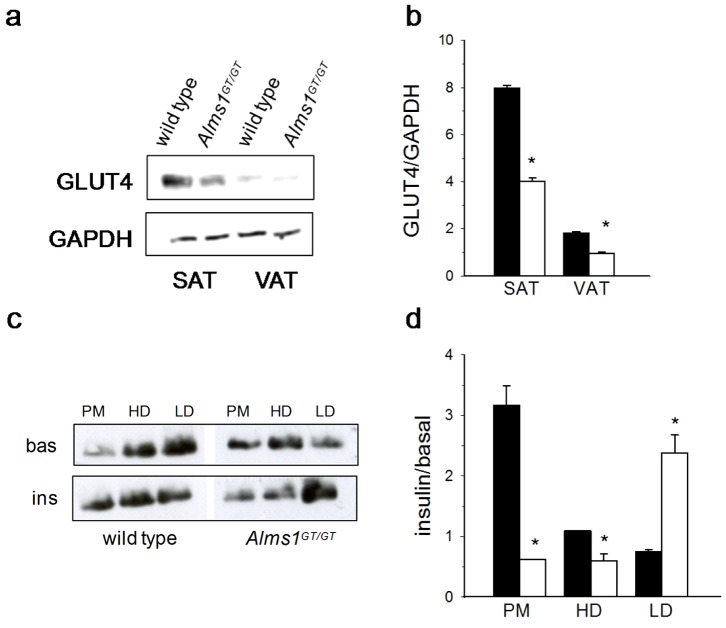
Dysregulation of signaling pathways in adipose tissue leading to insulin resistance can contribute to the development of obesity-related metabolic disorders. Alström Syndrome, a recessive ciliopathy, caused by mutations in ALMS1, is characterized by progressive metabolic alterations such as childhood obesity, hyperinsulinemia, and type 2 diabetes. Here we investigated the role of Alms1 disruption in AT expansion and insulin responsiveness in a murine model for Alström Syndrome. A gene trap insertion in Alms1 on the insulin sensitive C57BL6/Ei genetic background leads to early hyperinsulinemia and a progressive increase in body weight. At 6 weeks of age, before the onset of the metabolic disease, the mutant mice had enlarged fat depots with hypertrophic adipocytes, but without signs of inflammation. Expression of lipogenic enzymes was increased. Pre-adipocytes isolated from mutant animals demonstrated normal adipogenic differentiation but gave rise to mature adipocytes with reduced insulin-stimulated glucose uptake. Assessment of whole body glucose homeostasis revealed glucose intolerance. Insulin stimulation resulted in proper AKT phosphorylation in adipose tissue. However, the total amount of glucose transporter 4 (SLC4A2) and its translocation to the plasma membrane were reduced in mutant adipose depots compared to wildtype littermates. Alterations in insulin stimulated trafficking of glucose transporter 4 are an early sign of metabolic dysfunction in Alström mutant mice, providing a possible explanation for the reduced glucose uptake and the compensatory hyperinsulinemia. The metabolic signaling deficits either reside downstream or are independent of AKT activation and suggest a role for ALMS1 in GLUT4 trafficking. Alström mutant mice represent an interesting model for the development of metabolic disease in which adipose tissue with a reduced glucose uptake can expand by de novo lipogenesis to an obese state.
脂肪组织中信号通路失调导致胰岛素抵抗,可促使肥胖相关代谢紊乱的发生。阿尔斯特伦综合征是一种隐性纤毛病,由ALMS1基因突变引起,其特征为进行性代谢改变,如儿童肥胖、高胰岛素血症和2型糖尿病。在此,我们在阿尔斯特伦综合征小鼠模型中研究了Alms1缺失在脂肪组织扩张和胰岛素反应性中的作用。在胰岛素敏感的C57BL6/Ei遗传背景下,Alms1基因陷阱插入导致早期高胰岛素血症和体重逐渐增加。在6周龄时,即在代谢疾病发作之前,突变小鼠的脂肪库增大,脂肪细胞肥大,但无炎症迹象。生脂酶的表达增加。从突变动物分离的前脂肪细胞表现出正常的脂肪生成分化,但产生的成熟脂肪细胞胰岛素刺激的葡萄糖摄取减少。对全身葡萄糖稳态的评估显示葡萄糖不耐受。胰岛素刺激导致脂肪组织中AKT正常磷酸化。然而,与野生型同窝小鼠相比,突变脂肪库中葡萄糖转运蛋白4(SLC4A2)的总量及其向质膜的转位减少。胰岛素刺激的葡萄糖转运蛋白4转运改变是阿尔斯特伦突变小鼠代谢功能障碍的早期迹象,这为葡萄糖摄取减少和代偿性高胰岛素血症提供了一种可能的解释。代谢信号缺陷要么位于AKT激活的下游,要么与之无关,提示ALMS1在GLUT4转运中起作用。阿尔斯特伦突变小鼠代表了一种有趣的代谢疾病发展模型,其中葡萄糖摄取减少的脂肪组织可通过从头脂肪生成扩展至肥胖状态。