Capron C, Jondeau K, Casetti L, Jalbert V, Costa C, Verhoeyen E, Massé J M, Coppo P, Béné M C, Bourdoncle P, Cramer-Bordé E, Dusanter-Fourt I
1] Institut Cochin, Inserm U1016, Paris, France [2] Service d'Hématologie-Immunologie, Hôpital Ambroise Paré, Boulogne-Billancourt, France [3] Université Paris Descartes, Sorbonne Paris Cité, Paris, France [4] CNRS UMR8104, Paris, France [5] Université de Versailles St Quentin en Yvelines, Guyancourt, France.
1] Service d'Hématologie-Immunologie, Hôpital Ambroise Paré, Boulogne-Billancourt, France [2] Université de Versailles St Quentin en Yvelines, Guyancourt, France.
Cell Death Dis. 2014 Oct 9;5(10):e1451. doi: 10.1038/cddis.2014.393.
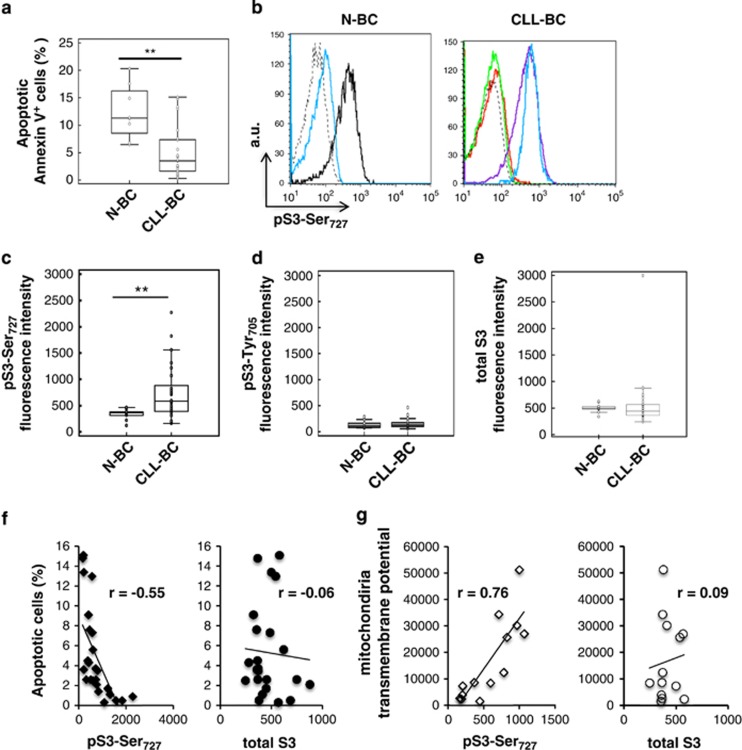
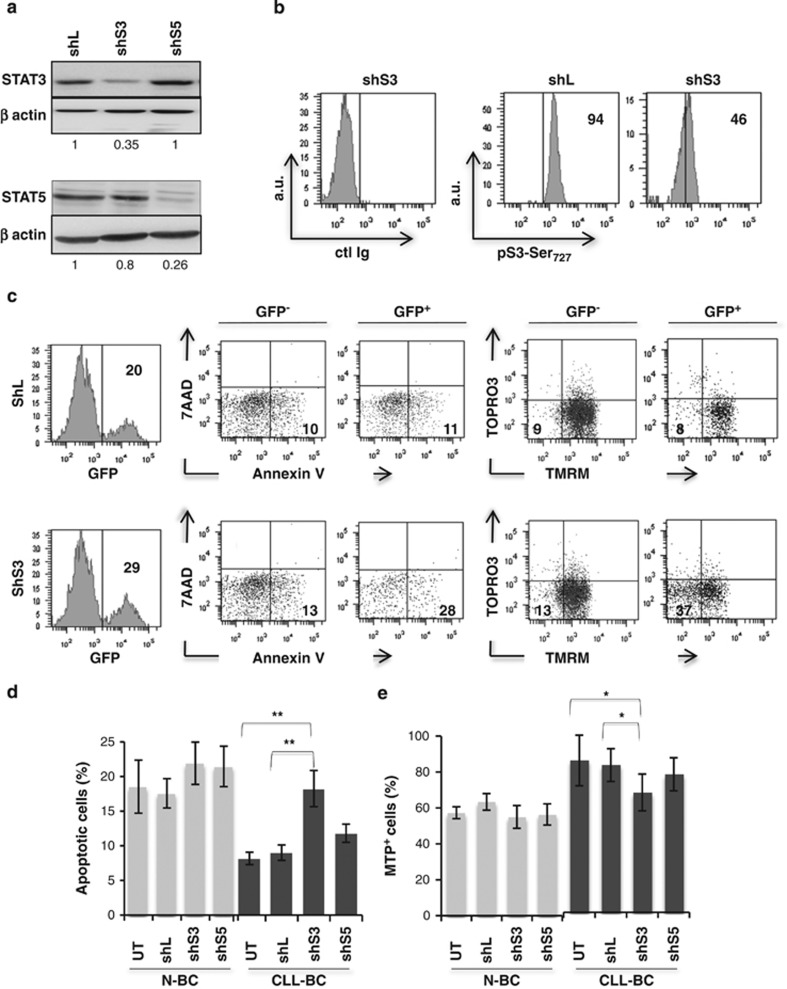
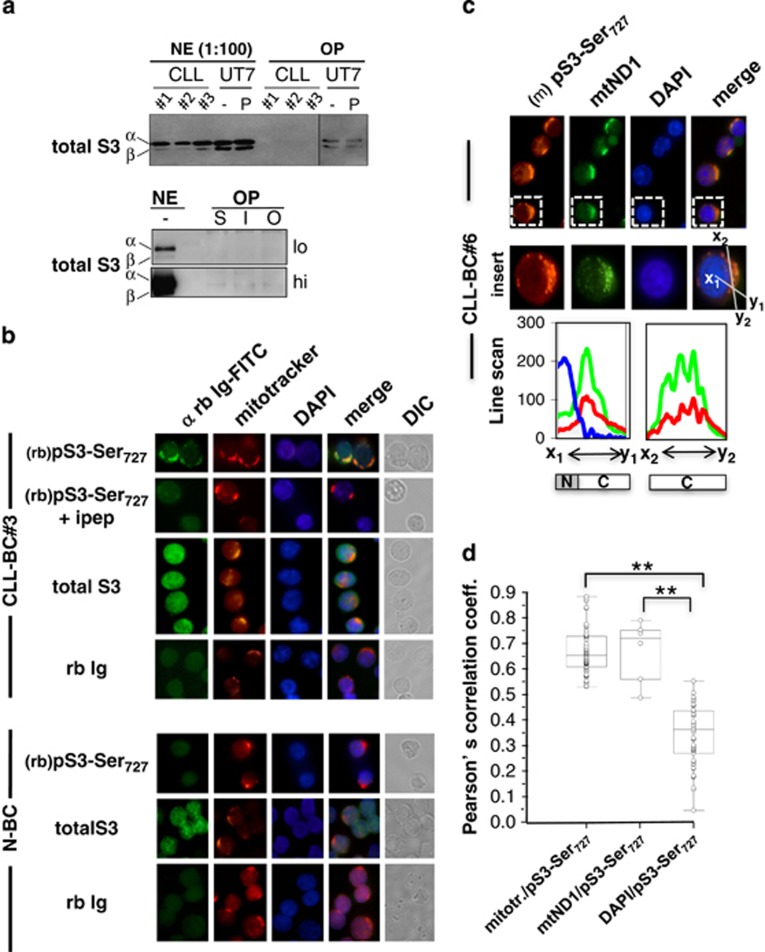
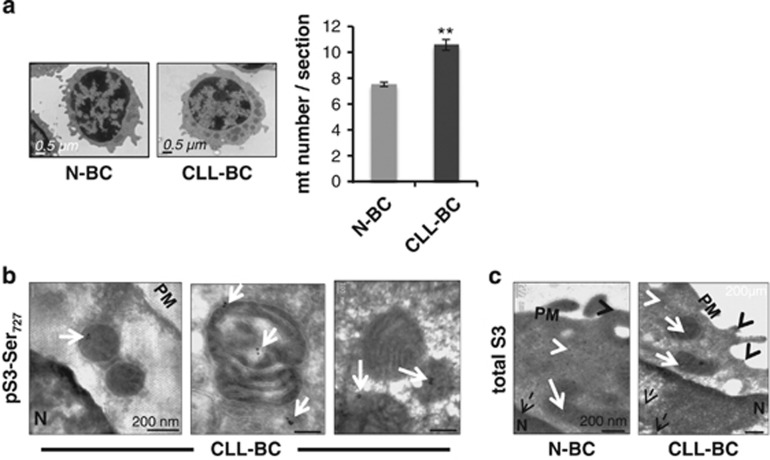
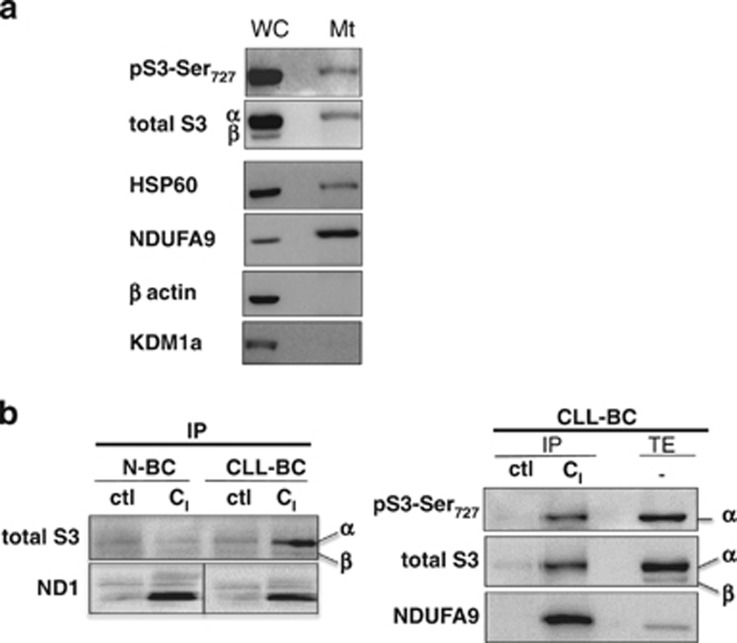
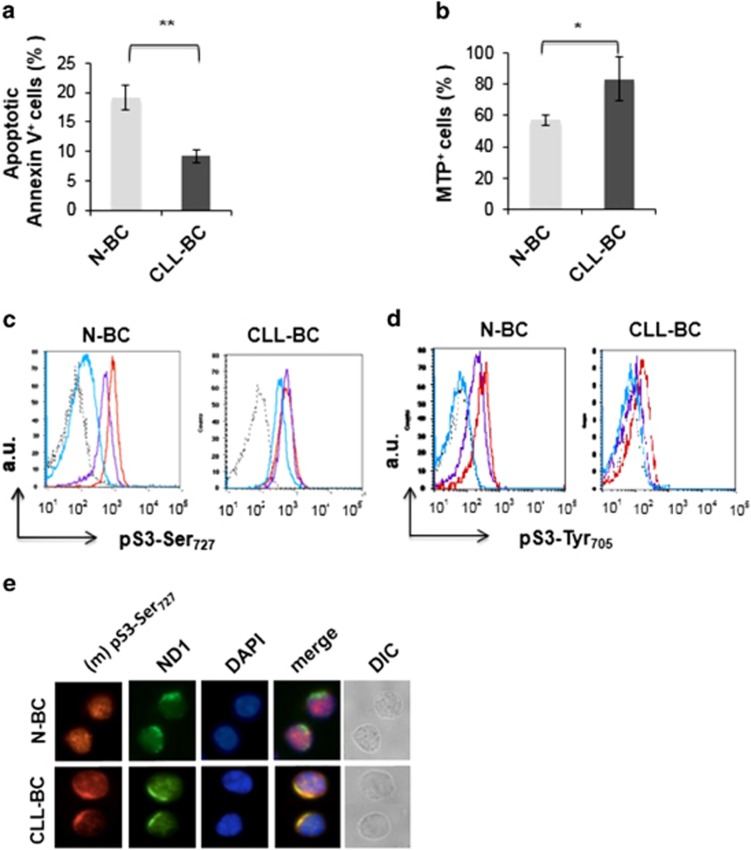
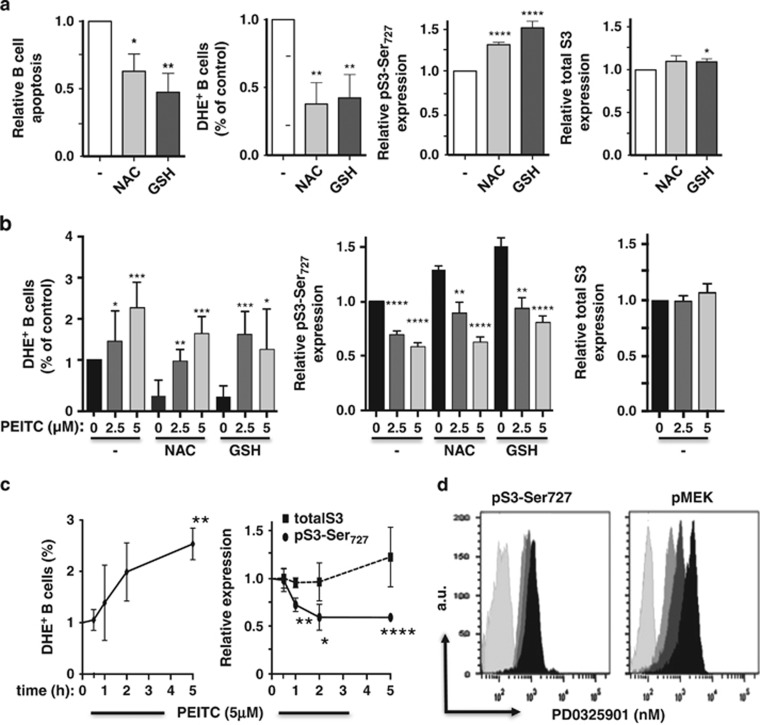
Chronic lymphoid leukemia (CLL) is characterized by the accumulation of functionally defective CD5-positive B lymphocytes. The clinical course of CLL is highly variable, ranging from a long-lasting indolent disease to an unpredictable and rapidly progressing leukemia requiring treatment. It is thus important to identify novel factors that reflect disease progression or contribute to its assessment. Here, we report on a novel STAT3-mediated pathway that characterizes CLL B cells-extended viability and oxidative stress control. We observed that leukemic but not normal B cells from CLL patients exhibit constitutive activation of an atypical form of the STAT3 signaling factor, phosphorylated on serine 727 (Ser(727)) in the absence of detectable canonical tyrosine 705 (Tyr705)-dependent activation in vivo. The Ser(727)-phosphorylated STAT3 molecule (pSTAT3Ser(727)) is localized to the mitochondria and associates with complex I of the respiratory chain. This pSer(727) modification is further controlled by glutathione-dependent antioxidant pathway(s) that mediate stromal protection of the leukemic B cells and regulate their viability. Importantly, pSTAT3Ser(727), but neither Tyr705-phosphorylated STAT3 nor total STAT3, levels correlate with prolonged in vivo CLL B cells survival. Furthermore, STAT3 activity contributes to the resistance to apoptosis of CLL, but not normal B cells, in vitro. These data reveal that mitochondrial (Mt) pSTAT3Ser(727) overactivity is part of the antioxidant defense pathway of CLL B cells that regulates their viability. Mt pSTAT3Ser(727) appears to be a newly identified cell-protective signal involved in CLL cells survival. Targeting pSTAT3Ser(727) could be a promising new therapeutic approach.
慢性淋巴细胞白血病(CLL)的特征是功能缺陷的CD5阳性B淋巴细胞积累。CLL的临床病程高度可变,从长期惰性疾病到需要治疗的不可预测且进展迅速的白血病。因此,识别反映疾病进展或有助于其评估的新因素很重要。在此,我们报告了一种新的STAT3介导的途径,该途径表征了CLL B细胞的延长生存能力和氧化应激控制。我们观察到,CLL患者的白血病B细胞而非正常B细胞在体内未检测到典型的酪氨酸705(Tyr705)依赖性激活的情况下,表现出丝氨酸727(Ser(727))磷酸化的非典型形式的STAT3信号因子的组成性激活。Ser(727)磷酸化的STAT3分子(pSTAT3Ser(727))定位于线粒体并与呼吸链的复合体I相关联。这种pSer(727)修饰进一步受谷胱甘肽依赖性抗氧化途径控制,该途径介导白血病B细胞的基质保护并调节其生存能力。重要的是,pSTAT3Ser(727)水平与体内CLL B细胞的延长存活相关,而酪氨酸705磷酸化的STAT3或总STAT3水平则不然。此外,STAT3活性在体外有助于CLL而非正常B细胞对凋亡的抵抗。这些数据表明,线粒体(Mt)pSTAT3Ser(727)过度活性是CLL B细胞抗氧化防御途径的一部分,该途径调节其生存能力。Mt pSTAT3Ser(727)似乎是一种新发现的参与CLL细胞存活的细胞保护信号。靶向pSTAT3Ser(727)可能是一种有前景的新治疗方法。