Zhao Shanshan, Gao Qi, Lin Jian, Yan Mengfei, Yu Qinghua, Yang Qian
Key Lab of Animal Physiology and Biochemistry, Ministry of Agriculture, Nanjing Agricultural University, Wei gang 1, Jiangsu, China.
Key Lab of Animal Physiology and Biochemistry, Ministry of Agriculture, Nanjing Agricultural University, Wei gang 1, Jiangsu, China.
Res Vet Sci. 2014 Dec;97(3):623-30. doi: 10.1016/j.rvsc.2014.09.008. Epub 2014 Sep 19.
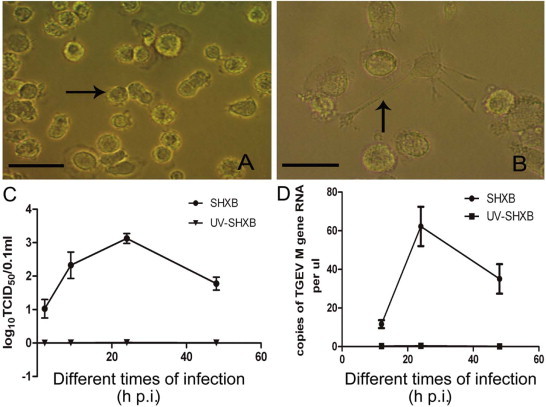
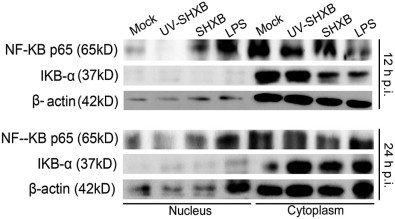
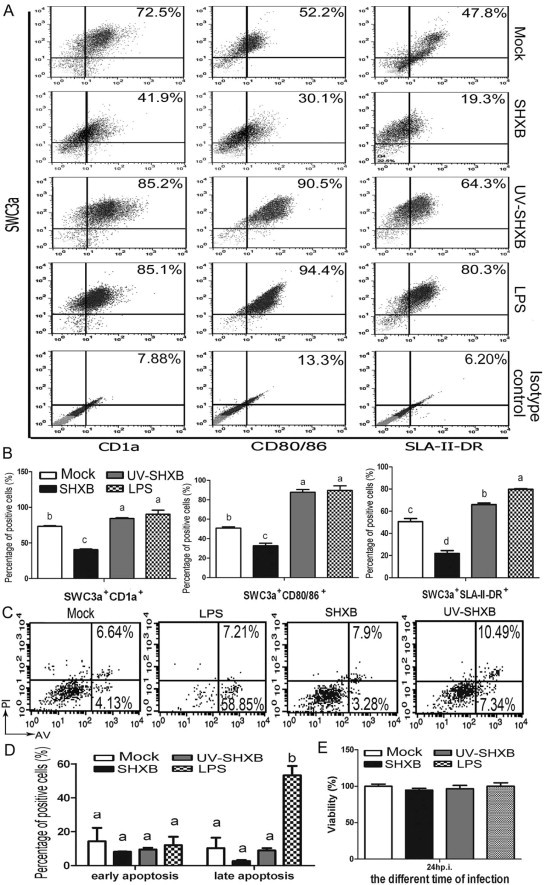
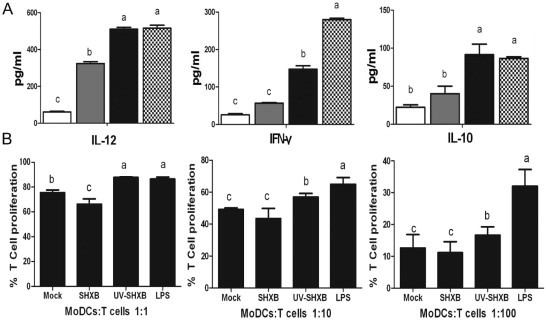
Exposure of piglets less than 2 weeks of age to virulent transmissible gastroenteritis virus (TGEV) gives rise to mortality as high as 100%, and adult pigs recovering from its infection often become TGEV carriers. These facts suggest an evasion of the immune system by virulent TGEV. In this study, we showed that a virulent TGEV SHXB strain could infect porcine immature monocyte-derived dendritic cells (Mo-DCs), and down-regulate cell surface markers (SLA-II-DR, CD1a and CD80/86). Moreover, SHXB-infected immature Mo-DCs showed low expression of IL-12 and IFN-γ, and also lost the ability to stimulate T cell proliferation. Finally, SHXB inhibited the activation of nuclear factor kappa B (NF-κB) in these cells. Instead, UV-inactivated SHXB (UV-SHXB) had the opposite effects in immature Mo-DCs. In conclusion, the virulent SHXB could severely impair immature Mo-DCs, which might be involved in the pathogenesis of virulent TGEV in vivo.
小于2周龄的仔猪感染强毒性传染性胃肠炎病毒(TGEV)后,死亡率高达100%,且从该病毒感染中恢复的成年猪常成为TGEV携带者。这些事实表明强毒性TGEV能够逃避免疫系统。在本研究中,我们发现强毒性TGEV SHXB毒株能够感染猪未成熟单核细胞来源的树突状细胞(Mo-DCs),并下调细胞表面标志物(SLA-II-DR、CD1a和CD80/86)。此外,受SHXB感染的未成熟Mo-DCs表现出IL-12和IFN-γ的低表达,并且也失去了刺激T细胞增殖的能力。最后,SHXB抑制了这些细胞中核因子κB(NF-κB)的激活。相反,紫外线灭活的SHXB(UV-SHXB)在未成熟Mo-DCs中产生相反的作用。总之,强毒性SHXB可严重损害未成熟Mo-DCs,这可能与强毒性TGEV在体内的发病机制有关。