Brazo Perrine, Beaucousin Virginie, Lecardeur Laurent, Razafimandimby Annick, Dollfus Sonia
Service de Psychiatrie, Centre Hospitalier Universitaire de Caen , Caen , France ; UMR6301 Imagerie et Stratégies Thérapeutiques des Pathologies Cérébrales et Tumorales (ISTCT), ISTS Team, Université de Caen Basse-Normandie , Caen , France.
Laboratoire de Psychopathologie et Neuropsychologie, Université de Paris 8 , Saint Denis , France.
Front Psychiatry. 2014 Sep 10;5:120. doi: 10.3389/fpsyt.2014.00120. eCollection 2014.
The recognition of the emotion expressed during conversation relies on the integration of both semantic processing and decoding of emotional prosody. The integration of both types of elements is necessary for social interaction. No study has investigated how these processes are impaired in patients with schizophrenia during the comprehension of an emotional speech. Since patients with schizophrenia have difficulty in daily interactions, it would be of great interest to investigate how these processes are impaired. We tested the hypothesis that patients present lesser performances regarding both semantic and emotional prosodic processes during emotional speech comprehension compared with healthy participants.
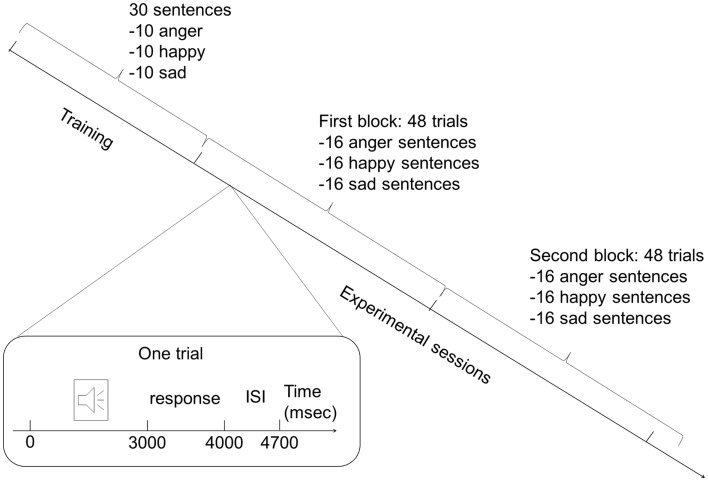
The paradigm is based on sentences built with emotional (anger, happiness, or sadness) semantic content uttered with or without congruent emotional prosody. The study participants had to decide with which of the emotional categories each sentence corresponded.
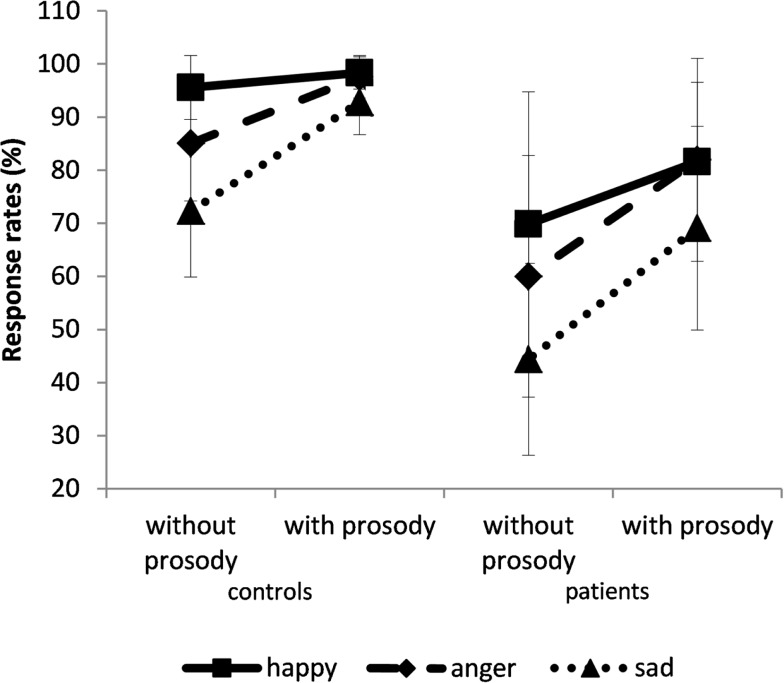
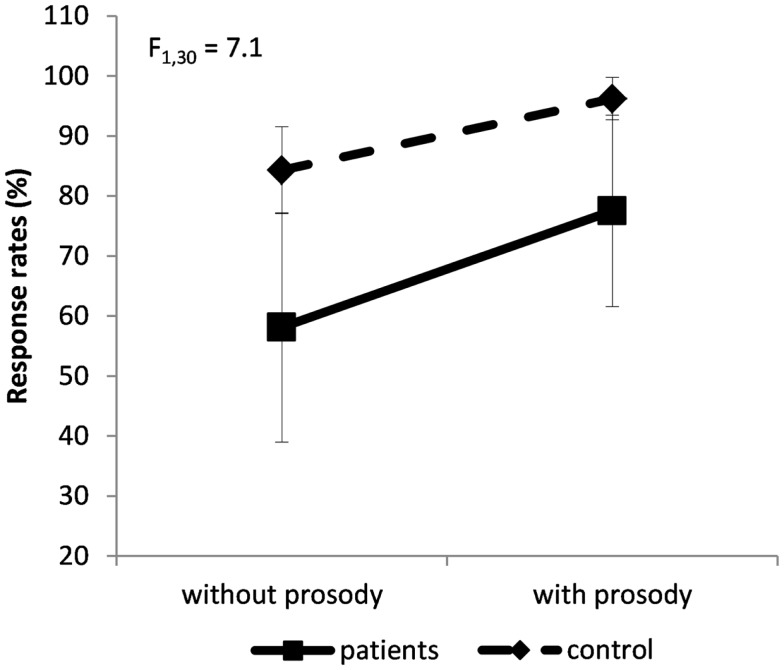
Patients performed significantly worse than their matched controls, even in the presence of emotional prosody, showing that their ability to understand emotional semantic content was impaired. Although prosody improved performances in both groups, it benefited the patients more than the controls.
Patients exhibited both impaired semantic and emotional prosodic comprehensions. However, they took greater advantage of emotional prosody adjunction than healthy participants. Consequently, focusing on emotional prosody during carrying may improve social communication.
对话中对所表达情感的识别依赖于语义处理和情感韵律解码的整合。这两种元素的整合对于社交互动是必要的。尚无研究调查精神分裂症患者在理解情感言语时这些过程是如何受损的。由于精神分裂症患者在日常互动中存在困难,研究这些过程如何受损将非常有趣。我们检验了这样一个假设:与健康参与者相比,患者在情感言语理解过程中在语义和情感韵律处理方面表现较差。
该范式基于由带有情感(愤怒、快乐或悲伤)语义内容的句子构成,这些句子以带有或不带有一致情感韵律的方式说出。研究参与者必须判断每个句子与哪种情感类别相对应。
即使在有情感韵律的情况下,患者的表现也明显比匹配的对照组差,这表明他们理解情感语义内容的能力受损。尽管韵律提高了两组的表现,但对患者的益处比对对照组更大。
患者在语义和情感韵律理解方面均受损。然而,与健康参与者相比,他们从情感韵律辅助中获益更多。因此,在交流过程中关注情感韵律可能会改善社交沟通。