Liu Yinan, Li Peng, Liu Kaiyu, He Qihua, Han Shuo, Sun Xiaofeng, Li Tao, Shen Li
Stem Cell Research Center, Department of Cell Biology, School of Basic Medical Sciences, Peking University, Haidian District, Beijing, China.
Department of Biochemistry and Molecular Biology, School of Basic Medical Sciences, Peking University, Haidian District, Beijing, China.
PLoS One. 2014 Oct 14;9(10):e109588. doi: 10.1371/journal.pone.0109588. eCollection 2014.
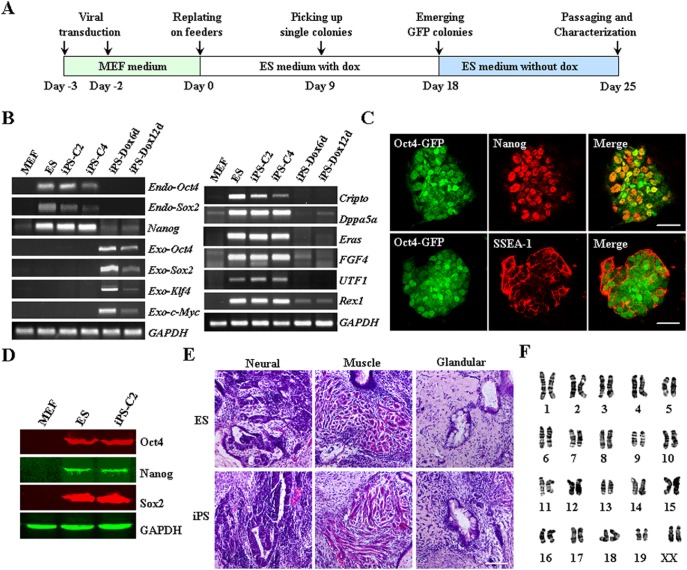
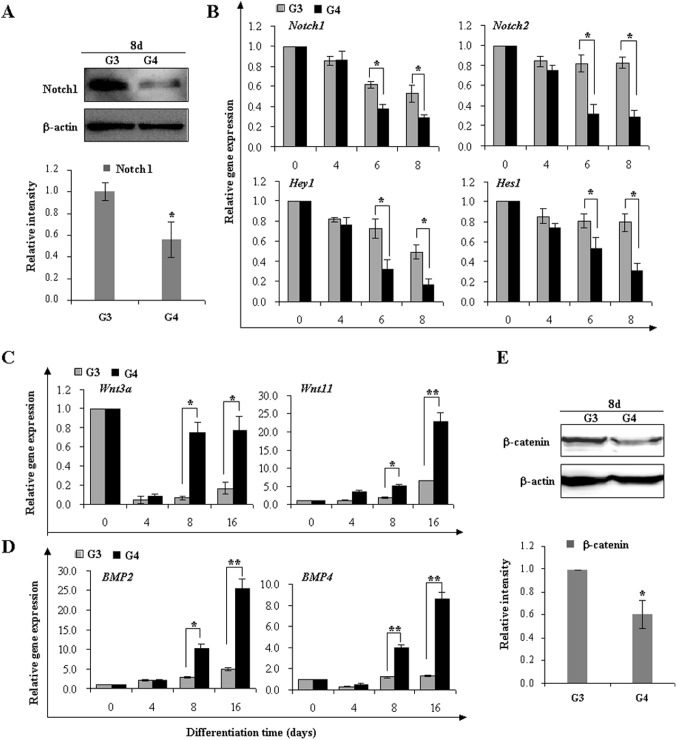
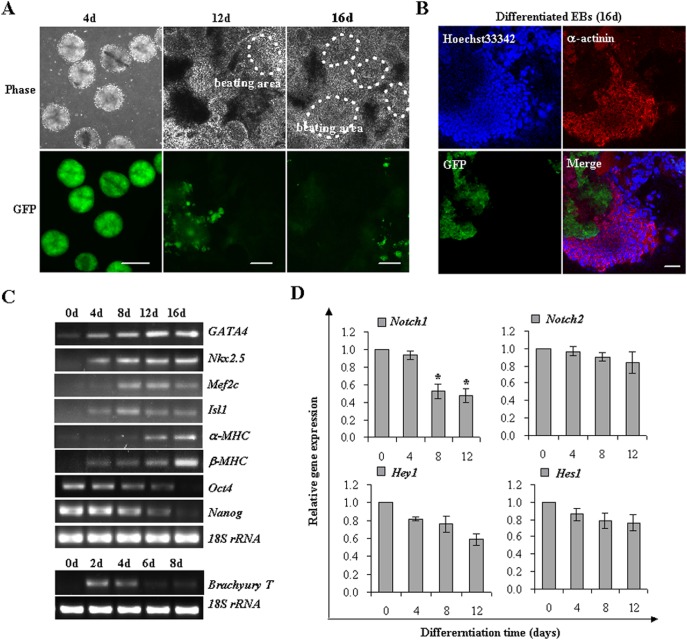
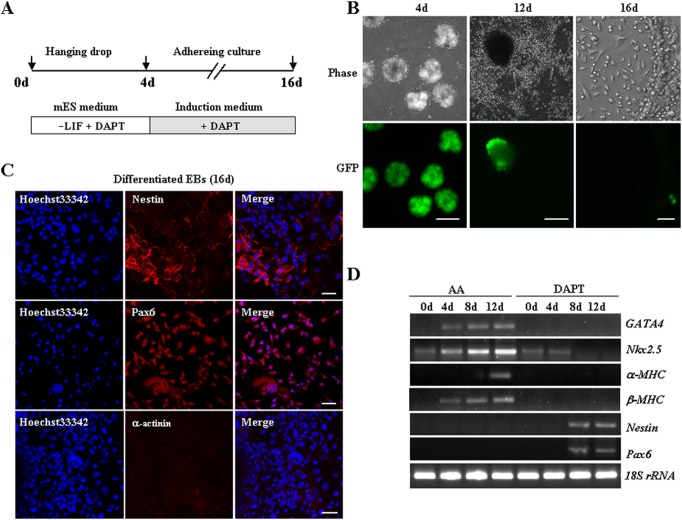
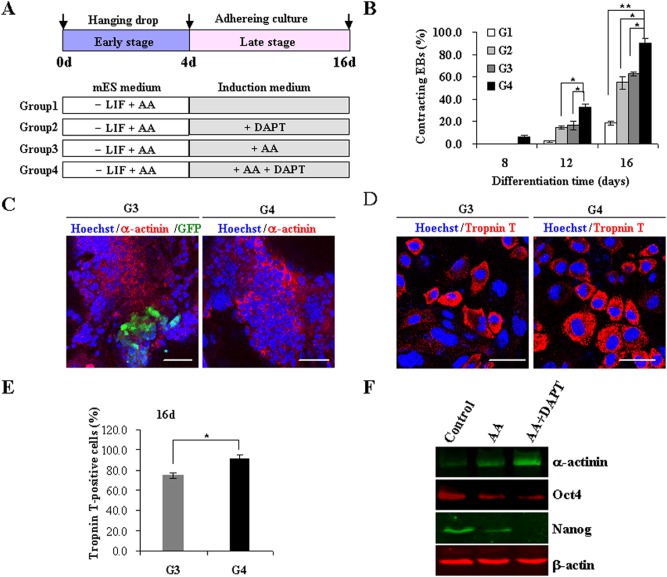
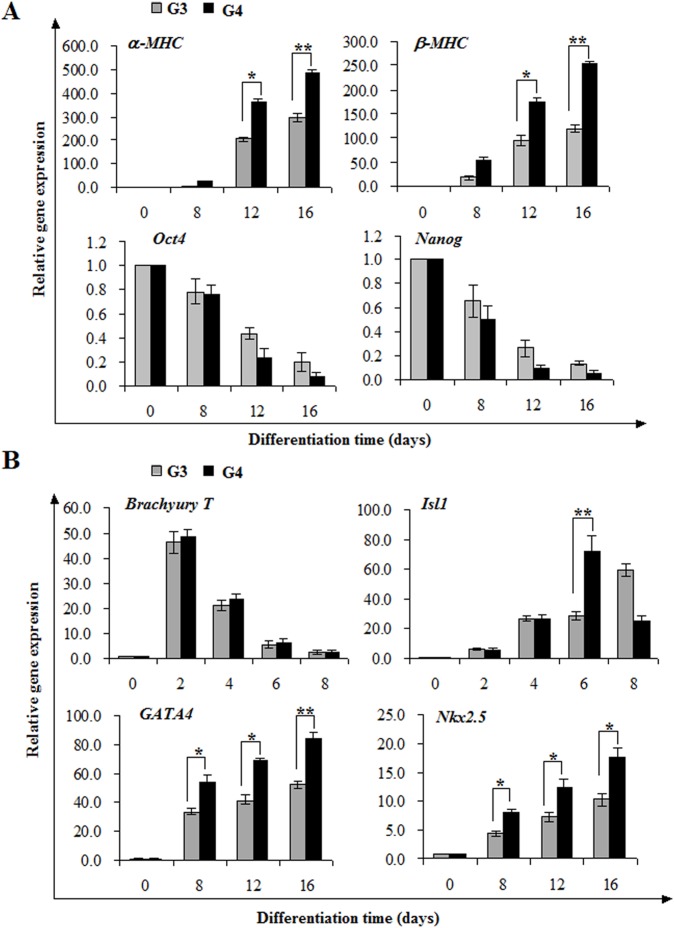
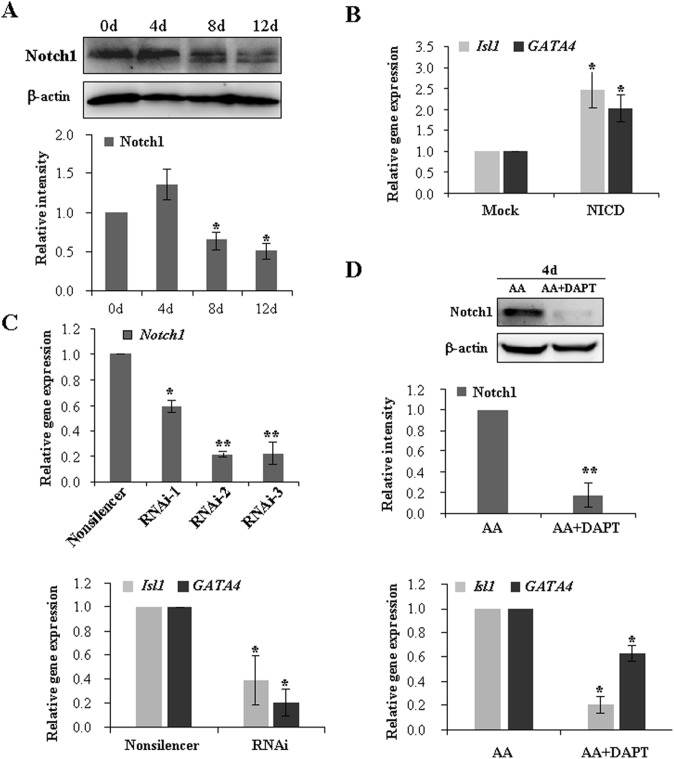
The Notch signaling pathway plays versatile roles during heart development. However, there is contradictory evidence that Notch pathway either facilitates or impairs cardiomyogenesis in vitro. In this study, we developed iPSCs by reprogramming of murine fibroblasts with GFP expression governed by Oct4 promoter, and identified an effective strategy to enhance cardiac differentiation through timely modulation of Notch signaling. The Notch inhibitor DAPT (N-[N-(3,5-difluorophenacetyl)-l-alanyl]-S-phenylglycine t-butyl ester) alone drove the iPSCs to a neuronal fate. After mesoderm induction of embryoid bodies initiated by ascorbic acid (AA), the subsequent treatment of DAPT accelerated the generation of spontaneously beating cardiomyocytes. The timed synergy of AA and DAPT yielded an optimal efficiency of cardiac differentiation. Mechanistic studies showed that Notch pathway plays a biphasic role in cardiomyogenesis. It favors the early-stage cardiac differentiation, but exerts negative effects on the late-stage differentiation. Therefore, DAPT administration at the late stage enforced the inhibition of endogenous Notch activity, thereby enhancing cardiomyogenesis. In parallel, DAPT dramatically augmented the expression of Wnt3a, Wnt11, BMP2, and BMP4. In conclusion, our results highlight a practicable approach to generate cardiomyocytes from iPSCs based on the stage-specific biphasic roles of Notch signaling in cardiomyogenesis.
Notch信号通路在心脏发育过程中发挥着多种作用。然而,有相互矛盾的证据表明,Notch通路在体外既促进又损害心肌生成。在本研究中,我们通过用由Oct4启动子控制GFP表达的小鼠成纤维细胞重编程来生成诱导多能干细胞(iPSCs),并确定了一种通过适时调节Notch信号来增强心脏分化的有效策略。单独使用Notch抑制剂DAPT(N-[N-(3,5-二氟苯乙酰基)-L-丙氨酰基]-S-苯甘氨酸叔丁酯)可使iPSCs向神经元命运分化。在用抗坏血酸(AA)启动胚状体的中胚层诱导后,随后用DAPT处理可加速自发跳动心肌细胞的生成。AA和DAPT的适时协同作用产生了最佳的心脏分化效率。机制研究表明,Notch通路在心肌生成中起双相作用。它有利于早期心脏分化,但对晚期分化产生负面影响。因此,在晚期给予DAPT可加强对内源性Notch活性的抑制,从而增强心肌生成。同时,DAPT显著增加了Wnt3a、Wnt11、BMP2和BMP4的表达。总之,我们的结果突出了一种基于Notch信号在心肌生成中的阶段特异性双相作用从iPSCs生成心肌细胞的可行方法。