Li Xiao-Yong, Harrison Melissa M, Villalta Jacqueline E, Kaplan Tommy, Eisen Michael B
Howard Hughes Medical Institute, University of California Berkeley, Berkeley, United States.
Department of Biomolecular Chemistry, University of Wisconsin, Madison, United States.
Elife. 2014 Oct 14;3:e03737. doi: 10.7554/eLife.03737.
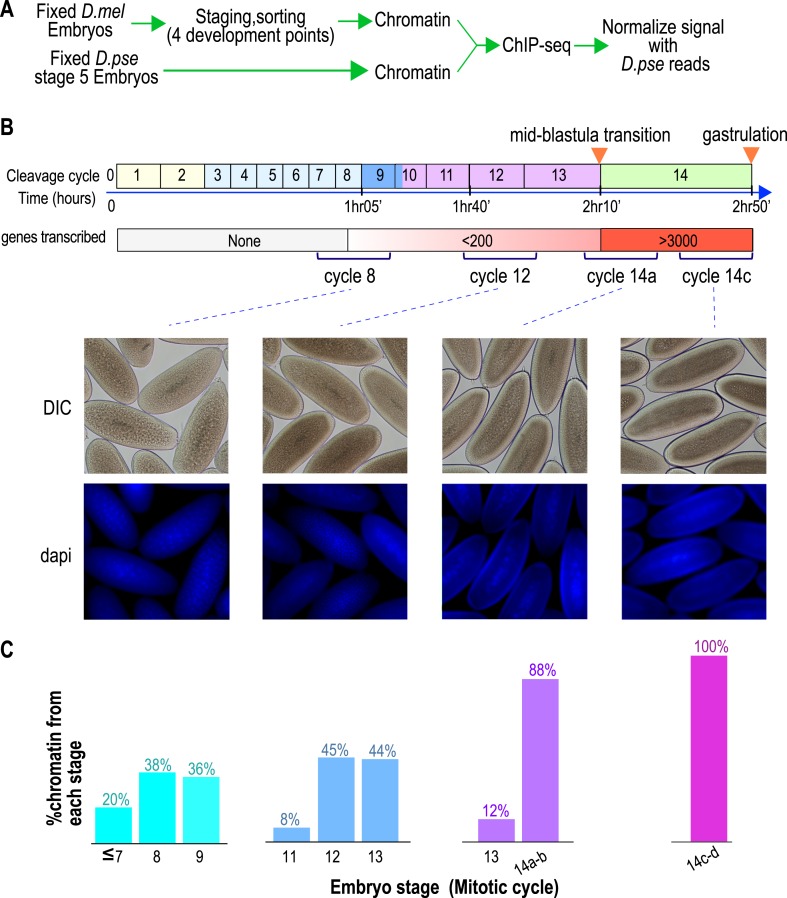
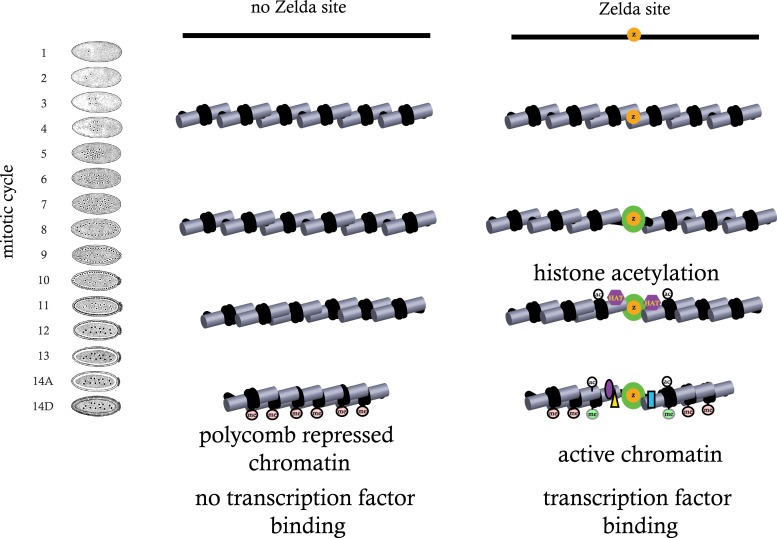
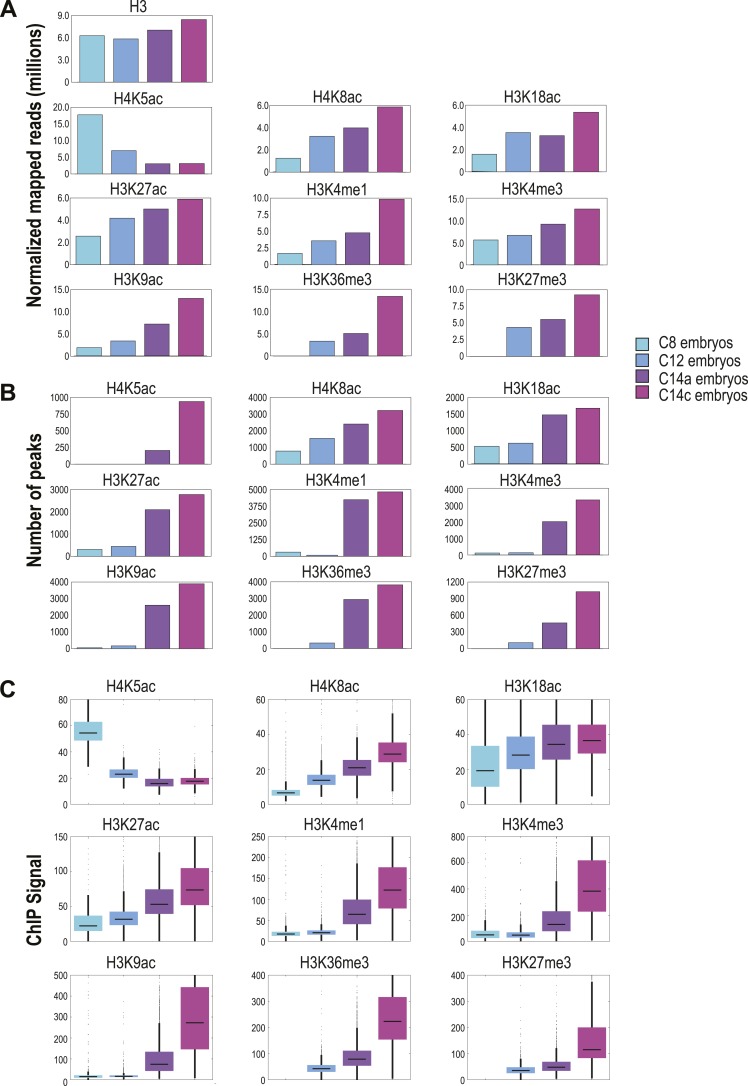
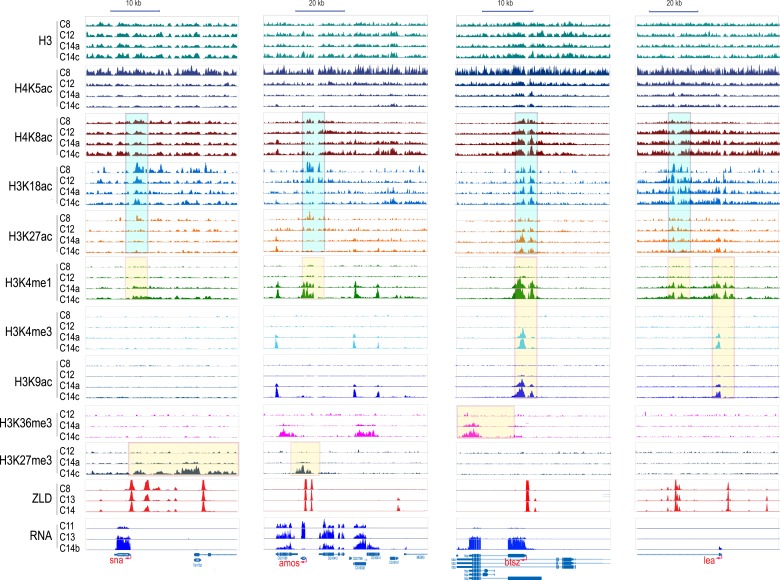
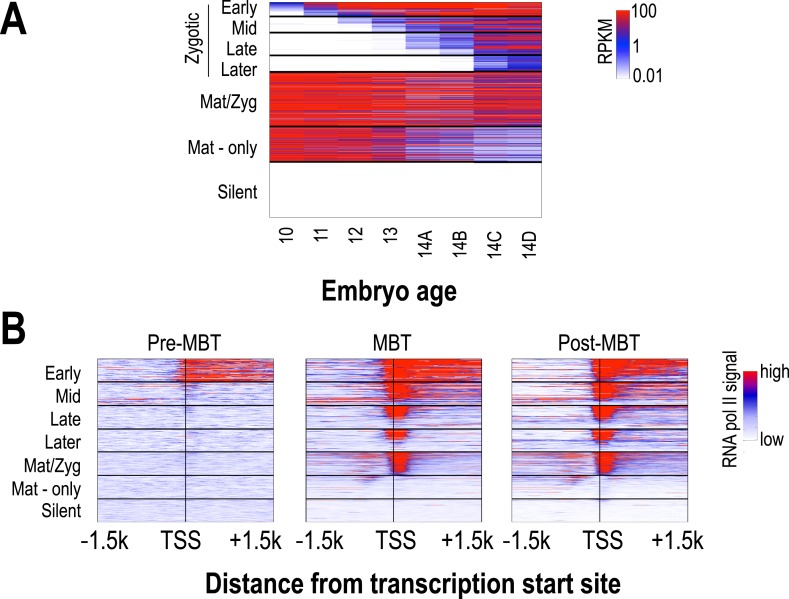
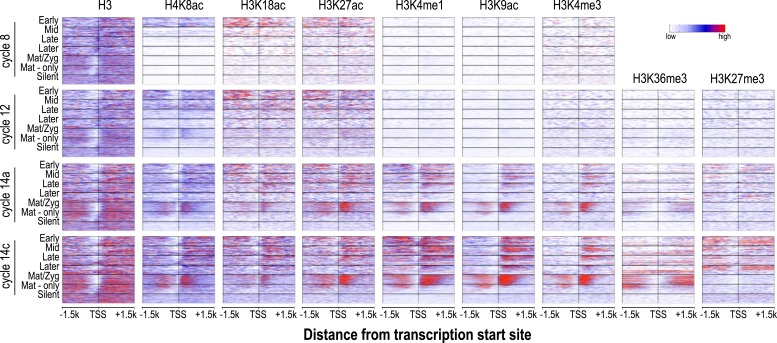
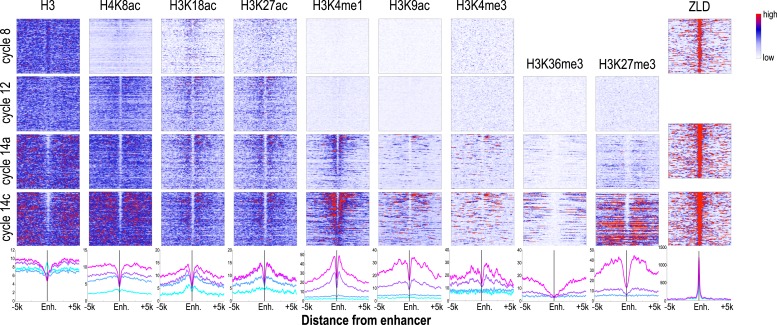
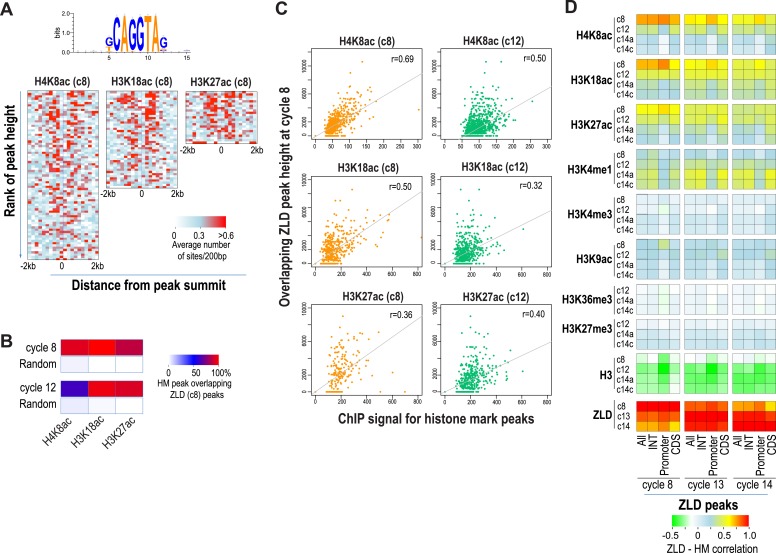
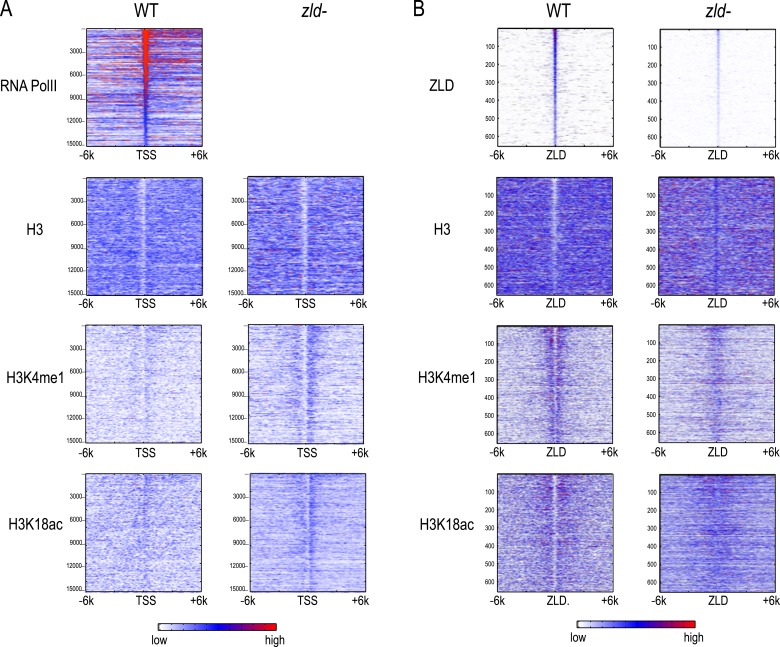
We describe the genome-wide distributions and temporal dynamics of nucleosomes and post-translational histone modifications throughout the maternal-to-zygotic transition in embryos of Drosophila melanogaster. At mitotic cycle 8, when few zygotic genes are being transcribed, embryonic chromatin is in a relatively simple state: there are few nucleosome free regions, undetectable levels of the histone methylation marks characteristic of mature chromatin, and low levels of histone acetylation at a relatively small number of loci. Histone acetylation increases by cycle 12, but it is not until cycle 14 that nucleosome free regions and domains of histone methylation become widespread. Early histone acetylation is strongly associated with regions that we have previously shown to be bound in early embryos by the maternally deposited transcription factor Zelda, suggesting that Zelda triggers a cascade of events, including the accumulation of specific histone modifications, that plays a role in the subsequent activation of these sequences.
我们描述了黑腹果蝇胚胎从母型向合子型转变过程中核小体和翻译后组蛋白修饰的全基因组分布及时间动态。在有丝分裂周期8时,当很少有合子基因被转录时,胚胎染色质处于相对简单的状态:几乎没有无核小体区域,检测不到成熟染色质特有的组蛋白甲基化标记水平,并且在相对少数的位点上有低水平的组蛋白乙酰化。到周期12时组蛋白乙酰化增加,但直到周期14无核小体区域和组蛋白甲基化结构域才变得广泛存在。早期组蛋白乙酰化与我们之前所示的在早期胚胎中由母源沉积的转录因子Zelda结合的区域密切相关,这表明Zelda触发了一系列事件,包括特定组蛋白修饰的积累,这些事件在随后这些序列的激活中发挥作用。