• 文献检索
  • 文档翻译
  • 深度研究
  • 学术资讯
  • Suppr Zotero 插件Zotero 插件
  • 邀请有礼
  • 套餐&价格
  • 历史记录
应用&插件
Suppr Zotero 插件Zotero 插件浏览器插件Mac 客户端Windows 客户端微信小程序
定价
高级版会员购买积分包购买API积分包
服务
文献检索文档翻译深度研究API 文档MCP 服务
关于我们
关于 Suppr公司介绍联系我们用户协议隐私条款
关注我们

Suppr 超能文献

核心技术专利:CN118964589B侵权必究
粤ICP备2023148730 号-1Suppr @ 2026

文献检索

告别复杂PubMed语法,用中文像聊天一样搜索,搜遍4000万医学文献。AI智能推荐,让科研检索更轻松。

立即免费搜索

文件翻译

保留排版,准确专业,支持PDF/Word/PPT等文件格式,支持 12+语言互译。

免费翻译文档

深度研究

AI帮你快速写综述,25分钟生成高质量综述,智能提取关键信息,辅助科研写作。

立即免费体验

“剑桥”响度模型的发展和现状。

Development and current status of the "Cambridge" loudness models.

机构信息

Department of Experimental Psychology, University of Cambridge, UK.

出版信息

Trends Hear. 2014 Oct 13;18:2331216514550620. doi: 10.1177/2331216514550620.

DOI:10.1177/2331216514550620
PMID:25315375
原文链接:https://pmc.ncbi.nlm.nih.gov/articles/PMC4227665/
Abstract

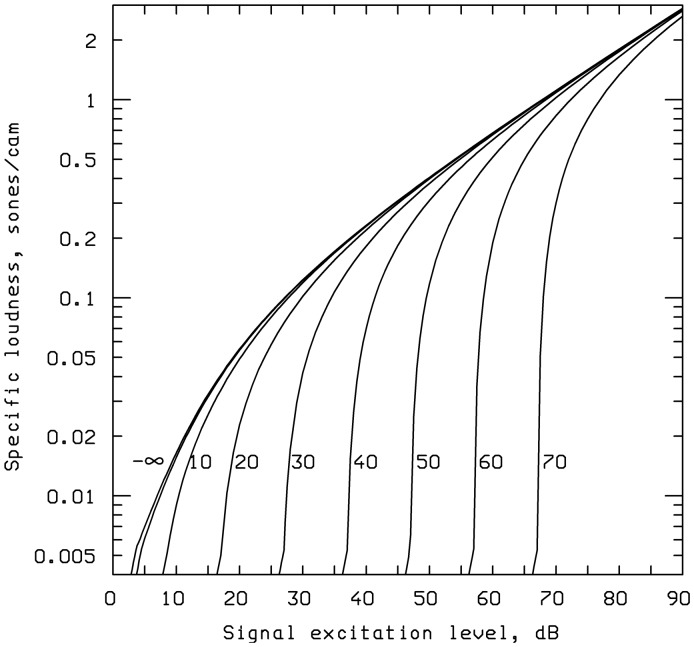
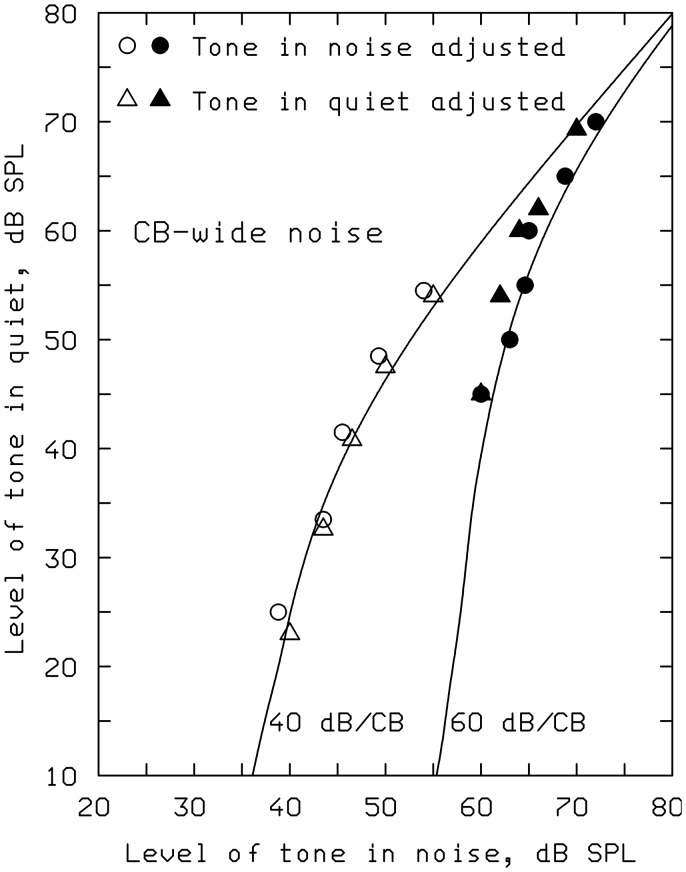
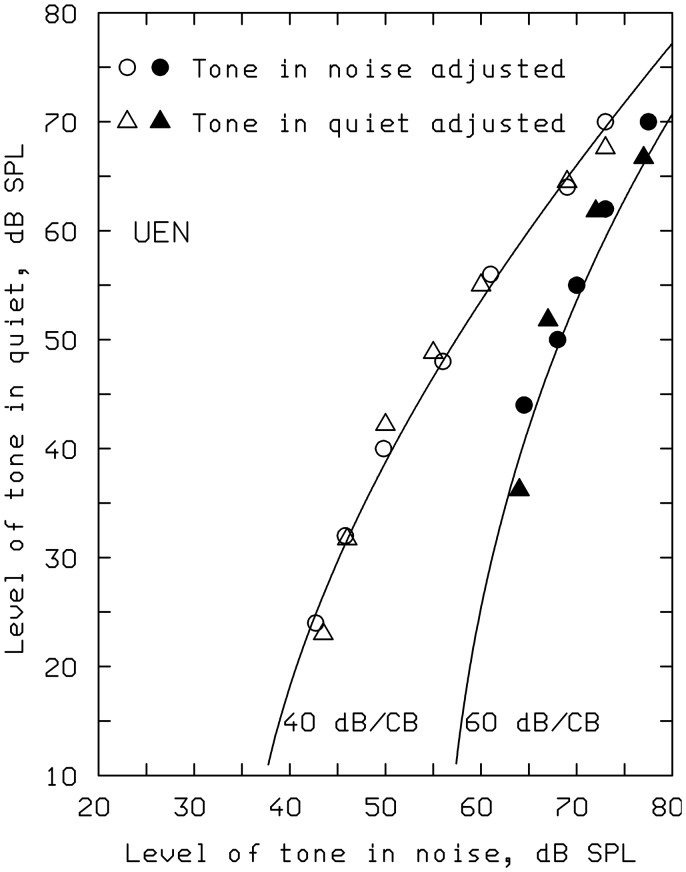
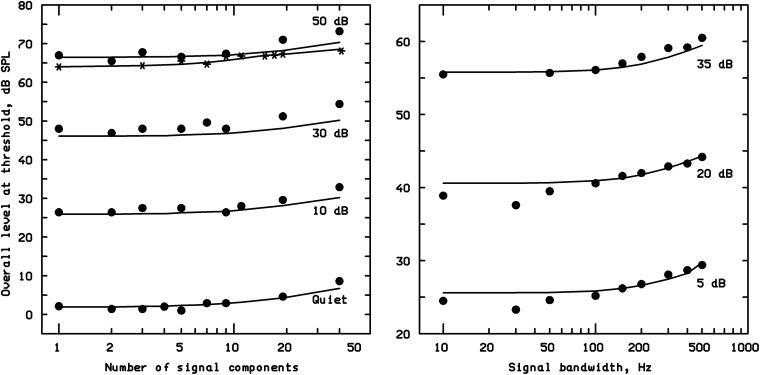
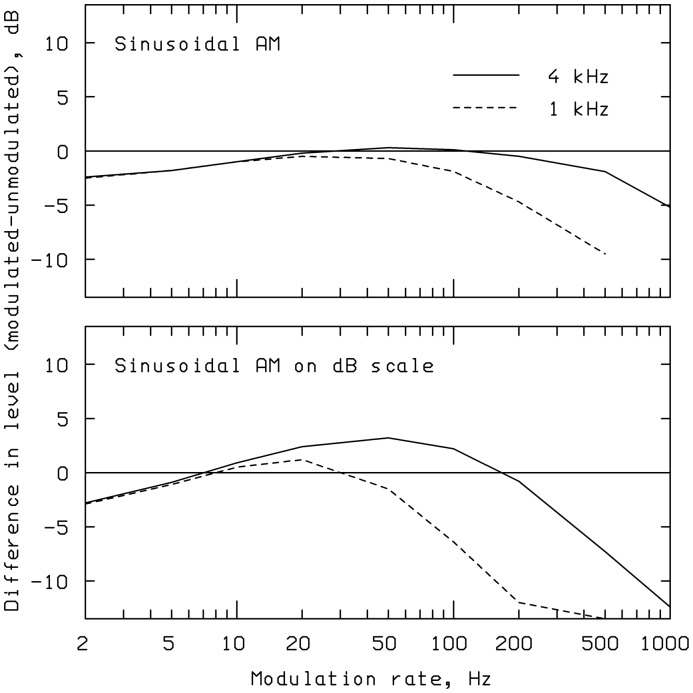
This article reviews the evolution of a series of models of loudness developed in Cambridge, UK. The first model, applicable to stationary sounds, was based on modifications of the model developed by Zwicker, including the introduction of a filter to allow for the effects of transfer of sound through the outer and middle ear prior to the calculation of an excitation pattern, and changes in the way that the excitation pattern was calculated. Later, modifications were introduced to the assumed middle-ear transfer function and to the way that specific loudness was calculated from excitation level. These modifications led to a finite calculated loudness at absolute threshold, which made it possible to predict accurately the absolute thresholds of broadband and narrowband sounds, based on the assumption that the absolute threshold corresponds to a fixed small loudness. The model was also modified to give predictions of partial loudness-the loudness of one sound in the presence of another. This allowed predictions of masked thresholds based on the assumption that the masked threshold corresponds to a fixed small partial loudness. Versions of the model for time-varying sounds were developed, which allowed prediction of the masked threshold of any sound in a background of any other sound. More recent extensions incorporate binaural processing to account for the summation of loudness across ears. In parallel, versions of the model for predicting loudness for hearing-impaired ears have been developed and have been applied to the development of methods for fitting multichannel compression hearing aids.

摘要

本文回顾了在英国剑桥开发的一系列响度模型的演变。第一个模型适用于稳态声音,是基于对 Zwicker 开发的模型的修改,包括引入滤波器以允许在计算激励模式之前考虑声音通过外耳和中耳的传输效应,以及修改计算激励模式的方式。后来,对假设的中耳传输函数和从激励水平计算特定响度的方式进行了修改。这些修改导致在绝对阈值处产生有限的计算响度,这使得根据绝对阈值对应于固定小响度的假设,能够准确预测宽带和窄带声音的绝对阈值。该模型还经过修改以提供部分响度的预测——即在另一个声音存在的情况下一个声音的响度。这允许根据掩蔽阈值对应于固定小部分响度的假设,对掩蔽阈值进行预测。为了预测时变声音,开发了该模型的版本,这允许根据任何声音在任何其他声音背景下的掩蔽阈值进行预测。最近的扩展版本包含了双耳处理,以解释双耳响度的总和。与此同时,为预测听力受损耳朵的响度开发了模型的版本,并将其应用于开发多通道压缩助听器的方法。

https://cdn.ncbi.nlm.nih.gov/pmc/blobs/4e99/4227665/4f4f9e5ae723/10.1177_2331216514550620-fig14.jpg
https://cdn.ncbi.nlm.nih.gov/pmc/blobs/4e99/4227665/7be7bc9d0351/10.1177_2331216514550620-fig1.jpg
https://cdn.ncbi.nlm.nih.gov/pmc/blobs/4e99/4227665/ef6a51e676a4/10.1177_2331216514550620-fig2.jpg
https://cdn.ncbi.nlm.nih.gov/pmc/blobs/4e99/4227665/27d1a4785951/10.1177_2331216514550620-fig3.jpg
https://cdn.ncbi.nlm.nih.gov/pmc/blobs/4e99/4227665/4cfeca38cd78/10.1177_2331216514550620-fig4.jpg
https://cdn.ncbi.nlm.nih.gov/pmc/blobs/4e99/4227665/f7efbde334c6/10.1177_2331216514550620-fig5.jpg
https://cdn.ncbi.nlm.nih.gov/pmc/blobs/4e99/4227665/e2e9d593406c/10.1177_2331216514550620-fig6.jpg
https://cdn.ncbi.nlm.nih.gov/pmc/blobs/4e99/4227665/2b1c92edd618/10.1177_2331216514550620-fig7.jpg
https://cdn.ncbi.nlm.nih.gov/pmc/blobs/4e99/4227665/29b3c80de7d5/10.1177_2331216514550620-fig8.jpg
https://cdn.ncbi.nlm.nih.gov/pmc/blobs/4e99/4227665/1557356ddef3/10.1177_2331216514550620-fig9.jpg
https://cdn.ncbi.nlm.nih.gov/pmc/blobs/4e99/4227665/e2566e8d730c/10.1177_2331216514550620-fig10.jpg
https://cdn.ncbi.nlm.nih.gov/pmc/blobs/4e99/4227665/c5eec0b5275d/10.1177_2331216514550620-fig11.jpg
https://cdn.ncbi.nlm.nih.gov/pmc/blobs/4e99/4227665/cf32ebb3f272/10.1177_2331216514550620-fig12.jpg
https://cdn.ncbi.nlm.nih.gov/pmc/blobs/4e99/4227665/3d082364460a/10.1177_2331216514550620-fig13.jpg
https://cdn.ncbi.nlm.nih.gov/pmc/blobs/4e99/4227665/4f4f9e5ae723/10.1177_2331216514550620-fig14.jpg
https://cdn.ncbi.nlm.nih.gov/pmc/blobs/4e99/4227665/7be7bc9d0351/10.1177_2331216514550620-fig1.jpg
https://cdn.ncbi.nlm.nih.gov/pmc/blobs/4e99/4227665/ef6a51e676a4/10.1177_2331216514550620-fig2.jpg
https://cdn.ncbi.nlm.nih.gov/pmc/blobs/4e99/4227665/27d1a4785951/10.1177_2331216514550620-fig3.jpg
https://cdn.ncbi.nlm.nih.gov/pmc/blobs/4e99/4227665/4cfeca38cd78/10.1177_2331216514550620-fig4.jpg
https://cdn.ncbi.nlm.nih.gov/pmc/blobs/4e99/4227665/f7efbde334c6/10.1177_2331216514550620-fig5.jpg
https://cdn.ncbi.nlm.nih.gov/pmc/blobs/4e99/4227665/e2e9d593406c/10.1177_2331216514550620-fig6.jpg
https://cdn.ncbi.nlm.nih.gov/pmc/blobs/4e99/4227665/2b1c92edd618/10.1177_2331216514550620-fig7.jpg
https://cdn.ncbi.nlm.nih.gov/pmc/blobs/4e99/4227665/29b3c80de7d5/10.1177_2331216514550620-fig8.jpg
https://cdn.ncbi.nlm.nih.gov/pmc/blobs/4e99/4227665/1557356ddef3/10.1177_2331216514550620-fig9.jpg
https://cdn.ncbi.nlm.nih.gov/pmc/blobs/4e99/4227665/e2566e8d730c/10.1177_2331216514550620-fig10.jpg
https://cdn.ncbi.nlm.nih.gov/pmc/blobs/4e99/4227665/c5eec0b5275d/10.1177_2331216514550620-fig11.jpg
https://cdn.ncbi.nlm.nih.gov/pmc/blobs/4e99/4227665/cf32ebb3f272/10.1177_2331216514550620-fig12.jpg
https://cdn.ncbi.nlm.nih.gov/pmc/blobs/4e99/4227665/3d082364460a/10.1177_2331216514550620-fig13.jpg
https://cdn.ncbi.nlm.nih.gov/pmc/blobs/4e99/4227665/4f4f9e5ae723/10.1177_2331216514550620-fig14.jpg

相似文献

1
Development and current status of the "Cambridge" loudness models.“剑桥”响度模型的发展和现状。
Trends Hear. 2014 Oct 13;18:2331216514550620. doi: 10.1177/2331216514550620.
2
A Loudness Model for Time-Varying Sounds Incorporating Binaural Inhibition.一种包含双耳抑制的时变声音响度模型。
Trends Hear. 2016 Jan-Dec;20:2331216516682698. doi: 10.1177/2331216516682698.
3
A new model for calculating auditory excitation patterns and loudness for cases of cochlear hearing loss.一种用于计算感音神经性听力损失病例的听觉激励模式和响度的新模型。
Hear Res. 2011 Dec;282(1-2):69-80. doi: 10.1016/j.heares.2011.09.007. Epub 2011 Sep 29.
4
Testing and refining a loudness model for time-varying sounds incorporating binaural inhibition.测试和完善包含双耳抑制的时变声音的响度模型。
J Acoust Soc Am. 2018 Mar;143(3):1504. doi: 10.1121/1.5027246.
5
The loudness of sounds whose spectra differ at the two ears.两耳频谱不同声音的响度。
J Acoust Soc Am. 2010 Apr;127(4):2433-40. doi: 10.1121/1.3336775.
6
Measurement and modeling of binaural loudness summation for hearing-impaired listeners.听力受损听众双耳响度总和的测量与建模
J Acoust Soc Am. 2014 Aug;136(2):736-47. doi: 10.1121/1.4889868.
7
Spectral and binaural loudness summation for hearing-impaired listeners.听力受损听众的频谱和双耳响度总和
Hear Res. 2016 May;335:179-192. doi: 10.1016/j.heares.2016.03.010. Epub 2016 Mar 19.
8
A revised model of loudness perception applied to cochlear hearing loss.一种应用于耳蜗性听力损失的响度感知修正模型。
Hear Res. 2004 Feb;188(1-2):70-88. doi: 10.1016/S0378-5955(03)00347-2.
9
Modeling binaural loudness.双耳响度建模
J Acoust Soc Am. 2007 Mar;121(3):1604-12. doi: 10.1121/1.2431331.
10
Monaural and binaural loudness measures in cochlear implant users with contralateral residual hearing.对有对侧残余听力的人工耳蜗使用者进行单耳和双耳响度测量。
Ear Hear. 2000 Feb;21(1):6-17. doi: 10.1097/00003446-200002000-00004.

引用本文的文献

1
Toward parametric Bayesian adaptive procedures for multi-frequency categorical loudness scaling.多频类别响度标度的参数贝叶斯自适应方法。
J Acoust Soc Am. 2024 Jul 1;156(1):262-277. doi: 10.1121/10.0026592.
2
Concurrent Encoding of Sequence Predictability and Event-Evoked Prediction Error in Unfolding Auditory Patterns.听觉模式展开过程中序列可预测性和事件诱发预测误差的并发编码。
J Neurosci. 2024 Apr 3;44(14):e1894232024. doi: 10.1523/JNEUROSCI.1894-23.2024.
3
Feasibility of Diagnosing Dead Regions Using Auditory Steady-State Responses to an Exponentially Amplitude Modulated Tone in Threshold Equalizing Notched Noise, Assessed Using Normal-Hearing Participants.

本文引用的文献

1
The NAL-NL2 Prescription Procedure.NAL-NL2处方程序。
Audiol Res. 2011 Mar 23;1(1):e24. doi: 10.4081/audiores.2011.e24. eCollection 2011 May 10.
2
Dead regions in the cochlea: diagnosis, perceptual consequences, and implications for the fitting of hearing AIDS.耳蜗中的死亡区域:诊断、感知后果及对助听器验配的影响
Trends Amplif. 2001 Mar;5(1):1-34. doi: 10.1177/108471380100500102.
3
Measurement and modeling of binaural loudness summation for hearing-impaired listeners.听力受损听众双耳响度总和的测量与建模
使用阈限均衡陷波噪声中指数幅度调制音调的听觉稳态反应诊断失活区的可行性,使用正常听力参与者进行评估。
Trends Hear. 2023 Jan-Dec;27:23312165231173234. doi: 10.1177/23312165231173234.
4
TorchDIVA: An extensible computational model of speech production built on an open-source machine learning library.TorchDIVA:一个基于开源机器学习库构建的可扩展的语音产生计算模型。
PLoS One. 2023 Feb 17;18(2):e0281306. doi: 10.1371/journal.pone.0281306. eCollection 2023.
5
Gesture-Speech Integration in Typical and Atypical Adolescent Readers.典型与非典型青少年读者的手势-言语整合
Front Psychol. 2022 Jun 3;13:890962. doi: 10.3389/fpsyg.2022.890962. eCollection 2022.
6
Listening to Music Through Hearing Aids: Potential Lessons for Cochlear Implants.通过助听器听音乐:对人工耳蜗植入的潜在启示。
Trends Hear. 2022 Jan-Dec;26:23312165211072969. doi: 10.1177/23312165211072969.
7
Does Loudness Relate to the Strength of the Sound Produced by the Source or Received by the Ears? A Review of How Focus Affects Loudness.响度与声源产生的声音强度或耳朵接收到的声音强度有关吗?关于注意力如何影响响度的综述。
Front Psychol. 2021 Jan 28;12:583690. doi: 10.3389/fpsyg.2021.583690. eCollection 2021.
8
It is too loud!声音太大了!
J Acoust Soc Am. 2020 Aug;148(2):R3. doi: 10.1121/10.0001666.
9
Contribution of frequency bands to the loudness of broadband sounds: Tonal and noise stimuli.各频段对宽带声音响度的贡献:音调与噪声刺激。
J Acoust Soc Am. 2019 Jun;145(6):3586. doi: 10.1121/1.5111751.
10
Encoding of natural timbre dimensions in human auditory cortex.人类听觉皮层中自然音色维度的编码。
Neuroimage. 2018 Feb 1;166:60-70. doi: 10.1016/j.neuroimage.2017.10.050. Epub 2017 Nov 4.
J Acoust Soc Am. 2014 Aug;136(2):736-47. doi: 10.1121/1.4889868.
4
A technique for estimating the occlusion effect for frequencies below 125 Hz.一种用于估计 125 Hz 以下频率的掩蔽效应的技术。
Ear Hear. 2014 Jan-Feb;35(1):49-55. doi: 10.1097/AUD.0b013e31829f2672.
5
Comparison of the CAM2 and NAL-NL2 hearing aid fitting methods.CAM2 与 NAL-NL2 两种助听器验配方法的比较。
Ear Hear. 2013 Jan-Feb;34(1):83-95. doi: 10.1097/AUD.0b013e3182650adf.
6
Binaural loudness summation for speech presented via earphones and loudspeaker with and without visual cues.双耳响度总和用于耳机和扬声器呈现的语音,有和没有视觉提示。
J Acoust Soc Am. 2012 May;131(5):3981-8. doi: 10.1121/1.3701984.
7
A new model for calculating auditory excitation patterns and loudness for cases of cochlear hearing loss.一种用于计算感音神经性听力损失病例的听觉激励模式和响度的新模型。
Hear Res. 2011 Dec;282(1-2):69-80. doi: 10.1016/j.heares.2011.09.007. Epub 2011 Sep 29.
8
A new method of calculating auditory excitation patterns and loudness for steady sounds.一种计算稳态声音听觉激励模式和响度的新方法。
Hear Res. 2011 Dec;282(1-2):204-15. doi: 10.1016/j.heares.2011.08.001. Epub 2011 Aug 10.
9
Psychophysical tuning curves for frequencies below 100 Hz.100 Hz 以下频率的心理物理调谐曲线。
J Acoust Soc Am. 2011 May;129(5):3166-80. doi: 10.1121/1.3560535.
10
Frequency selectivity for frequencies below 100 Hz: comparisons with mid-frequencies.100 Hz 以下频率的频率选择性:与中频的比较。
J Acoust Soc Am. 2010 Dec;128(6):3585-96. doi: 10.1121/1.3504657.