Kelm Zak, Womer James, Walter Jennifer K, Feudtner Chris
Department of Medical Ethics, The Children's Hospital of Philadelphia, Philadelphia, PA, USA.
BMC Med Educ. 2014 Oct 14;14:219. doi: 10.1186/1472-6920-14-219.
Physician empathy is both theoretically and empirically critical to patient health, but research indicates that empathy declines throughout medical school and is lower than ideal among physicians. In this paper, we synthesize the published literature regarding interventions that were quantitatively evaluated to detect changes in empathy among medical students, residents, fellows and physicians.
We systematically searched PubMed, EMBASE, Web of Science and PsychINFO in June of 2014 to identify articles that quantitatively assessed changes in empathy due to interventions among medical students, residents, fellows and physicians.
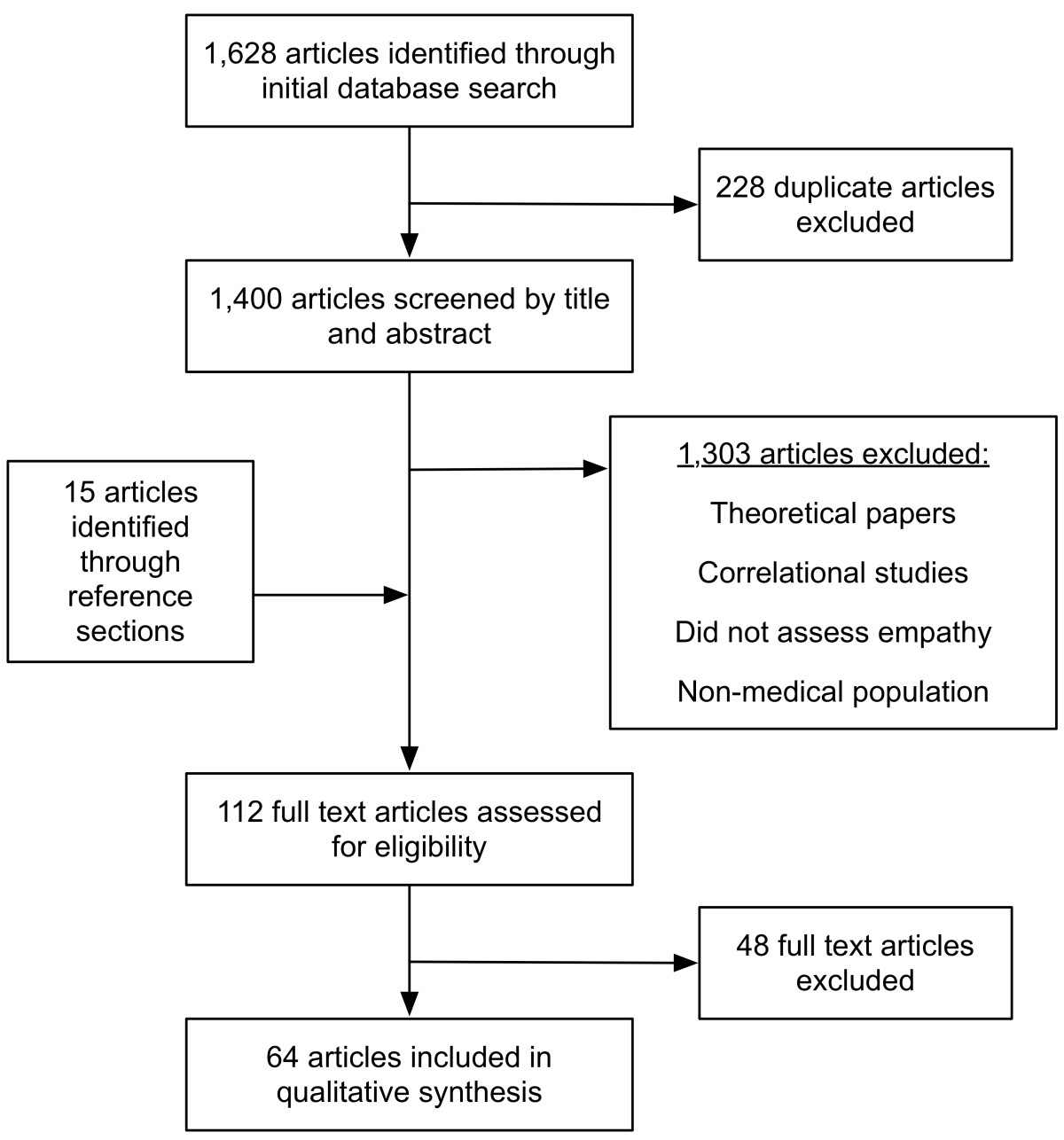
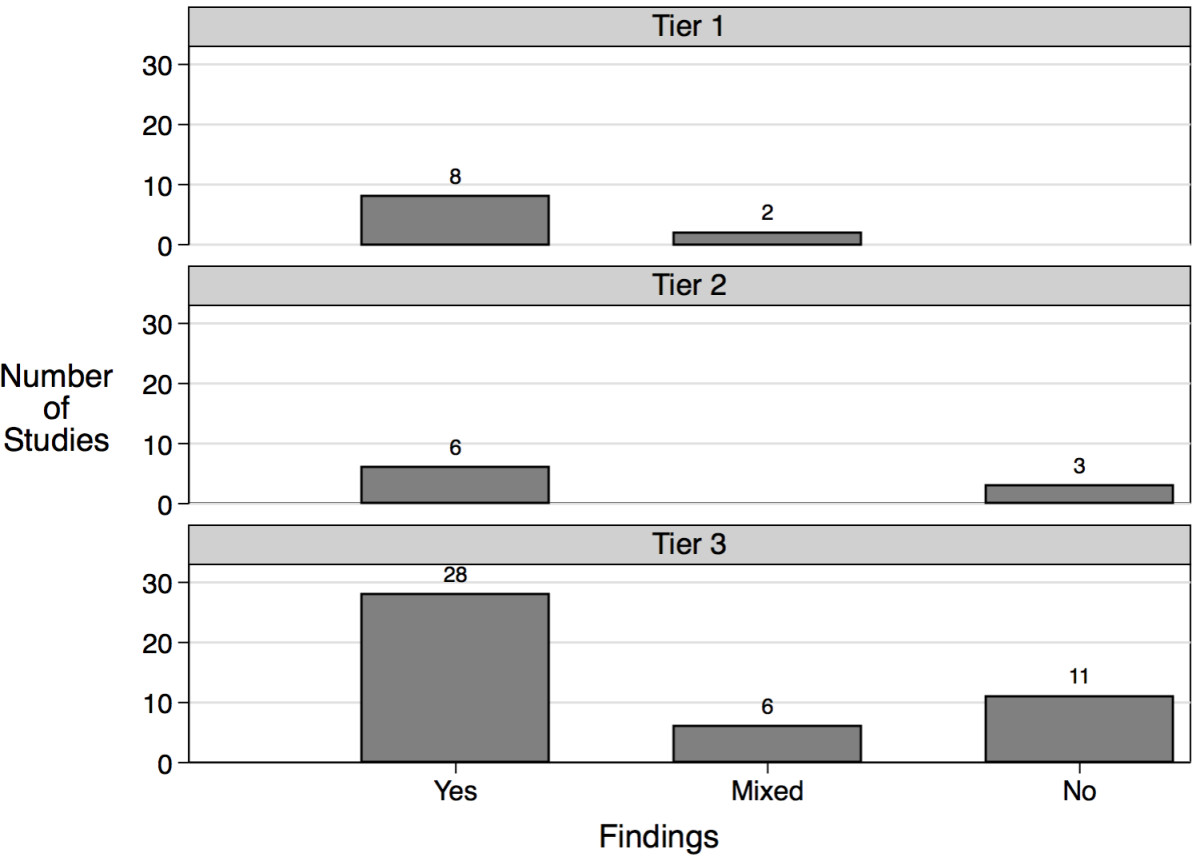
Of the 1,415 articles identified, 64 met inclusion criteria. We qualitatively synthesized the findings of qualified studies by extracting data for ten study metrics: 1) source population, 2) sample size, 3) control group, 4) random assignment, 5) intervention type, 6) intervention duration, 7) assessment strategy, 8) type of outcome measure, 9) outcome assessment time frame, and 10) whether a statistically significant increase in empathy was reported. Overall, the 64 included studies were characterized by relatively poor research designs, insufficient reporting of intervention procedures, low incidence of patient-report empathy assessment measures, and inadequate evaluations of long-term efficacy. 8 of 10 studies with highly rigorous designs, however, found that targeted interventions did increase empathy.
Physician empathy appears to be an important aspect of patient and physician well-being. Although the current empathy intervention literature is limited by a variety of methodological weaknesses, a sample of high-quality study designs provides initial support for the notion that physician empathy can be enhanced through interventions. Future research should strive to increase the sample of high-quality designs through more randomized, controlled studies with valid measures, explicit reporting of intervention strategies and procedures, and long-term efficacy assessments.
从理论和实证角度来看,医生的同理心对患者健康至关重要,但研究表明,同理心在整个医学院学习期间会下降,且在医生群体中的水平低于理想状态。在本文中,我们综合了已发表的文献,这些文献对旨在检测医学生、住院医师、专科医师和医生同理心变化的干预措施进行了定量评估。
我们于2014年6月系统检索了PubMed、EMBASE、科学引文索引和心理学文摘数据库,以识别那些定量评估医学生、住院医师、专科医师和医生因干预措施导致的同理心变化的文章。
在检索到的1415篇文章中,64篇符合纳入标准。我们通过提取十个研究指标的数据,对合格研究的结果进行了定性综合分析:1)源人群;2)样本量;3)对照组;4)随机分配;5)干预类型;6)干预持续时间;7)评估策略;8)结果测量类型;9)结果评估时间框架;10)是否报告了同理心有统计学意义的增加。总体而言,纳入的64项研究具有研究设计相对较差、干预程序报告不足、患者报告的同理心评估措施发生率低以及长期疗效评估不足等特点。然而,在10项设计高度严谨的研究中,有8项发现针对性干预确实提高了同理心。
医生的同理心似乎是患者和医生福祉的一个重要方面。尽管当前的同理心干预文献受到各种方法学缺陷的限制,但高质量研究设计的样本为医生同理心可通过干预得到增强这一观点提供了初步支持。未来的研究应通过更多随机对照研究、采用有效测量方法、明确报告干预策略和程序以及进行长期疗效评估,努力增加高质量设计的样本量。